Avoiding Foundation Failures in Australian Infrastructure: How Helical Piles Solve the Big 7 Site Challenges
Foundation failures drain budgets and delay timelines on Australian infrastructure projects more often than you think. Complex soil conditions like reactive clays and collapsible sands challenge traditional piling methods, risking costly rework and compliance issues. Helical piles Australia offer a proven solution with rapid installation, torque monitoring, and AS 2159 compliant piling designed specifically for these tough environments. In this post, you’ll learn how helical piles tackle the big seven site challenges to keep your projects on track and built to last. For more insights, you can explore this guide on helical pile engineering design in Australia.
Understanding Foundation Challenges

Let’s explore some of the common challenges Australian infrastructure projects face and how soil conditions contribute to these difficulties.
Common Risks in Australian Infrastructure
Infrastructure projects in Australia often face significant risks due to foundation issues. These can lead to delays and increased costs. From unexpected soil conditions to compliance hurdles, these risks can derail your projects. Traditional foundations often struggle to adapt, leading to costly fixes.
Screw piles, like those from Helical Piles Australia, offer a solution. Their rapid installation and adaptability make a difference. By choosing the right foundation, you can avoid many common pitfalls and keep your projects moving smoothly.
Impact of Soil Conditions on Foundations
The soil beneath your project plays a crucial role in foundation stability. Reactive clays and collapsible sands are notorious for causing problems. These conditions can lead to foundation movement and even failure. Traditional methods often fall short, struggling to cope with such challenges.
With helical piles, you gain an edge. Designed to handle complex soil conditions, screw piles anchor firmly into stable strata. This ensures a solid foundation, reducing risks of movement and damage. By addressing soil challenges effectively, you can safeguard your project’s success.
Environmental and Efficiency Concerns
Environmental concerns are increasingly critical in construction. Foundations that disturb the ground can harm ecosystems and push projects beyond budget. Traditional methods often involve significant excavation and site alteration, leading to environmental impact.
Helical piles offer a more sustainable option. With minimal site disturbance and a lower carbon footprint, they meet environmental standards while maintaining efficiency. By choosing environmentally friendly foundations, you not only protect the surrounding area but also streamline your project timeline.
Helical Piles: A Strategic Solution
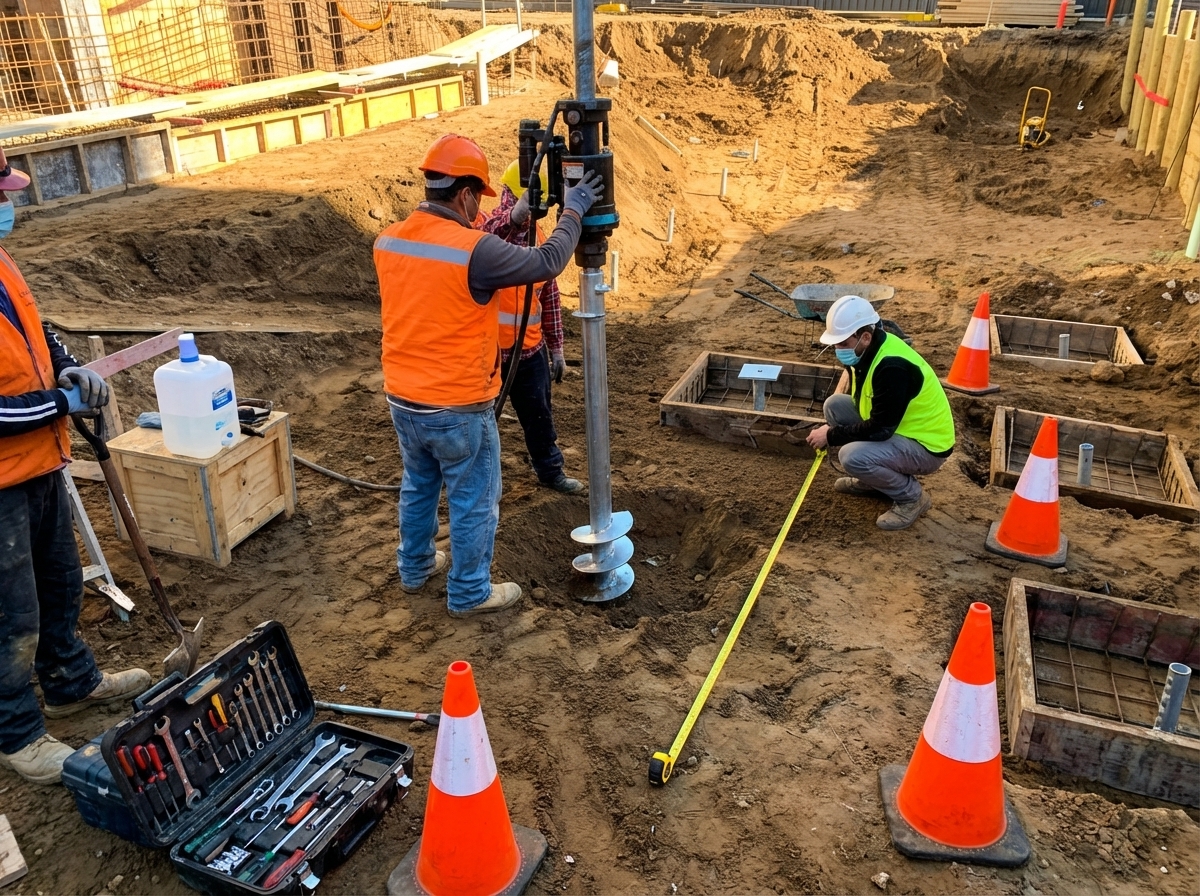
Having established the foundation challenges, let’s delve into how helical piles present a strategic solution, offering distinct advantages in various project scenarios.
Advantages of Screw Piles for Foundations
Screw piles bring significant benefits to the table. Their installation is quick and requires minimal site preparation, a crucial advantage for many projects. Unlike traditional methods, screw piles do not need extensive excavation. This reduces labor and equipment costs, saving you time and money.
For projects that demand rapid deployment, screw piles are ideal. You can install them in various weather conditions, keeping your project on track regardless of external factors. This flexibility is vital for meeting tight deadlines and managing project schedules effectively. Learn more about how screw piles are gaining popularity here.
Torque Monitoring Ensures Certainty
Certainty in foundation performance is non-negotiable. Torque monitoring during installation provides real-time feedback on the pile’s capacity. This ensures each pile achieves the necessary load-bearing requirements, giving you confidence in their performance.
With torque monitoring, you have a direct correlation between installation torque and load capacity. This method provides a higher assurance level than traditional testing, allowing for immediate verification. This means fewer surprises and a higher degree of reliability, ensuring your foundations are built to last.
Environmental Benefits of Helical Piles
Choosing helical piles means choosing a greener option. Installation involves low vibration and noise, reducing impact on the surrounding environment. This is especially important for projects near sensitive areas or existing structures.
Helical piles also minimize soil displacement, preserving the site’s natural state. This lowers the environmental footprint and aligns with sustainable construction practices. By adopting environmentally friendly foundations, you make a positive impact while maintaining efficiency. For more on their benefits, check out this comprehensive guide.
Addressing Site-Specific Issues
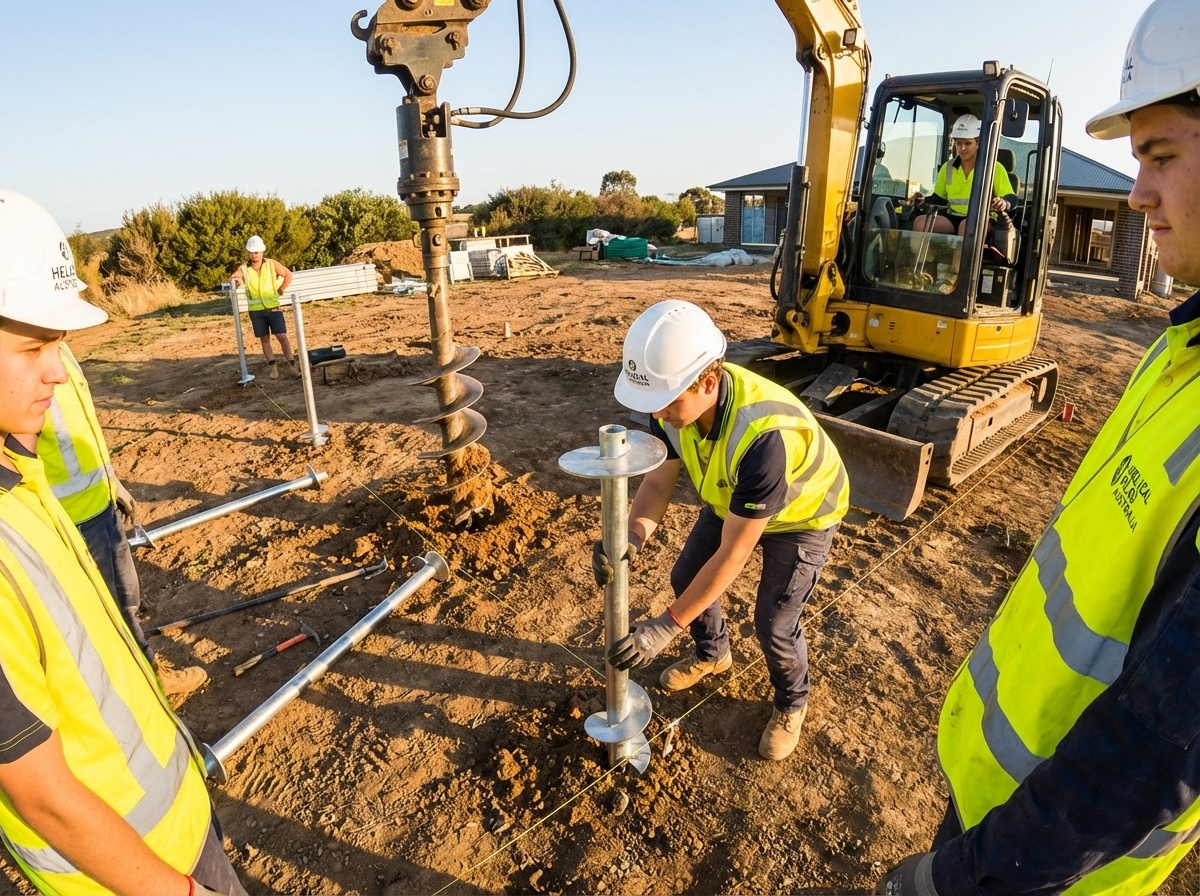
Now, let’s address how helical piles tackle site-specific issues, ensuring your projects are equipped to handle diverse challenges.
Solar Farm and Pipeline Foundations
For solar farms and pipelines, foundation stability is key. These projects often occur in remote locations with challenging terrain. Helical piles offer a robust solution. They are designed for quick installation in diverse conditions, ensuring your projects remain on schedule.
With helical piles, you gain the benefits of stable, corrosion-resistant anchoring. This is crucial for long-term performance, especially in areas with shifting soils or slopes. Their adaptability makes them ideal for handling the unique demands of solar and pipeline projects.
Solutions for Reactive Clay and Collapsible Sand
Reactive clay and collapsible sand are notorious for causing foundation issues. Traditional methods struggle to cope with these conditions, leading to costly adjustments. Helical piles, however, are engineered to handle such challenges seamlessly.
By anchoring into stable soil layers, helical piles provide a reliable foundation. Their design minimizes movement, ensuring stability even in difficult soil types. This approach mitigates risks, saving you from expensive rework and ensuring compliance with project standards.
Overcoming Remote Site Access Challenges
Accessing remote sites presents logistical challenges. Transporting heavy equipment can be costly and time-consuming. Helical piles offer a practical solution. Their lightweight design and ease of installation mean fewer resources are needed for remote projects.
This efficiency translates into cost savings and reduced environmental impact. By choosing helical piles, you simplify logistics, enabling project success even in the most isolated areas. For more insights on overcoming these challenges, explore this expert discussion on helical screwpiles.
In conclusion, by leveraging helical piles, you address diverse foundation challenges effectively. Their adaptability, efficiency, and environmental benefits position them as the ideal choice for Australian infrastructure projects.
Learn how to avoid costly foundation failures with expert insights.