Why traditional foundations add risk to solar, pipeline, and transmission projects—and how helical piles remove it
Traditional foundation methods often introduce hidden risks that can derail your solar, pipeline, or transmission project schedule and budget. Drilled piers, driven piles, and concrete footings struggle with Australia’s varied soil conditions, causing delays and compliance headaches. Switching to helical piles offers a clear path to reduce these risks, speed installation, and meet AS 2159 compliance with real-time torque monitoring. Let’s explore why helical piles deliver program certainty where traditional foundations fall short. https://www.pnnl.gov/sites/default/files/media/file/Introduction%20to%20Transmission%20Infrastructure-Revised.pdf
Risks of Traditional Foundations
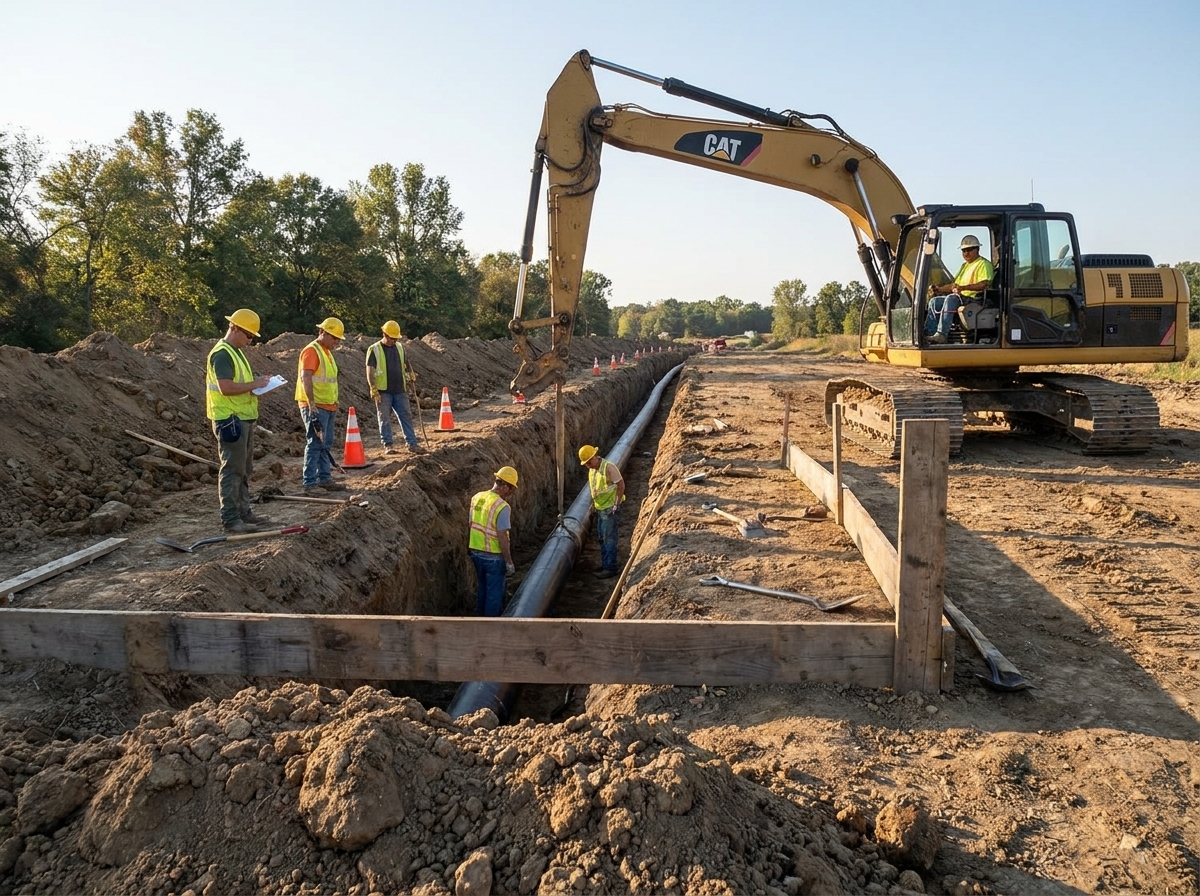
Traditional foundation methods, like drilled piers and driven piles, might be familiar, but they come with significant challenges. Let’s look at the risks they pose to your projects.
Schedule Delays and Cost Overruns
Time is money in construction, and traditional foundations often waste both. Drilled piers and concrete footings can slow you down. Wet weather and poor soil conditions mean delays, pushing project timelines beyond what’s planned. These delays lead to cost overruns that can eat into your budget significantly. Imagine planning for months, only to face unexpected setbacks. The longer the delay, the higher the costs. When budgets are tight, these overruns can be critical.
Compliance Challenges and Environmental Concerns
Ensuring compliance with regulations is crucial, but traditional methods can make this difficult. Drilled piers often struggle with meeting standards like AS 2159. Compliance isn’t just a box to tick; it’s about safety and reliability. Environmental impact is another concern. Large-scale excavations and concrete batching can harm the environment, affecting ecosystems and future site usability. With increasing focus on sustainability, these issues can’t be ignored.
Impact on Project Feasibility
Traditional methods don’t always fit well with project goals. When foundational issues arise, it can question the feasibility of the entire project. You might find your solar farm or pipeline project facing unnecessary risks. These risks can result in stakeholders losing confidence, which can impact future investments or expansions negatively.
Benefits of Helical Piles
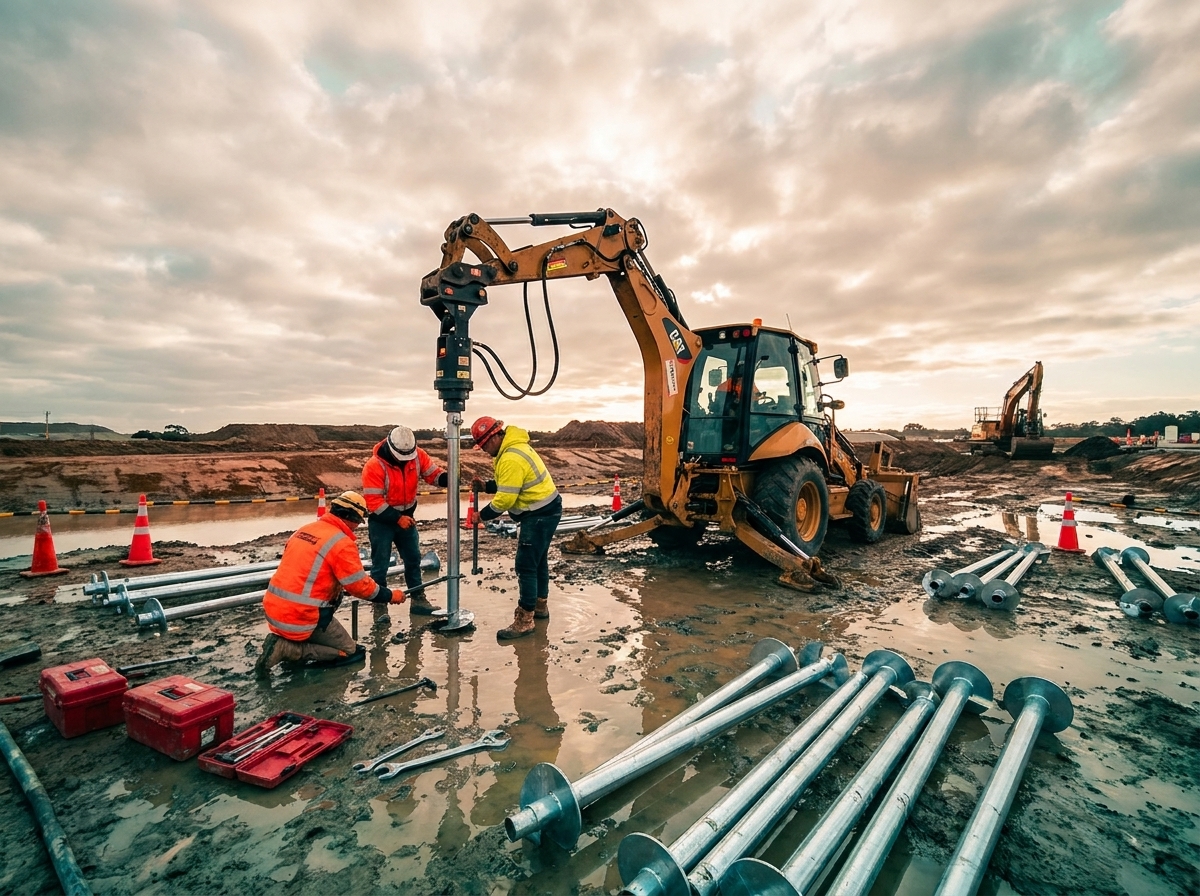
Helical piles offer a modern alternative, eliminating many of the risks associated with traditional foundations. Here’s why they stand out.
Faster Installation and Cost Efficiency
Helical piles can be installed in half the time compared to concrete foundations. This speed is thanks to their design, which requires no curing time. Immediate loading capability means you can proceed without delays. Faster installation equals lower costs. With less labor and machinery needed, you save on expenses. Shorter timelines also mean projects stay more predictable, keeping budgets on track.
AS 2159 Compliance and Torque Monitoring
Meeting compliance standards is easier with helical piles. They align with AS 2159 through real-time torque monitoring. This ensures every pile meets load requirements accurately. Compliance becomes less of a headache with tools providing instant feedback. Engineers and project managers appreciate how much simpler it is to verify these metrics, giving peace of mind when it comes to safety and reliability.
Low Impact and Environmental Advantages
Helical piles are kind to the environment. Their installation involves no large-scale excavations, preserving surrounding ecosystems. This low-impact approach means you can maintain site integrity while meeting environmental regulations. It’s a sustainable choice that aligns with modern construction goals, ensuring projects leave a positive legacy.
Helical Piles in Australian Projects
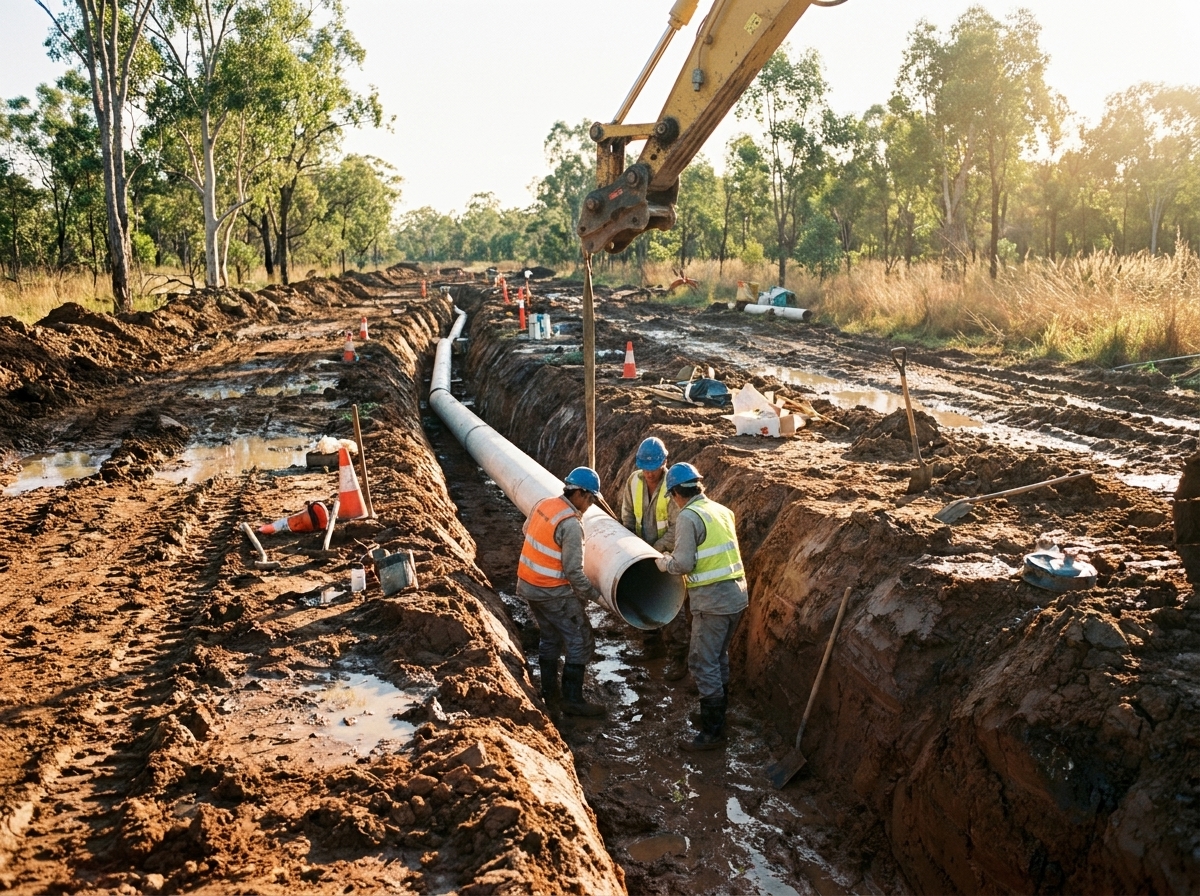
Helical piles are transforming construction projects across Australia. They bring unique advantages to several key sectors.
Solar Farm Foundations and Pipeline Supports
For solar farms, helical piles mean stable foundations on uneven terrain. They adapt to varying soil conditions, crucial for expansive solar projects. Pipeline supports also benefit. Helical piles offer corrosion-resistant anchoring, essential for long-term stability. These projects can proceed with confidence, knowing that their foundations are built to last.
Transmission Line Footings and Deep Foundation Solutions
Transmission line projects face unique challenges. Helical piles provide robust footings, even in the most remote locations. Their adaptability to deep foundation needs means they can support heavy loads efficiently. This versatility makes them a preferred choice for complex infrastructure projects across Australia.
Ensuring Program Certainty and Risk Mitigation
Overall, helical piles ensure that projects stay on course. They minimize risks associated with compliance and environmental impact, providing certainty. By choosing helical piles, you mitigate the issues that traditionally derail large infrastructure projects, ensuring success from the ground up.
Helical Piles Australia is your partner in delivering reliable, efficient, and sustainable foundation solutions. Whether for solar, pipeline, or transmission projects, our expertise ensures your project is supported by the best technology available.
Learn how to avoid costly foundation failures with expert insights.