Helical Pile Installation: Engineered Certainty for Australian Infrastructure
Helical pile installation often decides the fate of your infrastructure project before the first beam goes up. Getting it right means mastering site investigation, design, and real-time torque monitoring—especially under Australia’s demanding conditions. In this post, you’ll learn how Helical Piles Australia’s patented systems and precision methods deliver rapid, low-impact foundations that meet AS 2159 compliance and reduce risk across solar farms, pipelines, and transmission lines. For a comprehensive understanding of the installation process, you can also refer to this guide to helical piles installation.
Understanding Helical Pile Installation
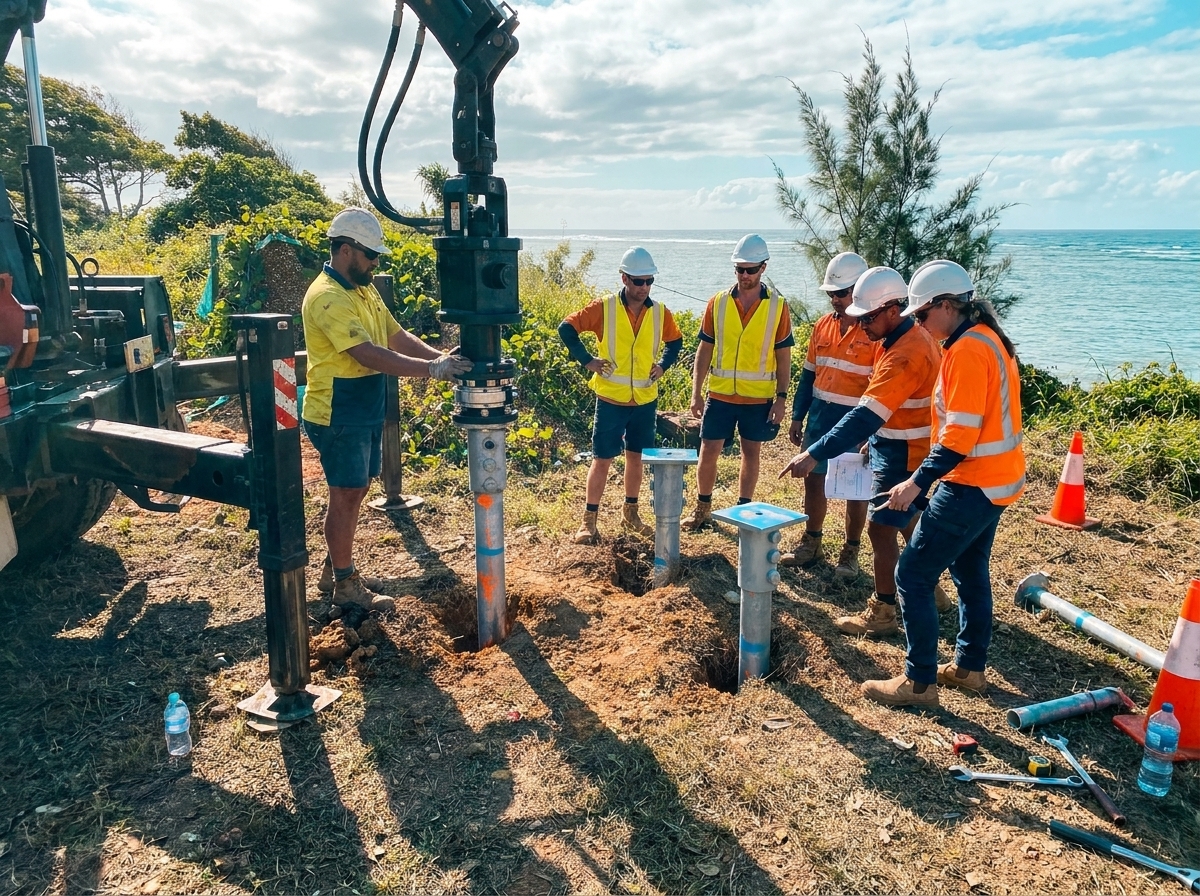
Site Investigation Essentials
Before you start any project, understanding the site is key. This involves a detailed assessment of soil types, load requirements, and environmental conditions. The goal? Ensure your project stands the test of time.
First, a thorough site investigation helps identify soil characteristics and potential challenges. You might find reactive clays or sandy soils, each needing a unique approach. Gathering this data is crucial. It influences the design and selection of the right helical piles. Without proper investigation, you risk foundation failures.
Next, consider the load-bearing capacity. This determines how much weight your piles can support. Knowing this helps avoid over-engineering, saving time and costs. For a detailed guide on site investigation, check this resource.
Designing for Optimal Performance
Once you have your site data, design becomes your next focus. A well-thought-out design ensures your piles meet specific project demands, such as load and environmental conditions.
Start by matching the pile design to soil conditions. Different soil types require different pile shapes and materials. For instance, clay soils might need wider helical plates for better stability. In contrast, sandy conditions could necessitate deeper piles.
Moreover, consider the structural demands of your project. Whether it’s a solar farm or a pipeline, each has unique load requirements. Designing your piles to meet these needs ensures they can handle stress without failing. This tailored approach is what sets successful projects apart.
Equipment Selection Criteria
Choosing the right equipment is the backbone of any successful installation. It ensures precision, efficiency, and safety on-site, leading to a smoother process.
Firstly, your equipment must suit the pile type and site conditions. For example, hydraulic drive motors are essential for screwing piles into tough soils. They provide the necessary torque and control. Without them, installation can become a challenge.
Secondly, consider the size and weight of your equipment. Lighter equipment is often easier to transport, especially to remote sites. This reduces logistics costs and speeds up deployment. For further insights on equipment, explore this installation manual.
Key Installation Parameters
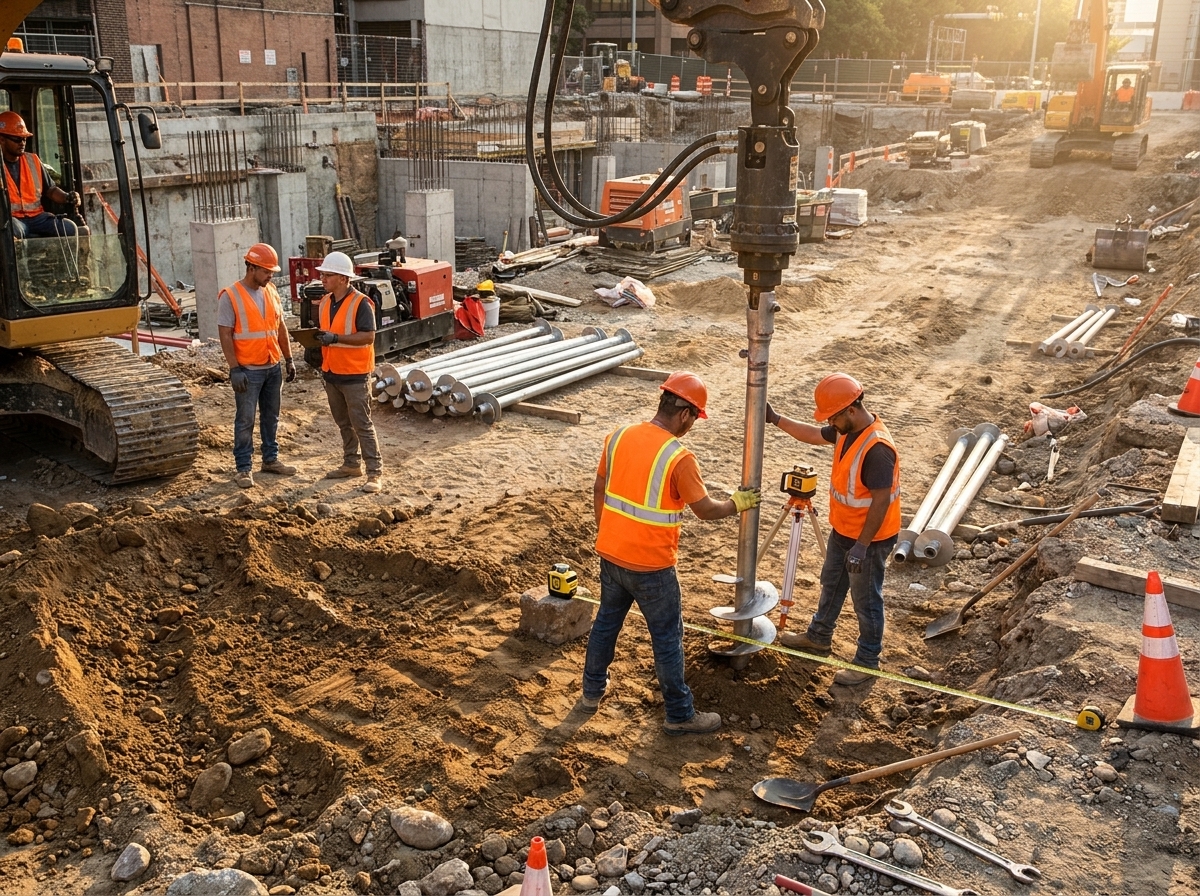
Torque-to-Capacity Correlation
During installation, understanding the correlation between torque and capacity is vital. It ensures your piles are installed correctly and can bear the intended load.
As you drive the pile into the ground, measuring the torque helps estimate its load-bearing capacity. This real-time data ensures the pile’s integrity. For example, higher torque often indicates greater capacity, which is crucial for heavy structures.
This method provides immediate feedback, allowing for adjustments on the spot. It reduces the risk of under or over-installation. The result is a foundation that stands strong under pressure.
Real-Time Torque Monitoring
Real-time torque monitoring is a game-changer. It offers immediate insights into how well your piles are set. This ensures each pile meets the project’s specific load requirements.
Using specialized equipment, you can track torque levels as piles are installed. This data helps confirm that the pile has reached the right depth and capacity. Plus, it alerts you to any issues, allowing for quick fixes before they become bigger problems.
This proactive approach not only boosts confidence in the foundation’s performance but also streamlines the installation process, cutting down on time and costs.
AS 2159 Compliance Standards
Meeting AS 2159 standards is non-negotiable for any project in Australia. These standards ensure your installation is safe, reliable, and of high quality.
Compliance means your piles are tested against stringent criteria. This includes load capacity, material integrity, and environmental impact. Adhering to these standards protects you from potential legal and safety issues. It also assures stakeholders of your project’s reliability. Learn more about these standards in this detailed guide.
Ensuring Quality and Environmental Protection
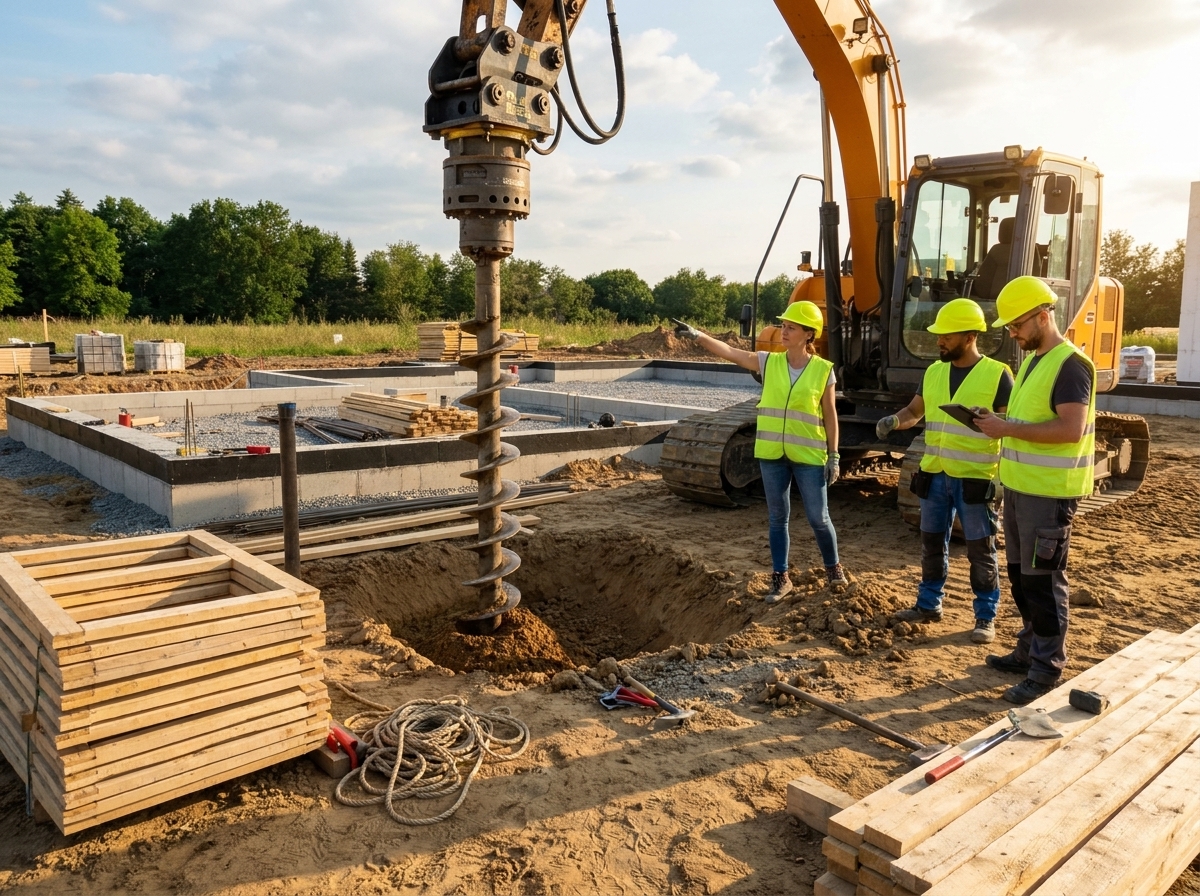
QA/QC Best Practices
Quality assurance and control are crucial for a successful project. They ensure every pile meets the required standards and performs as expected.
Implementing a robust QA/QC program involves regular inspections and testing. This includes checking the materials, installation methods, and final torque readings. These steps catch potential issues early, preventing costly repairs and delays.
Moreover, documenting these processes provides a clear trail of compliance and quality. This transparency builds trust and confidence among stakeholders.
Environmental Control Measures
Protecting the environment is integral to pile installation. Implementing control measures minimizes the impact on local ecosystems and complies with regulations.
Limiting site disturbance is a primary measure. This means reducing excavation and preserving natural vegetation. Such steps help maintain the site’s integrity and prevent erosion.
Additionally, monitoring and managing waste materials prevent contamination. This proactive approach not only meets environmental standards but also showcases your commitment to sustainability.
Benefits of Low Impact Foundations
Low impact foundations offer numerous advantages. They are particularly valuable in sensitive or remote areas where environmental preservation is a priority.
Firstly, these foundations require minimal excavation, preserving the site’s natural state. This reduces the environmental footprint and maintains the local ecosystem.
Secondly, they speed up installation. Without waiting for concrete to cure, projects can advance more swiftly. This efficiency saves time and resources, making it an attractive option for many projects.
In summary, helical pile installation is a meticulous process. From site investigation to quality assurance, each step ensures a strong, reliable foundation. By following best practices and embracing innovative technologies, your projects can achieve lasting success with minimal environmental impact.
Last chance for 2026 pricing – secure your foundation solutions today.