Push piers often get the nod for foundation settlement repair, but in Australian soils, their limits can stall your project. You need foundations that install quickly and deliver predictable, verifiable performance—especially for solar farms, pipelines, and transmission towers. This article explains when push piers work and why engineered helical piles offer up to 50% faster installation with less risk, no excavation, and immediate load capacity on your site. Learn more about the intricacies of push pier installation here.
Understanding Push Piers
Push piers, or resistance piers, are widely used for foundation settlement repair. But how effective are they under Australian conditions? Let’s explore their workings and where they may fall short.
What Are Push Piers?
Push piers are steel tubes pushed into the ground using hydraulic pressure. They support structures by transferring the load to deeper, more stable soil layers. This method is popular due to its minimal soil disturbance and ability to lift settled foundations.
However, push piers require careful installation. They rely on the building’s weight for penetration, and their success depends on reaching a suitable load-bearing stratum. For those looking to grasp the full installation process, Solid Base Foundations offers a detailed guide.
Advantages in Australian Soils
In certain Australian soils, push piers can provide a lifeline for struggling foundations. They work well in clayey terrains where soil shifts due to moisture change. Their design minimizes excavation, preserving surrounding landscapes.
For property owners, this means less mess and disruption. Plus, with their steel structure, push piers offer long-term durability against environmental degradation. Foundation Rescue Supply provides insights into their broader applications.
Limitations and Challenges
Despite their benefits, push piers face challenges in Australia. The variability of soil types can limit their effectiveness. They require significant structure weight for deep penetration. In some regions, reaching stable layers might not be possible, risking incomplete settlement correction.
Additionally, push piers may not suit projects needing rapid installation. They involve more steps and can face delays due to unforeseen soil conditions. Understanding these challenges helps in making informed decisions.
Helical Piles: A Better Alternative
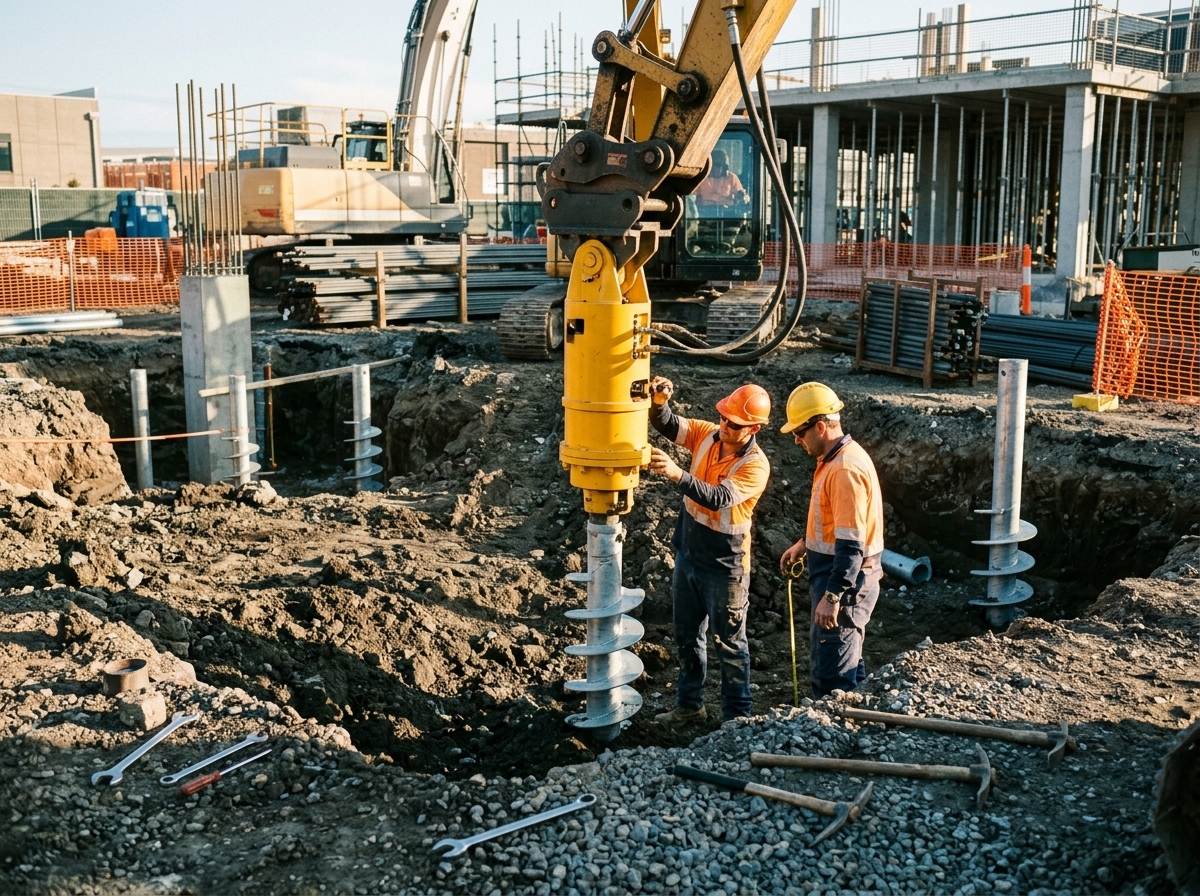
While push piers have their place, helical piles offer compelling advantages in speed and reliability. Let’s delve into why they might be the better choice for many projects.
Faster Installation and Lower Risk
Helical piles, often called screw piles, are installed by rotating them into the ground. This method speeds up installation compared to traditional options. They can be placed in hours, not days, cutting labor costs significantly.
For urgent projects, this means staying on schedule and within budget. Helical piles also adapt to changing site conditions, reducing surprises. With no curing time needed, projects can progress without delay, a crucial factor in remote or weather-affected areas.
Predictable Performance with Torque Correlation
One standout feature of helical piles is their predictable performance through torque correlation. As they’re installed, the resistance felt is measured to estimate load capacity. This real-time data ensures installations meet required specifications.
Engineers and project managers can rely on this method for precise performance checks. It reduces the guesswork, offering peace of mind that structures are secure. Learn more about these methods in the article on Helical Pile Capacity in Australia.
Environmental Benefits of Helical Piles
Helical piles also bring environmental advantages. They require no large-scale excavation, preserving natural landscapes and reducing environmental impact. This makes them ideal for sensitive areas where ground disturbance must be minimized.
Their installation process is quieter and cleaner, making them suitable for urban settings. Additionally, they can be removed and reused, offering a sustainable foundation option. For eco-conscious developers, this aligns with green building practices and reduces the overall carbon footprint.
Comparing Solutions for Infrastructure
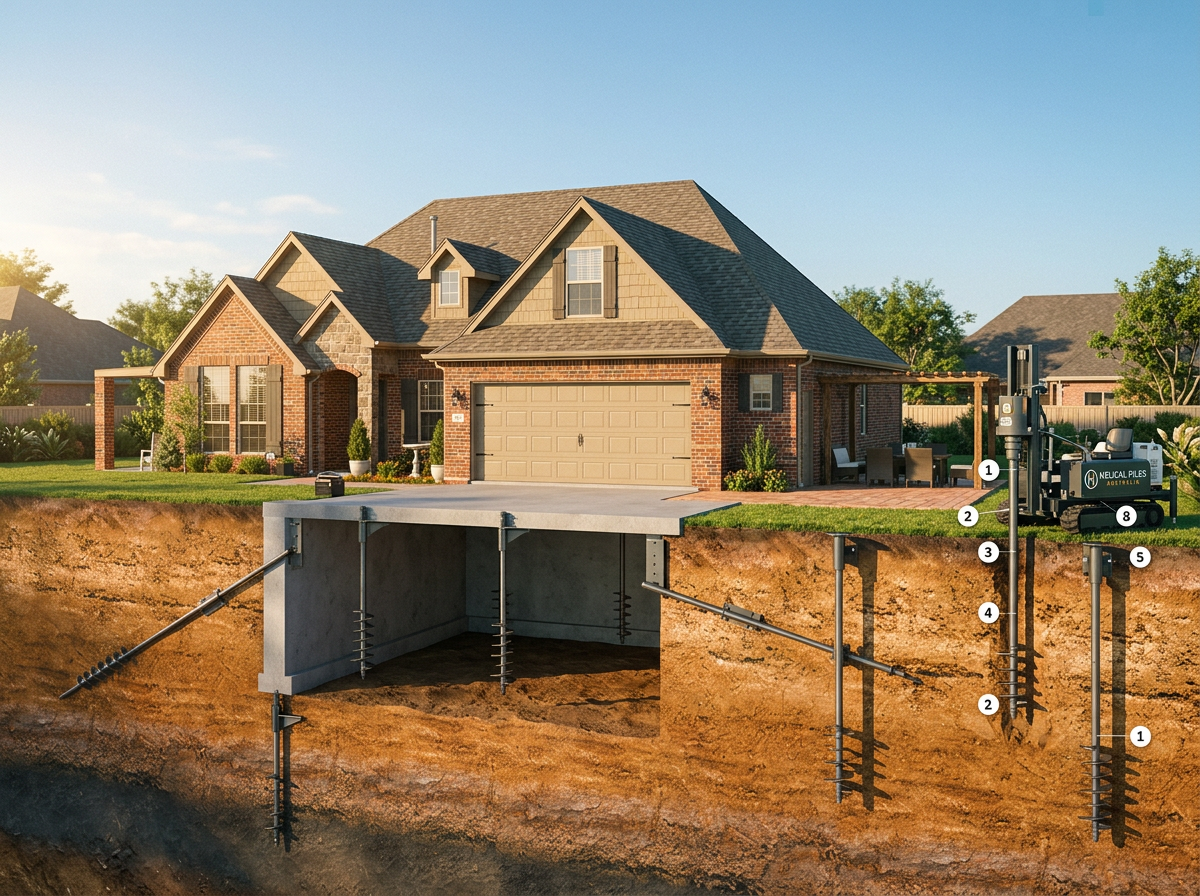
Choosing the right foundation method is crucial for infrastructure projects. Let’s see how push piers and helical piles stack up in different applications.
Application in Solar Farm Foundations
Solar farms demand reliable foundations to withstand environmental conditions. Helical piles offer rapid installation, ideal for large-scale projects needing speed. Their adaptability to uneven terrain and minimal ground disruption make them a preferred choice.
Push piers, conversely, may face limitations in such settings. The need for heavy equipment and specific soil conditions could slow the process. For solar projects, time saved is money earned.
Pipeline Supports and Transmission Towers
In supporting pipelines and transmission towers, stability is key. Helical piles provide strong anchorage against shifting soils. Their corrosion resistance ensures long-term durability, essential for infrastructure longevity.
Push piers may not offer the same level of assurance in variable soils. The risk of inadequate penetration or settlement can pose significant challenges. For pipeline and tower projects, reliability cannot be compromised.
No Excavation and Immediate Load Capacity
One of the standout features of helical piles is the ability to bear loads immediately after installation. This eliminates wait times, allowing construction to proceed swiftly. With no need for excavation, projects maintain momentum even in challenging sites.
In comparison, the installation of push piers involves more steps and potential delays. For projects with tight schedules or in remote locations, helical piles provide a clear advantage.
By understanding these differences, you can make informed decisions about which foundation method to choose for your project. Helical piles are not just about speed; they offer reliability and environmental benefits that align with modern construction needs.
Last chance for 2026 pricing – secure your foundation solutions today.