Ground screw anchors are a popular choice across Australia, but their performance often falls short in complex soil conditions or tight timelines. If you’ve faced delays or unexpected costs from traditional screw pile foundations, you’re not alone. This post breaks down when ground screws deliver and when helical piles provide faster, code-compliant results with lower risk—especially for solar farms, transmission footings, and pipeline supports. Keep reading to learn which foundation solution fits your project’s unique demands. Learn more about screw piles.
Ground Screw Anchors: Capabilities and Design
Ground screw anchors can be effective in the right conditions, but how do they perform in Australia’s tough soils? Let’s explore their capabilities and where they might fall short.
Performance in Australian Soils
When it comes to performance, ground screw anchors have their pros and cons. In soft soils, they are straightforward to install and offer a quick solution. However, in harder or rocky terrains, they may struggle to achieve the desired load capacity. For projects in areas with mixed soil types, this could mean delays as you try to adapt the installation process. Consistent performance is not always guaranteed. If your project is in a region with challenging soil, alternative solutions like helical piles might offer better reliability. For more on how screw anchors function, check out this Wikipedia article.
Key Design Criteria and Limitations
You need to consider several design factors when choosing ground screw anchors. First, determine soil conditions at your site. These anchors work best where the ground is soft enough to penetrate but firm enough to hold. They are often limited by their depth and diameter, which affects load-bearing capability. Additionally, corrosion can be a concern, especially in marine or high-moisture areas. Regular inspection and maintenance become crucial to ensure longevity. Understanding these limitations helps you decide if ground screws meet your project needs.
When Ground Screws Excel
Ground screws shine in smaller projects with less stringent load requirements. They offer quick installation and minimal site disturbance, making them ideal for temporary structures or small-scale projects. If you’re working on a project where speed is crucial, and the soil conditions are favorable, ground screws can save you time and money. They are perfect for projects like small solar installations, where rapid deployment is more important than maximum load capacity.
Helical Piles: Superior for Infrastructure
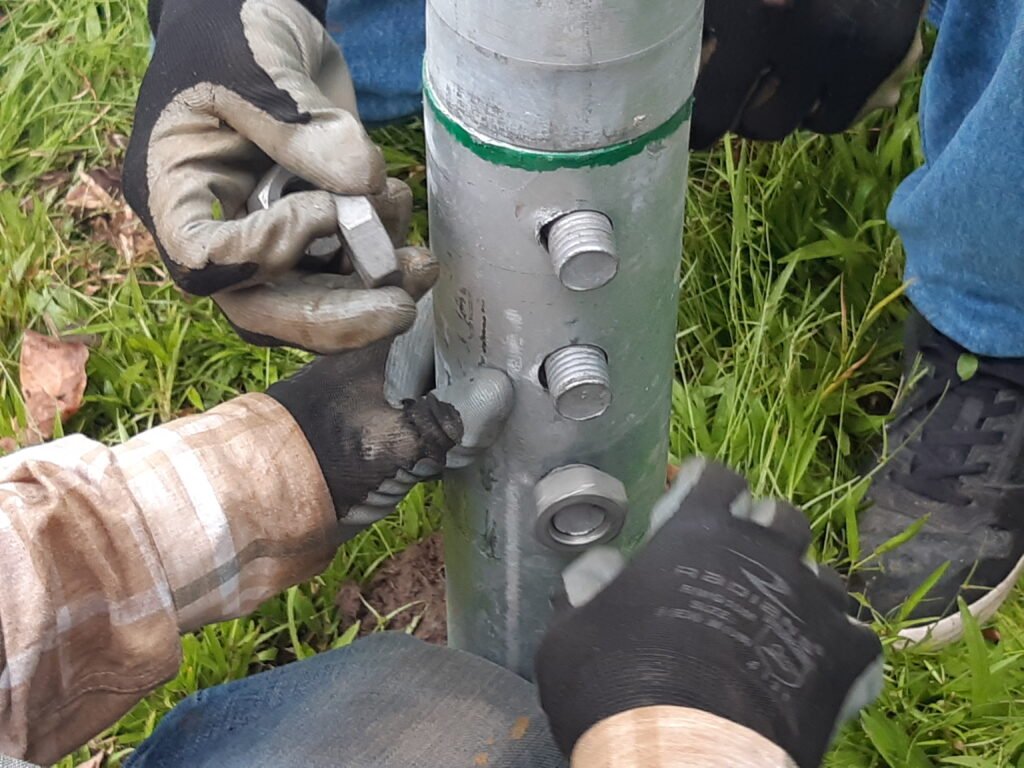
For larger infrastructure projects, helical piles often outperform ground screws. They are designed for challenging environments and deliver superior load capacity and installation speed.
Faster Installation and Load Capacity
Helical piles excel in delivering strong foundation solutions rapidly. Their design allows for installation without excavation or curing time, making them suitable for accelerated construction schedules. They can handle higher loads than ground screws, which is crucial for large-scale projects like solar farms or transmission lines. Immediate load-bearing capacity means you can move on to the next stage of your project without delay, ensuring timelines are met.
Minimizing Geotechnical Risks
One of the key advantages of helical piles is their ability to minimize geotechnical risks. The torque applied during installation directly correlates to load capacity, providing real-time assurance of foundation strength. This makes them a reliable choice for projects with uncertain soil conditions, reducing the potential for costly rework or adjustments. Ensuring stability in variable soils is a significant benefit for developers concerned about foundation integrity.
Practical Applications: Solar, Transmission, Pipelines
Helical piles are particularly effective in applications such as solar farms, transmission line footings, and pipeline supports. Their ability to provide stable support without extensive site preparation makes them ideal for remote and environmentally sensitive areas. Solar projects benefit from reduced installation times, while transmission and pipeline projects gain from the robust support helical piles offer. For more about their applications, visit Wikipedia.
Comparing Ground Screws and Helical Piles
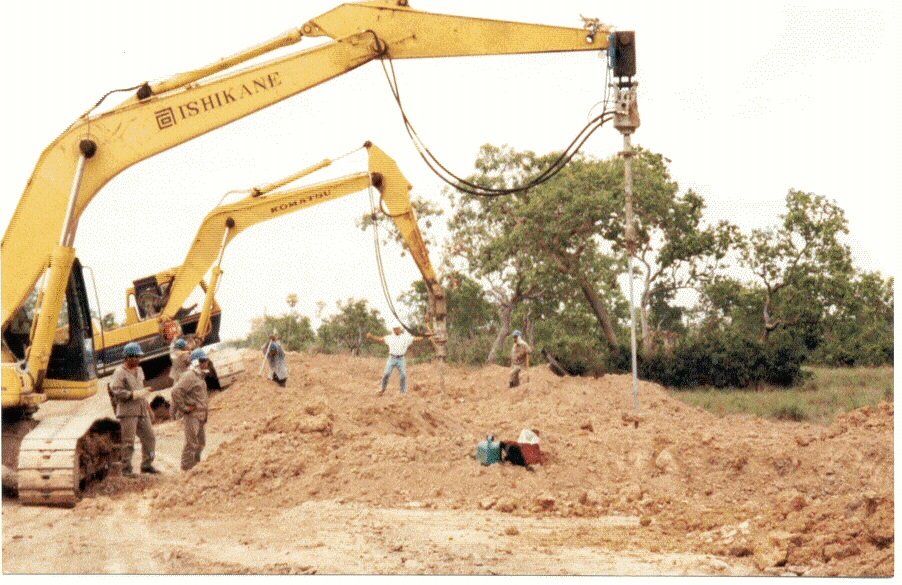
Deciding between ground screws and helical piles depends on numerous factors. Let’s compare them across several key areas to see which suits your project best.
Code Compliance and Safety Standards
Compliance with safety standards is crucial for any project. Helical piles typically meet rigorous code requirements more easily, thanks to their predictable performance and robust design. Ground screws might struggle here, especially in projects with high safety demands. If your project requires strict adherence to safety standards, helical piles are likely the more reliable choice.
Environmental Benefits and Site Disturbance
Both ground screws and helical piles offer environmental benefits by minimizing site disturbance compared to traditional foundations. However, helical piles take it a step further. They require no excavation and can be installed in all-weather conditions, reducing environmental impact even more. This makes them an excellent option for projects in environmentally sensitive areas where preserving the landscape is crucial.
Project Efficiency and Cost Analysis
Efficiency and cost are always top of mind in construction projects. While ground screws might offer lower upfront costs, helical piles provide long-term savings through reduced installation times and maintenance needs. Their ability to handle higher loads with fewer units can also reduce overall project costs. When analyzing cost-effectiveness, consider the entire project lifecycle to see the true value helical piles bring.
In conclusion, while ground screws have their place, helical piles often provide a superior solution for large-scale infrastructure projects in Australia. They offer speed, reliability, and environmental advantages that can significantly benefit your project. For more insights on cost and efficiency, check out Ground Screw Foundation Cost in Australia: A Practical Guide to Total Installed Cost and Schedule Savings.
Last chance for 2026 pricing – secure your foundation solutions today.