Traditional foundation methods often stall projects with long curing times and heavy excavation. You know the risks: unpredictable soil, site delays, and costly rework. Screw pile foundations offer a faster, low-impact alternative engineered specifically for Australia’s challenging ground conditions. This post explains how helical piles deliver immediate load capacity, reduce ground disturbance, and provide verified performance—perfect for solar farms, pipelines, and transmission projects.
How Screw Piles Work
Understanding the mechanics of screw pile foundations helps in appreciating their benefits. Let’s explore their principles, performance, and suitability for Australian conditions.
Principles of Helical Piles
Helical piles, also known as screw piles, are innovative foundation systems. They use steel shafts with attached plates to anchor into the soil. These plates help transfer loads deep into stable ground. Unlike traditional methods, they require no large excavations. Helical piles are installed using hydraulic machinery that screws them into the ground, reaching the necessary depth for load support. This installation method minimizes soil disturbance and ensures the pile reaches competent strata capable of supporting structures.
Torque Verification and Performance
The strength of helical piles is verified through torque measurements during installation. This process correlates the torque required to install the pile with its load-bearing capacity. It provides a real-time assurance of performance. By measuring torque, engineers can confirm that each pile meets design specifications. This eliminates the uncertainty and delays associated with testing post-installation. The immediate feedback allows for adjustments on-site, ensuring each pile performs as expected.
Adaptability to Australian Conditions
Helical piles are particularly suited for Australia’s diverse and challenging soil conditions. They work well in areas with clay, sand, and silt, but are less effective in rocky terrains. Their adaptability to different soils makes them a preferred choice for many projects. Helical piles can also be installed in both wet and dry conditions, making them versatile for fluctuating weather. Their ability to perform in such varied environments is why they’re popular across infrastructure projects throughout Australia.
Speed and Environmental Benefits
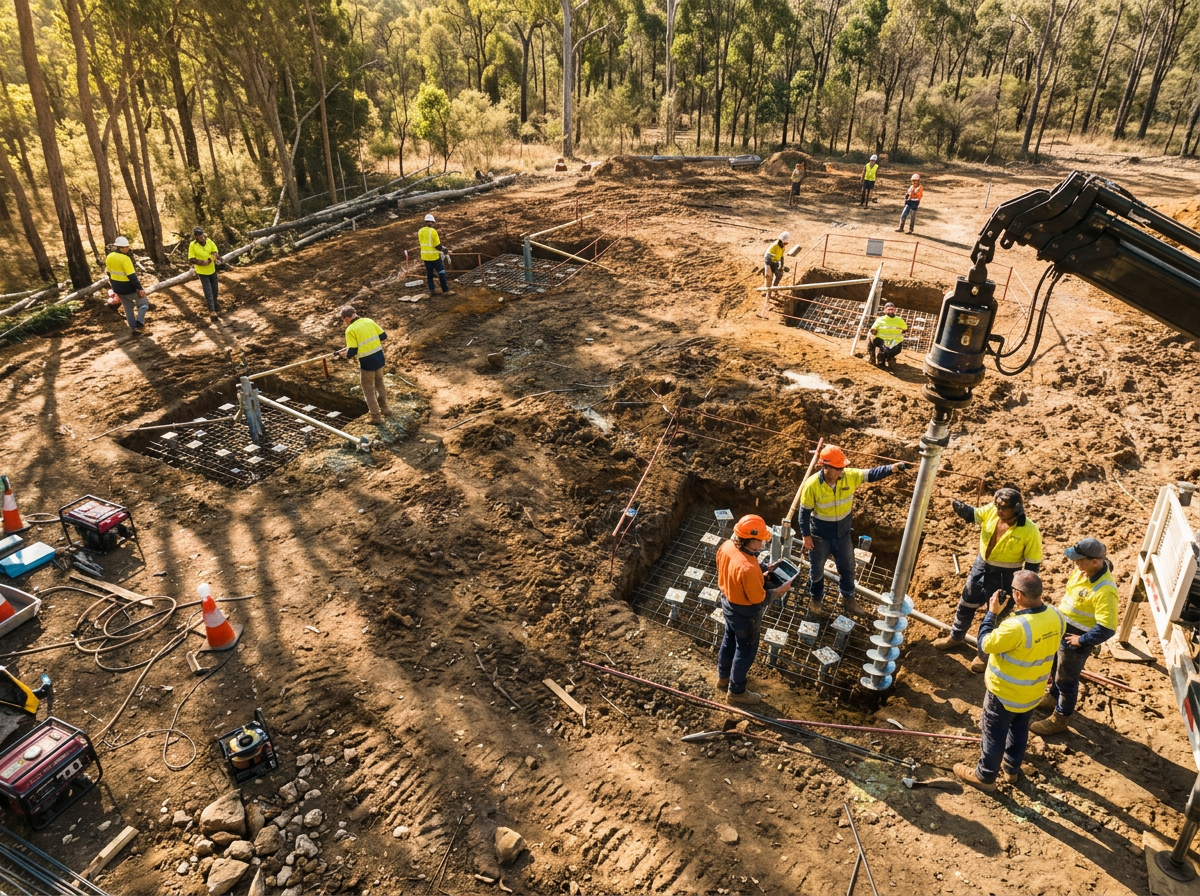
Screw piles not only excel in installation efficiency but also offer significant environmental advantages. Let’s delve into their speed, reduced disturbance, and time-saving benefits.
Rapid Installation Foundations
One of the standout benefits of helical piles is their rapid installation. Without the need for extensive excavation or curing, projects can move swiftly. This is crucial for tight timelines and remote sites. Faster installations mean reduced labor costs and quicker project turnarounds. These rapid installation foundations are ideal for projects where time is of the essence, allowing for immediate progression to subsequent construction phases.
Reduced Ground Disturbance
Helical piles minimize environmental impact by reducing soil disruption. Their installation involves minimal digging, which helps preserve the natural landscape. This low-impact approach is beneficial for projects in sensitive areas or where environmental conservation is a priority. By reducing the need for heavy machinery and large-scale excavation, helical piles contribute to sustainable construction practices.
No Curing Time Needed
Traditional concrete foundations require days or even weeks to cure. Helical piles eliminate this waiting period entirely. Once installed, they can be loaded immediately. This advantage translates into significant time savings, especially for projects with tight schedules. No curing time means less downtime and faster progress, a critical factor for infrastructure projects needing to stay on track.
Applications in Infrastructure Projects
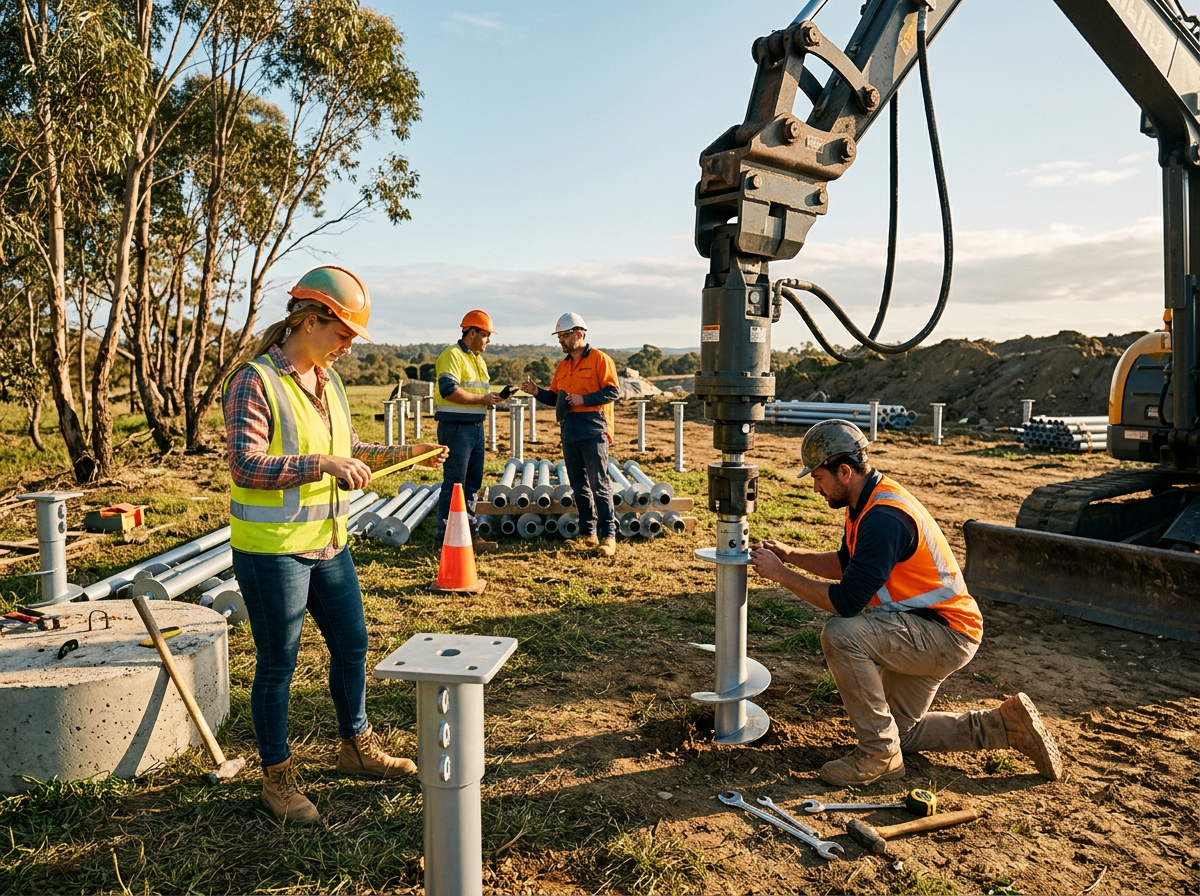
The versatility of screw piles makes them suitable for various infrastructure applications. Here, we explore their use in solar farms, pipelines, and transmission lines.
Solar Farm Foundations
In solar farm projects, screw piles provide a stable and efficient foundation solution. Their ability to be installed quickly and with minimal machinery makes them ideal for large-scale solar installations. By reducing ground disturbance, solar farm foundations maintain site integrity and allow for rapid deployment of solar arrays, essential for meeting renewable energy goals.
Pipeline Supports
For pipelines, helical piles offer reliable support even in challenging terrains. Their design helps counteract buoyancy and uplift forces, which is crucial in areas prone to flooding or high groundwater levels. With their corrosion-resistant coatings, they ensure long-term durability and stability, making them a trusted choice for pipeline supports.
Transmission Line Footings
Transmission projects in remote locations benefit greatly from the use of helical piles. These foundations provide the necessary stability without the need for extensive logistical efforts. Their quick installation reduces the environmental footprint and ensures projects can proceed efficiently. Transmission line footings with helical piles reflect a commitment to both performance and environmental responsibility.
Frequently Asked Questions
What are screw piles used for?
Screw piles are used in various infrastructure projects, including solar farms, pipelines, and transmission lines. They provide stable, rapid-installation foundations with minimal environmental impact.
How do screw piles compare to traditional concrete foundations?
Screw piles offer significant advantages over traditional concrete foundations by eliminating the need for large excavations and curing time. They provide immediate load-bearing capacity, reducing project timelines and environmental disturbance.
Are screw piles suitable for all soil types?
Screw piles are effective in many soil types, including clay, sand, and silt. However, they may not be suitable for rocky terrains without pre-drilling or special considerations. Their adaptability makes them a versatile choice for construction projects in varied Australian conditions.
Last chance for 2026 pricing – secure your foundation solutions today.