Helical piers vs push piers—when your project timeline tightens and ground conditions complicate, the choice isn’t trivial. You need foundations that install quickly, bear load immediately, and minimise site risks. This comparison highlights why helical piles Australia projects rely on outperforming push pier underpinning with faster installation, torque correlated capacity, and minimal ground disturbance. Keep reading to learn how these engineered foundations reduce schedule risk and deliver precise, reliable performance for solar, transmission, and pipeline infrastructure.
Comparing Helical and Push Piers
Choosing the right foundation is crucial for project success. Let’s explore how helical piers and push piers differ fundamentally.
Fundamental Differences in Design
Helical piers and push piers serve similar purposes but differ significantly in design. Helical piers are steel shafts with helical plates welded onto them. These plates allow the piers to screw into the ground like a corkscrew, providing anchoring strength. In contrast, push piers are long steel tubes driven into the ground using hydraulic pressure. They rely on the structure’s weight to achieve depth.
The design of helical piers allows for installation in a variety of soil conditions. This flexibility makes them ideal for different terrains. On the other hand, push piers require heavy loads to push them into the ground, limiting their use in certain situations.
Installation Techniques and Speed
The installation process impacts both time and cost. Helical piers excel in this area with their screw-like design, which enables rapid and efficient installation. They require minimal excavation and are less weather-dependent. This means you can proceed with your project without significant delays.
Push piers, however, need heavy equipment to drive them into the ground. This process is slower and can be hindered by weather conditions. The longer installation time can delay project timelines, especially in remote locations.
Load Bearing and Performance
Once installed, both types of piers must support the intended load. Helical piers offer immediate load-bearing capability. This is due to the torque-to-capacity relationship, which ensures that they can handle the load as soon as they’re in place. You won’t have to wait for curing times, which is a significant advantage.
Push piers take time to reach their full capacity. They rely on the building’s weight to settle, often requiring adjustments post-installation. This can cause delays and increase project complexity.
Advantages of Helical Piles in Australia
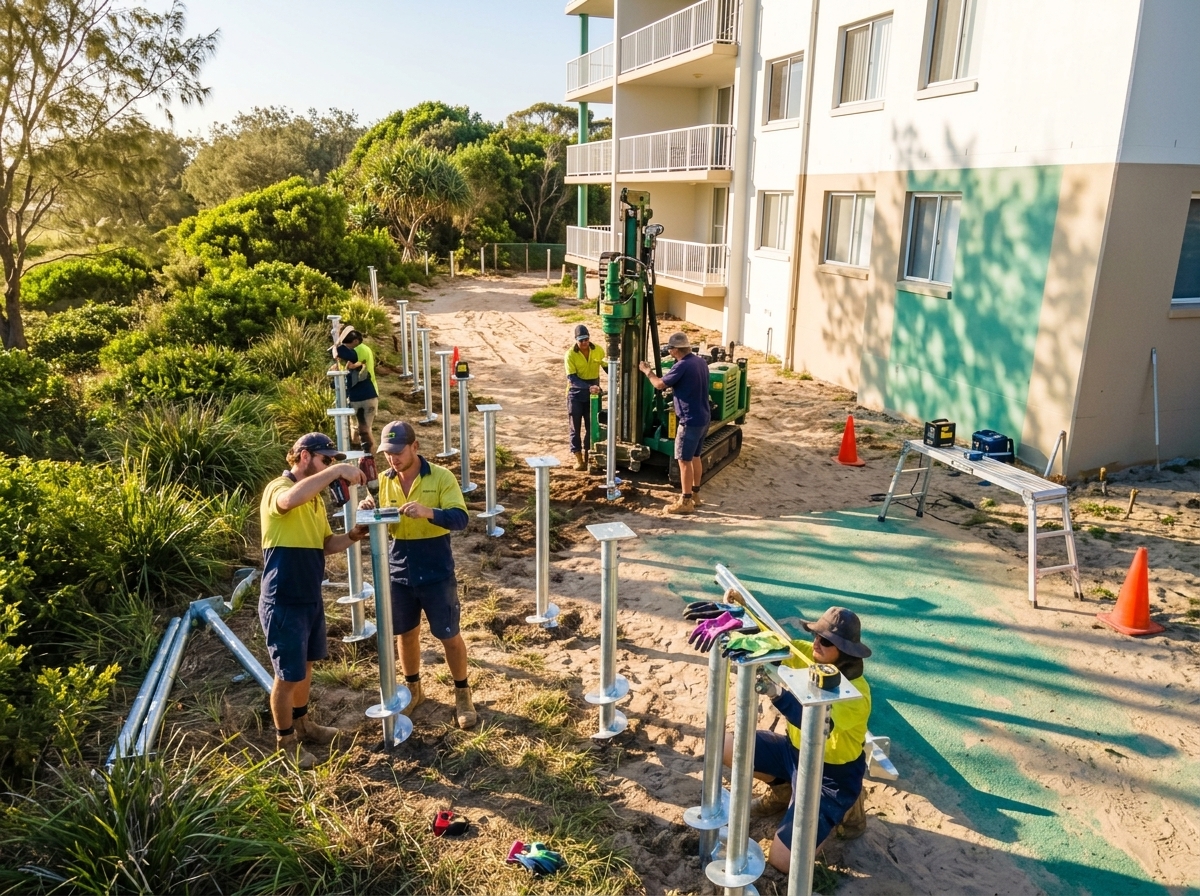
Let’s delve into the specific benefits that make helical piles the preferred choice in Australia.
Predictable Performance and Site Safety
Helical piles provide predictable performance through real-time torque monitoring. This offers project managers peace of mind, knowing that each pile meets the necessary load requirements from the start. The ability to verify capacity during installation reduces the risk of failure and ensures site safety.
Push piers lack this precise verification. You might face uncertainty about their load-bearing capabilities until the structure settles, which can lead to unforeseen complications.
Environmental Impact and Site Disturbance
Minimizing environmental impact is critical in today’s construction landscape. Helical piles shine in this respect as they require less soil excavation and leave minimal site disturbance. This makes them ideal for environmentally sensitive areas or projects with restricted site access, such as solar farms or pipeline installations.
Push piers often necessitate significant excavation and soil displacement, which can disrupt the surrounding environment. This increases the project’s ecological impact and might require additional remediation efforts.
Corrosion Design and Durability
The durability of a foundation system is paramount, especially in challenging Australian conditions. Helical piles are designed with robust corrosion protection strategies, often involving hot-dip galvanizing. This ensures longevity and reliability even in corrosive soils.
Push piers typically lack specialized corrosion protection, which might lead to deterioration over time. This can compromise the foundation’s integrity and lead to costly repairs or replacements down the line.
Selecting the Right Foundation Solution
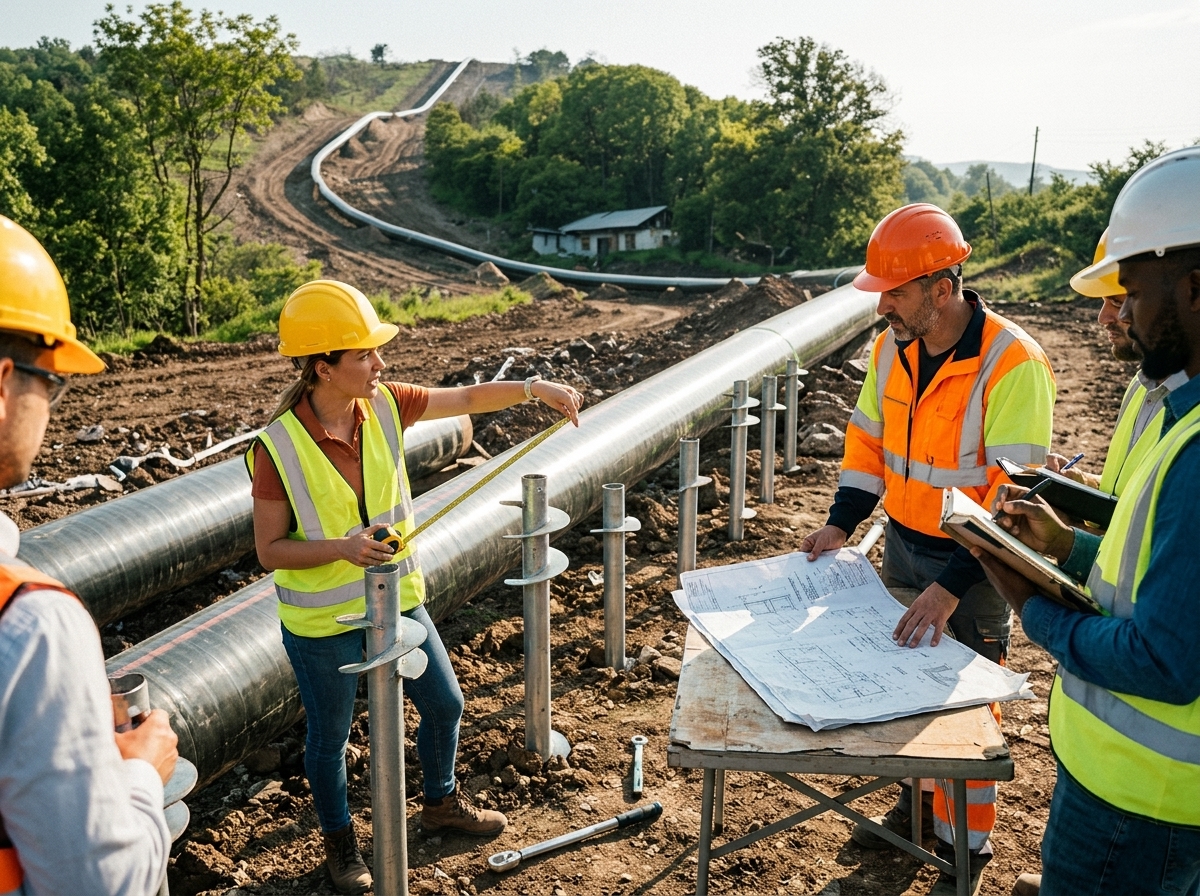
Choosing between helical and push piers requires careful consideration of several factors.
Evaluating Project Requirements
Understanding your project’s unique requirements is the first step in selecting the right foundation. Consider soil conditions, load requirements, and the project timeline. Helical piles are suitable for diverse terrains and offer immediate load-bearing capabilities, making them a versatile choice.
Push piers might be appropriate for projects where heavy structures provide the necessary driving force. However, their use is constrained by soil conditions and load weight.
Case Studies: Solar and Pipeline Projects
Helical piles have proven their worth in various Australian projects. In solar installations, their minimal site disturbance and rapid installation are key benefits. For pipelines, their ability to handle variable soils and provide stable support in remote locations makes them invaluable.
Push piers, while useful in some contexts, often fall short in such projects due to their slower installation and reliance on structure weight.
Scheduling and Cost Considerations
Project timelines and budgets are always top of mind. Helical piles offer significant advantages by reducing installation time and minimizing delays. Their immediate load-bearing capability helps keep projects on schedule and might reduce overall costs by eliminating the need for additional equipment or labor.
Push piers, with their slower installation and dependency on weight, can extend project timelines and increase costs, especially in challenging or remote environments.
Frequently Asked Questions
What are the main differences between helical piers and push piers?
Helical piers use a screw-like design with helical plates to anchor into the ground, providing immediate load-bearing capacity. Push piers are driven into the ground using hydraulic pressure and rely on the structure’s weight for stability.
Why are helical piles preferred in Australia?
Helical piles offer rapid installation, minimal site disturbance, and reliable performance across various soil conditions, making them ideal for projects in challenging Australian environments.
How do helical piles minimize environmental impact?
Helical piles require less excavation, leading to reduced soil displacement and minimal disruption to the surrounding environment, making them suitable for projects in sensitive areas.
What factors should be considered when choosing a foundation solution?
Consider soil conditions, load requirements, project timeline, and environmental impact when selecting between helical and push piers for your project.
Are helical piles more cost-effective than push piers?
While upfront costs can vary, helical piles often prove more cost-effective over time due to their rapid installation, immediate load-bearing capacity, and lower environmental impact, which reduces additional remediation expenses.
Last chance for 2026 pricing – secure your foundation solutions today.