Traditional concrete footings often slow projects down and disrupt sensitive sites. Ground screws Australia offers a proven alternative designed for rapid installation and immediate load-bearing, especially suited to reactive clay, coastal sand, and weathered rock conditions. In this guide, you’ll learn how engineered screw pile foundations comply with AS2159, use torque correlation for capacity verification, and support solar, transmission, and pipeline infrastructure with minimal ground disturbance.
Ground Screws vs Concrete Footings
When comparing ground screws to concrete footings, the differences are clear. Ground screws offer a faster, lower-impact solution. They excel in conditions where traditional methods struggle, delivering reliability and speed.
Performance in Australian Soils
In the diverse and challenging soils of Australia, ground screws shine. They adapt well to reactive clay, coastal sand, and weathered rock. Unlike concrete footings, ground screws avoid the need for extensive excavation. This adaptability allows you to tackle difficult soil conditions confidently.
Ground screws are installed using hydraulic drive motors, which screw them into the ground efficiently. This method ensures they reach the necessary depth and secure stable support. As a result, they perform reliably where concrete might fail due to soil variability.
By eliminating the need for heavy machinery and extensive site work, ground screws reduce both labor and installation time. This efficiency is a game-changer in locations with challenging soil conditions, keeping your projects on schedule and within budget.
AS2159 Compliance and Design
Compliance with Australian standards is critical. Ground screws meet AS2159, ensuring they adhere to the necessary design and verification requirements. This compliance provides peace of mind for engineers and project managers.
Ground screws are engineered with precision, ensuring they meet the stringent standards set forth in AS2159. The design process involves detailed soil analysis and geotechnical verification. This meticulous approach guarantees that your foundations are both safe and reliable.
With ground screws, you receive a foundation solution that not only meets compliance standards but also provides the assurance of quality and performance. This compliance ensures that your projects proceed smoothly, minimizing risks and delays.
Installation Time and Environmental Impact
Speed and minimal disruption are key advantages of ground screws. They reduce installation time significantly compared to concrete footings, which require curing. This rapid installation allows you to move forward with construction immediately.
Ground screws have a lower environmental impact by minimizing ground disturbance. They avoid the need for heavy excavation, preserving the natural state of the site. This eco-friendly approach is ideal for projects sensitive to environmental concerns.
By choosing ground screws, you not only expedite your construction timeline but also demonstrate a commitment to sustainability. This dual benefit positions your projects for success in today’s environmentally conscious world.
Ground Screw Systems in Infrastructure
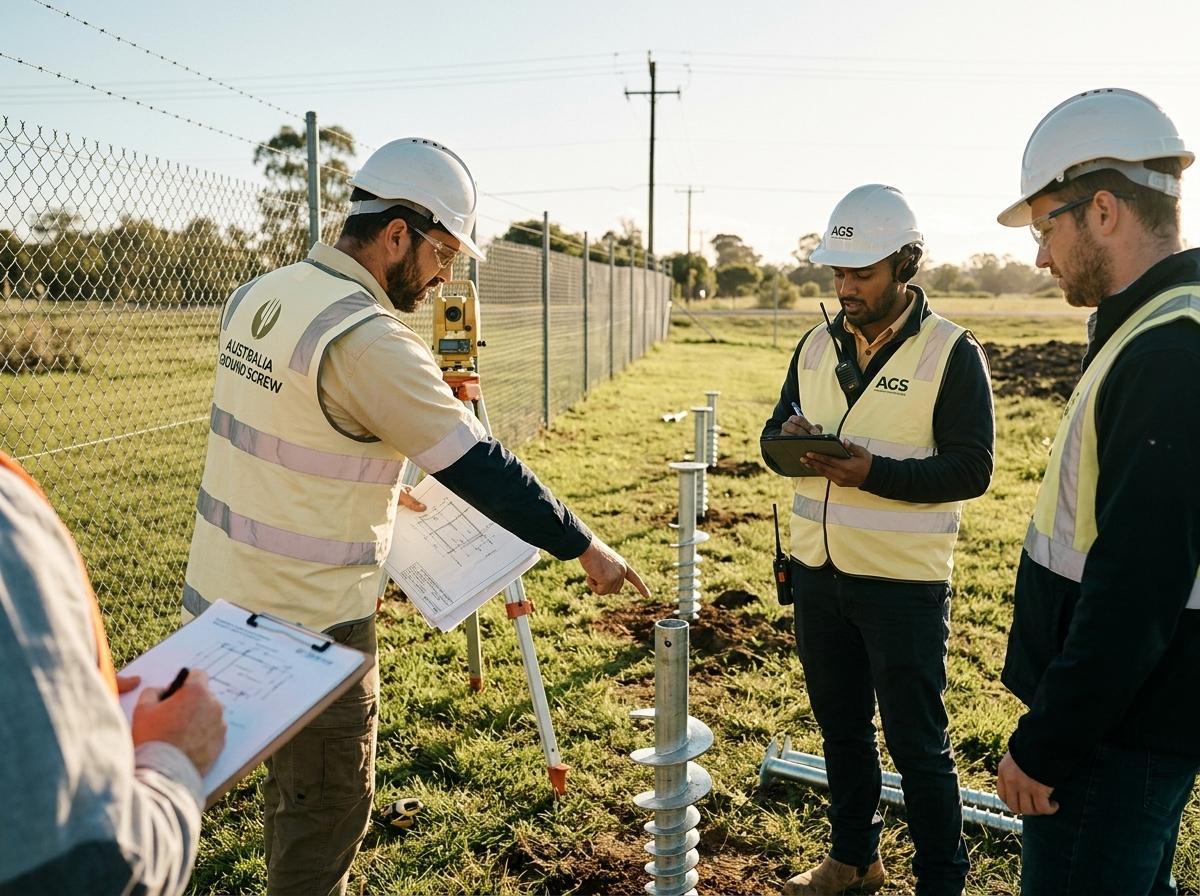
Ground screws play a vital role in infrastructure projects across Australia. Their versatility and reliability make them an excellent choice for various applications. Let’s explore how they benefit specific sectors.
Solar Farm Foundations Australia
Solar farms benefit immensely from ground screws. They provide a stable and efficient foundation solution, crucial for large-scale solar installations. Their quick installation keeps projects on track, vital in the fast-paced renewable energy sector.
Ground screws avoid the need for concrete batching and curing, allowing solar farms to progress rapidly from planning to operation. This efficiency reduces downtime and accelerates the path to energy generation.
By utilizing ground screws, solar farm developers can enhance project timelines and reduce environmental impact. The result is a more sustainable and cost-effective energy solution.
Transmission Line Footings
Transmission lines face unique challenges, often requiring foundations in remote or difficult-to-access areas. Ground screws are ideal, providing robust support where traditional methods struggle.
The ability of ground screws to adapt to various soil conditions ensures they perform reliably, even in challenging terrains. This adaptability reduces the need for extensive site preparation, keeping projects moving smoothly.
Ground screws offer a reliable and efficient foundation solution for transmission lines, ensuring stability and performance across diverse Australian landscapes.
Pipeline Supports Australia
For pipeline projects, stability and corrosion resistance are paramount. Ground screws deliver on both fronts, offering a dependable support system that withstands shifting soils and environmental challenges.
Their quick installation and immediate load-bearing capability reduce downtime, a critical factor in pipeline construction. This efficiency minimizes disruption and keeps projects on schedule.
Choosing ground screws for pipeline supports ensures a secure and reliable foundation, safeguarding your infrastructure investments against environmental factors and site variability.
Design and Verification
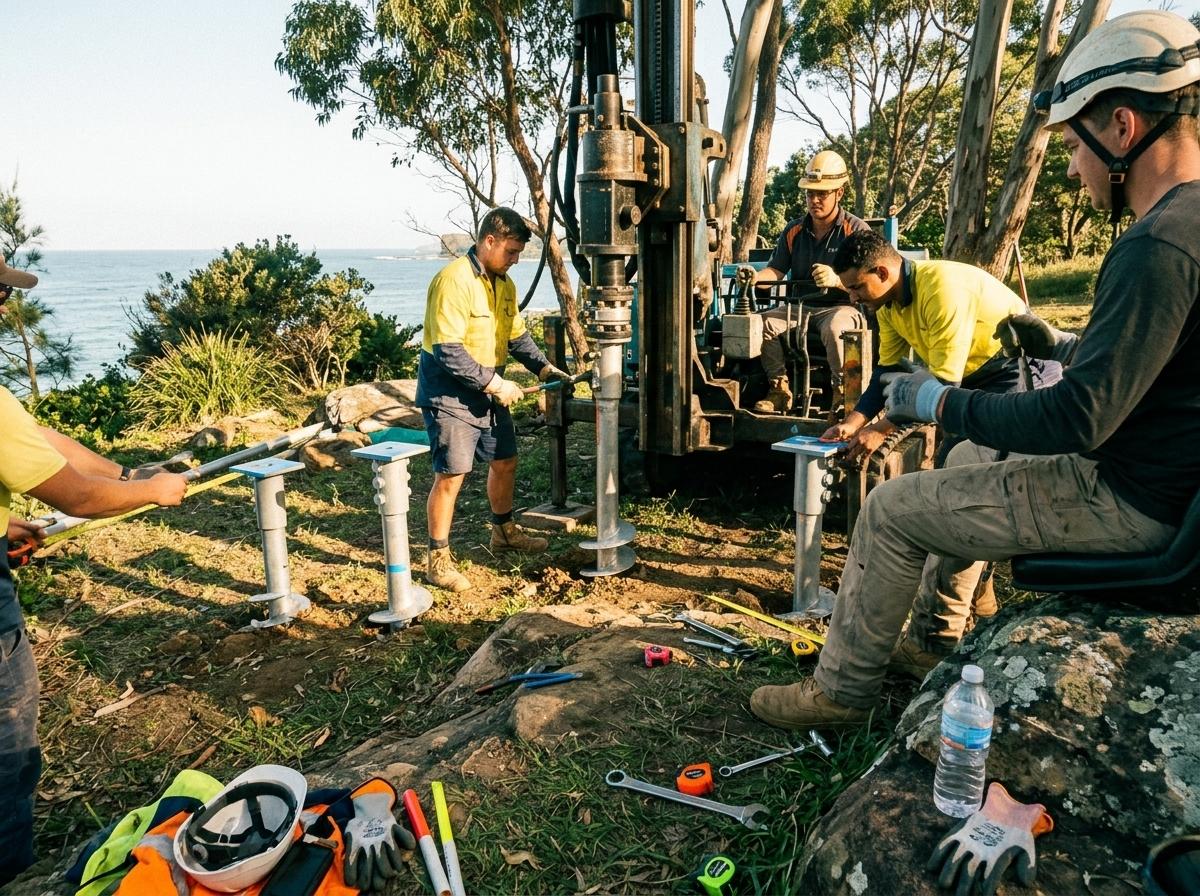
The design and verification of ground screw systems are integral to their success. Let’s explore how these processes ensure reliable foundation performance.
Pile Capacity Verification and Torque Correlation
Verification of ground screw capacity is achieved through torque correlation. This method allows for real-time quality assurance, ensuring that each screw pile meets the required standards.
By measuring installation torque, engineers can directly correlate it to the pile’s load capacity. This approach provides confidence in the foundation’s ability to support the intended loads, avoiding future issues.
Ground screws offer a robust and verifiable solution, ensuring project managers and engineers can trust the foundation’s performance from the outset.
No Excavation Foundations and Load-Bearing
Ground screws eliminate the need for extensive excavation. This feature not only reduces site disturbance but also accelerates the construction timeline. Immediate load-bearing capability allows projects to proceed without delay.
By avoiding heavy machinery and extensive site work, ground screws reduce labor and environmental impact. This efficiency translates into cost savings and a more sustainable construction process.
The ability to bear loads immediately after installation is a significant advantage. It positions ground screws as an ideal choice for projects requiring rapid deployment and minimal site disruption.
Hot-Dip Galvanised Corrosion Protection
Corrosion protection is crucial for long-lasting foundation performance. Ground screws are hot-dip galvanized, providing a durable and resistant coating that withstands harsh environmental conditions.
This protective layer ensures that ground screws remain reliable over time, reducing maintenance costs and extending the foundation’s lifespan. It’s a critical feature for projects facing challenging environmental factors.
The use of hot-dip galvanization positions ground screws as a superior choice for projects requiring long-term reliability and durability in foundation solutions.
Frequently Asked Questions
What are ground screws, and how do they work?
Ground screws are steel shafts with helical plates that, when driven into the ground, provide stable and reliable foundation support. They are installed using hydraulic drive motors, which screw them into the soil, ensuring they reach the necessary depth and secure a strong hold.
Are ground screws suitable for reactive clay soils?
Yes, ground screws are highly suitable for reactive clay soils. They adapt well to various soil conditions, providing stable support without the need for extensive excavation. This adaptability makes them ideal for challenging soil environments like reactive clays.
How do ground screws compare to concrete footings in terms of installation time?
Ground screws significantly reduce installation time compared to concrete footings. They eliminate the need for curing, allowing construction to proceed immediately after installation. This efficiency accelerates project timelines and reduces downtime.
What is the significance of torque correlation in ground screw installation?
Torque correlation is used to verify the load capacity of ground screws during installation. By measuring the installation torque, engineers can directly correlate it to the pile’s load capacity, providing real-time quality assurance and confidence in the foundation’s performance.
How does hot-dip galvanization protect ground screws from corrosion?
Hot-dip galvanization involves coating ground screws with a layer of zinc, providing excellent corrosion resistance. This process extends the lifespan of the screws, ensuring they remain durable and reliable in harsh environmental conditions.
Last chance for 2026 pricing – secure your foundation solutions today.