Traditional concrete foundations often stall projects when soils vary unexpectedly. You know the frustration: reactive clays swell, coastal sands shift, and weathered rock resists excavation. Engineered helical piles provide a practical solution by installing quickly with immediate load capacity and real-time torque verification. In this article, you’ll see how these screw piles recover schedules, reduce risks, and comply with AS 2159 for Australian infrastructure projects.
Learn more about helical piles and their applications.
Engineered Helical Piles in Variable Soils
When dealing with unpredictable ground conditions, engineered helical piles shine. They adapt well to diverse soil challenges without extensive site preparation or delays.
Benefits in Reactive Clay Foundations
Reactive clay soils are notorious for swelling and shrinking, which can disrupt traditional foundations. Helical piles serve as a robust solution. They penetrate deep into stable layers, bypassing the unstable clay. This ensures a steady foundation and protects your project from soil movement. Additionally, the immediate load capacity means no waiting for curing, saving precious time.
Coastal Sand Foundation Solutions
Coastal sands pose a unique challenge with their tendency to shift and erode. Helical piles anchor securely into these sands, providing a reliable foundation. Their installation process minimizes site disturbance, crucial for maintaining the natural coastal environment. Plus, with no need for extensive excavation, projects proceed swiftly, reducing the risk of delays.
Tackling Weathered Rock Challenges
Weathered rock can be a formidable obstacle. Helical piles cut through these layers with precision, establishing a firm hold. This capability eliminates the need for heavy equipment and complex excavation. It allows for streamlined installation, translating to fewer disruptions and a more predictable timeline.
Installation Process and Schedule Recovery
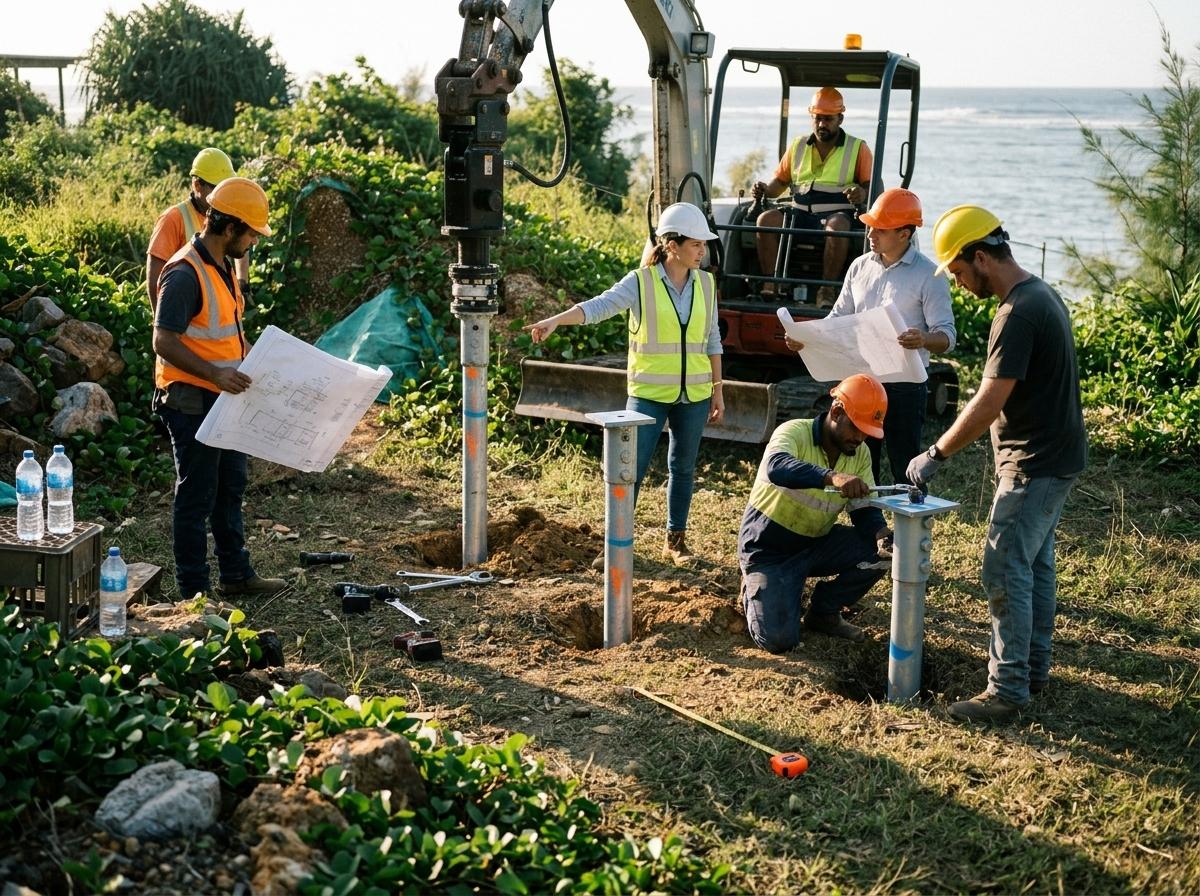
Engineered helical piles excel in recovering lost time on infrastructure projects, providing immediate support once installed.
Immediate Load Capacity and No Curing Time
One of the standout advantages of helical piles is their immediate load capacity. Unlike traditional methods that require curing time, these piles are ready for use right after installation. This means you can proceed with construction activities without delays, keeping your project on schedule.
Torque to Capacity Correlation and Load Testing
The torque-to-capacity correlation offers real-time quality assurance. By monitoring installation torque, engineers can verify the load capacity instantly. This live feedback ensures each pile meets the required standards, eliminating the guesswork and need for later testing.
Reduced Ground Disturbance in Remote Site Construction
In remote locations, minimizing disturbance is crucial. Helical piles require less excavation, reducing environmental impact. Their installation process is efficient, using smaller, more mobile equipment. This allows for quick setups, even in hard-to-reach areas, ensuring minimal disruption to the surrounding environment.
Helical Piles vs Concrete: A Comparison
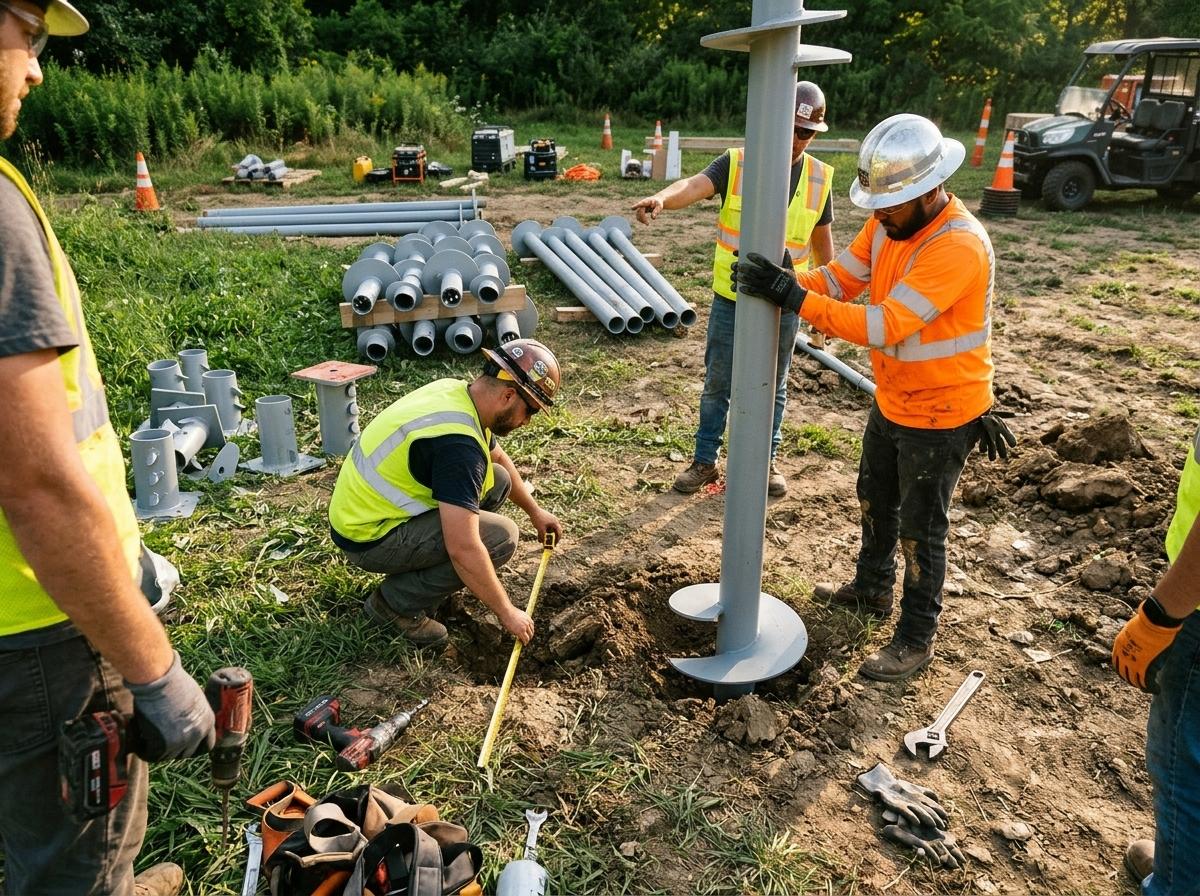
Comparing helical piles with traditional concrete foundations reveals clear advantages, particularly in challenging Australian conditions.
Predictable Foundation Performance
Helical piles offer predictable performance due to their real-time verification during installation. This contrasts with concrete, which can be affected by curing conditions and requires post-installation testing. The predictability of helical piles means fewer surprises and smoother project execution.
Environmental Impact of Foundations
Helical piles have a lower environmental footprint. They involve minimal excavation, reducing soil disturbance and preserving natural habitats. In comparison, concrete foundations often require significant earthworks, which can disrupt ecosystems and lead to greater environmental impacts.
Case Studies and In-house Manufacturing Benefits
Successful case studies highlight the effectiveness of helical piles across various projects, from solar farms to pipeline supports. In-house manufacturing ensures consistent quality and reliable supply, crucial for maintaining project timelines. This control over production further enhances the reliability and performance of helical pile systems.
Frequently Asked Questions
What are helical piles and how do they work?
Helical piles are steel shafts with helical plates designed to be screwed into the ground. They transfer load into deeper, competent soil layers, offering immediate load capacity without the need for curing time.
How do helical piles compare to concrete foundations?
Helical piles provide faster installation and immediate use, whereas concrete requires curing time. They also cause less environmental disturbance and offer real-time load capacity verification during installation.
Can helical piles be used in all soil types?
Helical piles are versatile and can be used in various soil types, including reactive clays, coastal sands, and weathered rock. However, they may not be suitable for solid rock or dense boulders without additional measures like pilot holes.
What is the environmental impact of using helical piles?
Helical piles have a lower environmental impact due to minimal excavation and reduced site disturbance. This makes them a more sustainable choice compared to traditional concrete foundations.
How does torque-to-capacity correlation work in helical piles?
Torque-to-capacity correlation involves monitoring the installation torque to determine the load capacity of each pile in real-time. This ensures immediate verification and supports the structural integrity of the foundation.