Common Foundation Challenges in Australian Infrastructure—and How Helical Piles Avoid Them
Foundation failures in Australian infrastructure projects often stem from unpredictable soil conditions and environmental stresses. You know how expansive clays, coastal sands, and collapsible soils challenge traditional foundations, causing delays and cost overruns. Helical piles Australia offers deep foundation solutions engineered to handle these risks, delivering rapid installation, verified load capacity, and minimal site disturbance. Keep reading to learn how patented helical piling systems can secure your next project with confidence and compliance.
Foundation Challenges in Australian Infrastructure
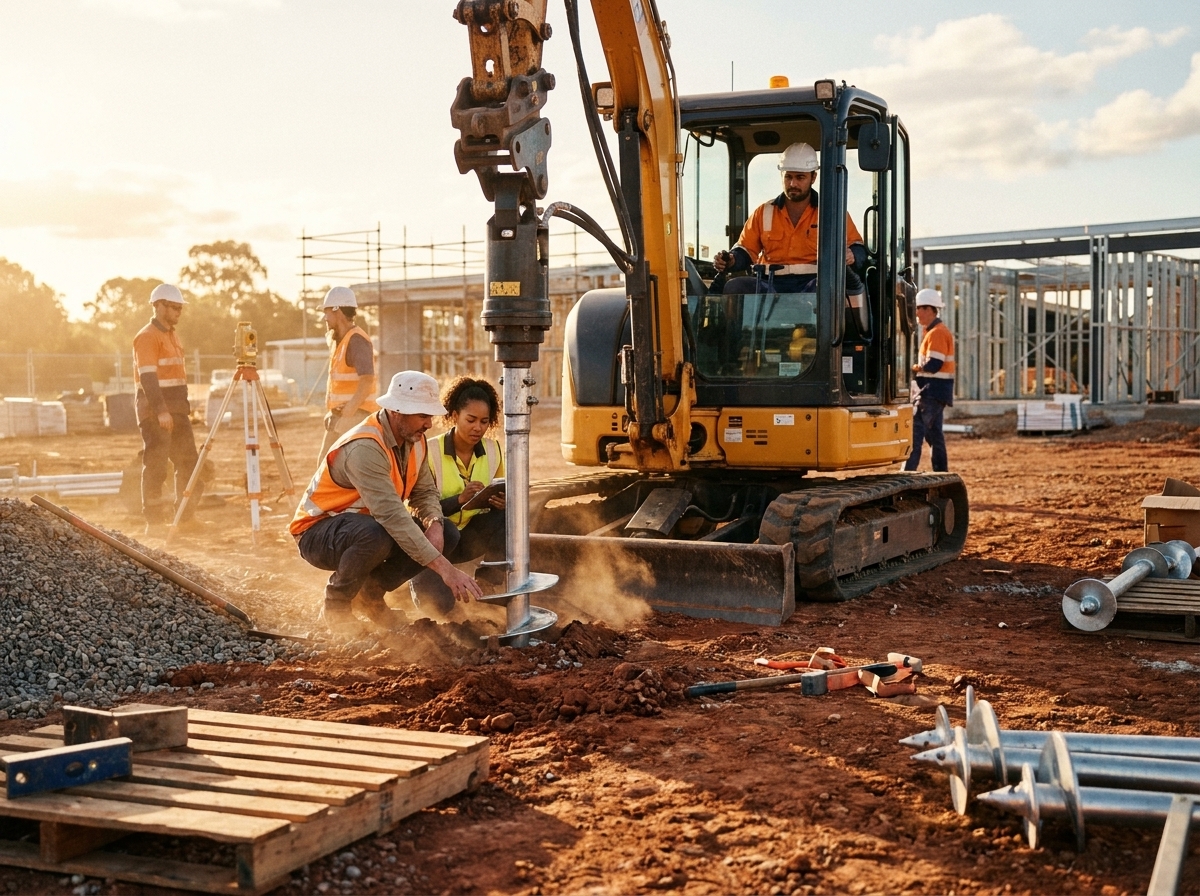
Dealing with the unique soil types across Australia poses significant challenges for infrastructure projects. Let’s explore two of the most common issues and their solutions.
Navigating Expansive Clay Risks
Expansive clays are particularly tricky because they swell when wet and shrink when dry. This constant movement can damage foundations if not properly managed. You may have seen roads and buildings experiencing cracks due to this issue.
Understanding expansive clays is crucial for any project manager. These soils can change in volume by up to 30% depending on moisture levels. When foundations are laid on these soils without proper measures, it can lead to severe structural issues. One effective approach is to use deep foundations, like helical piles, that anchor below the clay layer. This ensures stability regardless of surface conditions.
Helical piles offer a unique advantage here. They transfer the load to deeper, more stable soil, bypassing the problematic clay. By securing the foundation below the active zone, your projects are less prone to damage from soil movement. This method not only saves time but also cuts down on repair costs in the long run.
Overcoming Coastal Sand Instability
Coastal sands present another set of challenges. Their loose structure makes them prone to erosion and shifting, especially in stormy conditions. If your project is near the coast, these factors can’t be ignored.
Coastal sands lack the cohesion found in other soils, making them unstable for traditional foundations. When building in these areas, it’s essential to plan for potential erosion and shifting. Helical piles come into play here, too. By anchoring into more compact layers beneath the sand, they provide a sturdy base.
Using helical piles in sandy coastal regions helps reduce the risk of structural failure. They ensure that the foundation remains stable even during adverse weather conditions. Plus, their design allows for easy adaptation to the unique challenges posed by sandy terrains.
Helical Piles: A Deep Foundation Solution
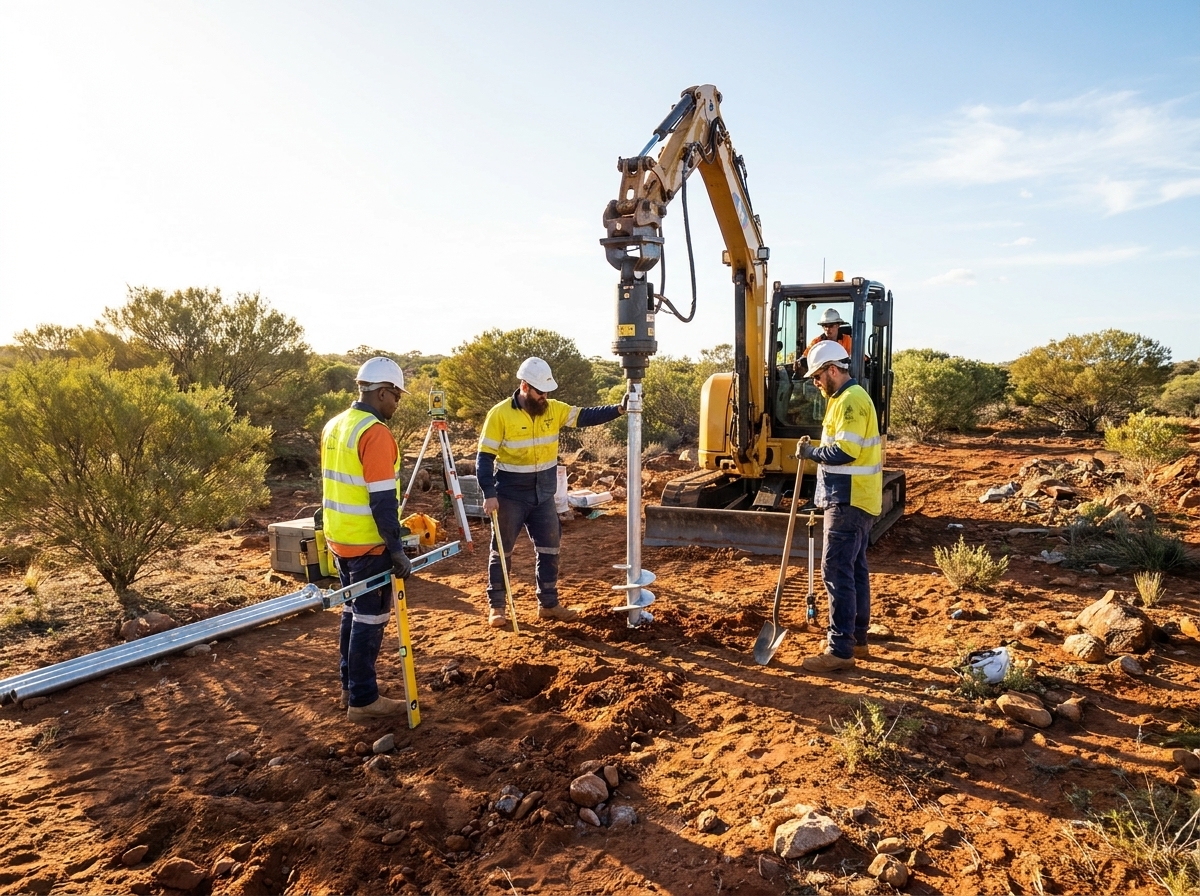
Helical piles offer a reliable solution for projects across varied Australian terrains. Let’s dig into what sets them apart and how they can benefit your design process.
Features of Patented Helical Systems
Helical piles are not just a replacement for traditional foundations; they are a superior choice in many cases. Their unique design ensures they handle diverse conditions effectively.
These piles consist of steel shafts with helical plates, resembling a giant screw. This design allows them to be screwed into the ground with precision. Once installed, they provide immediate load support, eliminating the need for concrete curing. This feature is particularly useful in areas where time and weather conditions are a concern.
Another standout feature is their adaptability. Helical piles can be customized based on the soil conditions and load requirements. Whether dealing with expansive clay or coastal sands, the design can be adjusted to ensure maximum stability. This flexibility makes them a go-to option for various projects, from solar farms to transmission lines.
Benefits of Torque Monitoring in Design
Torque monitoring is an integral part of the helical pile installation process. This technology ensures that each pile is installed correctly, offering peace of mind about its load-bearing capacity.
During installation, torque monitoring measures the resistance faced by the pile as it goes into the ground. This data is critical because it directly correlates to the pile’s load capacity. By monitoring torque, you can verify that each pile can support the intended weight, ensuring safety and reliability.
The torque-to-capacity correlation provides real-time feedback during installation, allowing for adjustments as needed. This level of precision is crucial for projects requiring strict compliance with AS 2159 standards. It not only ensures safety but also streamlines the verification process, reducing delays and improving overall project efficiency.
Environmentally Friendly and Efficient Foundations
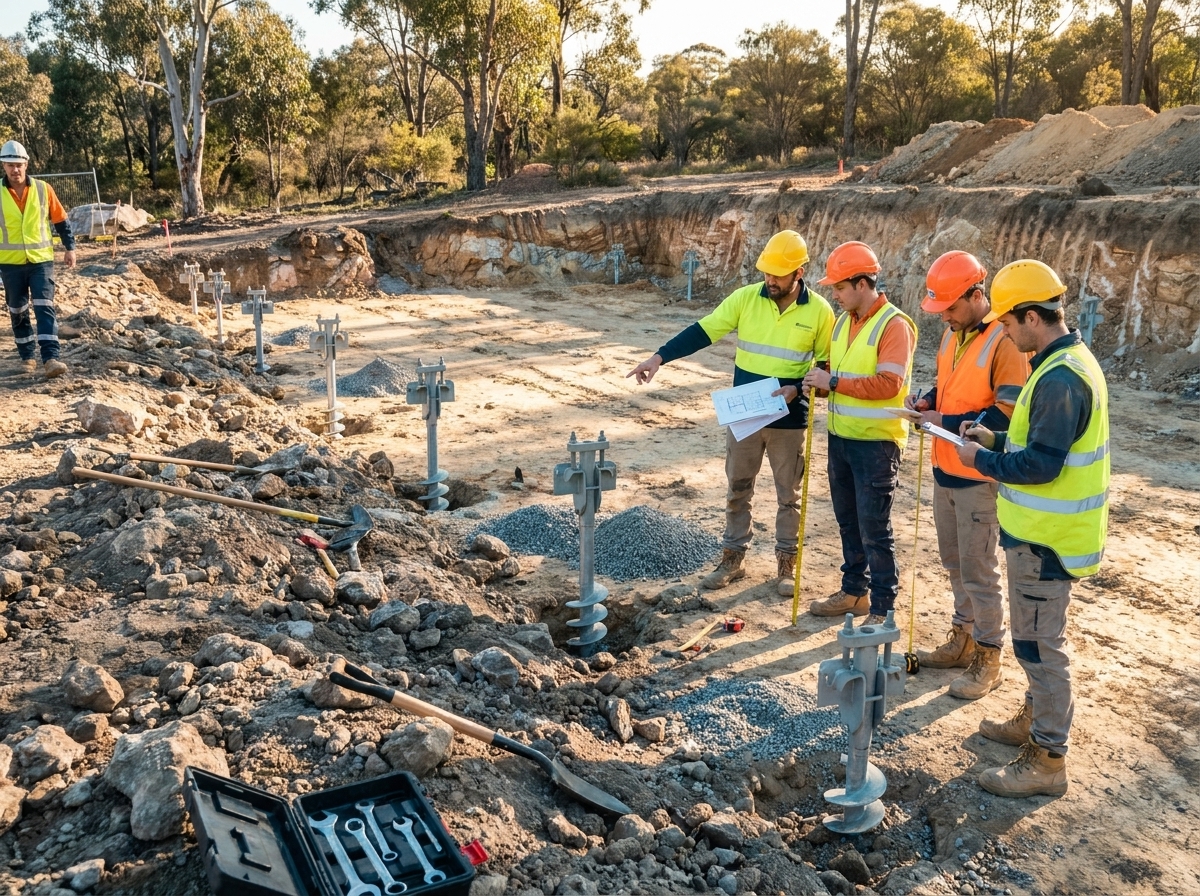
In today’s construction landscape, sustainability is as important as stability. Helical piles offer both, making them a smart choice for eco-conscious projects.
Rapid Installation for Minimal Site Disturbance
One of the standout benefits of helical piles is their rapid installation. Unlike traditional methods, which may require extensive excavation and preparation, helical piles are quick to install. This speed is not just a time-saver but also an environmental benefit.
Rapid installation means less machinery on-site and reduced fuel consumption, leading to a lower carbon footprint. This approach significantly minimizes site disturbance, preserving the natural landscape. For projects in sensitive areas, this can be a deciding factor.
Moreover, the quick setup reduces labor costs and allows for faster project completion. With no need for concrete curing, structures can be built immediately after installation. This efficiency is a game-changer, especially for projects with tight deadlines or in remote locations where every day counts.
Ensuring Low Carbon Impact with Galvanised Steel
Sustainability in construction extends beyond reducing site impact. The materials used also play a vital role in minimizing environmental effects. Helical piles, made from galvanised steel, are designed with this in mind.
Galvanised steel provides a durable, long-lasting solution that withstands harsh conditions without the need for frequent replacements. This durability means fewer resources are used over the lifetime of the structure. By choosing helical piles, you’re opting for a foundation that aligns with sustainable building practices.
Additionally, the use of galvanised steel ensures that the piles resist corrosion, maintaining their integrity over time. This longevity, combined with the low-impact installation process, makes helical piles an environmentally friendly choice for modern infrastructure projects.
Learn how to avoid costly foundation failures with expert insights.