Concrete footing failures continue to cause costly delays and structural risks in Australian infrastructure projects. You face unpredictable ground conditions like reactive clays, expansive heave, and acid sulfate soils that challenge traditional foundations. This post explains why concrete footings often fail and how helical piles Australia offers a faster, more reliable foundation alternative designed to handle these difficult soils with immediate load capacity and torque verification.
Common Causes of Concrete Footing Failures
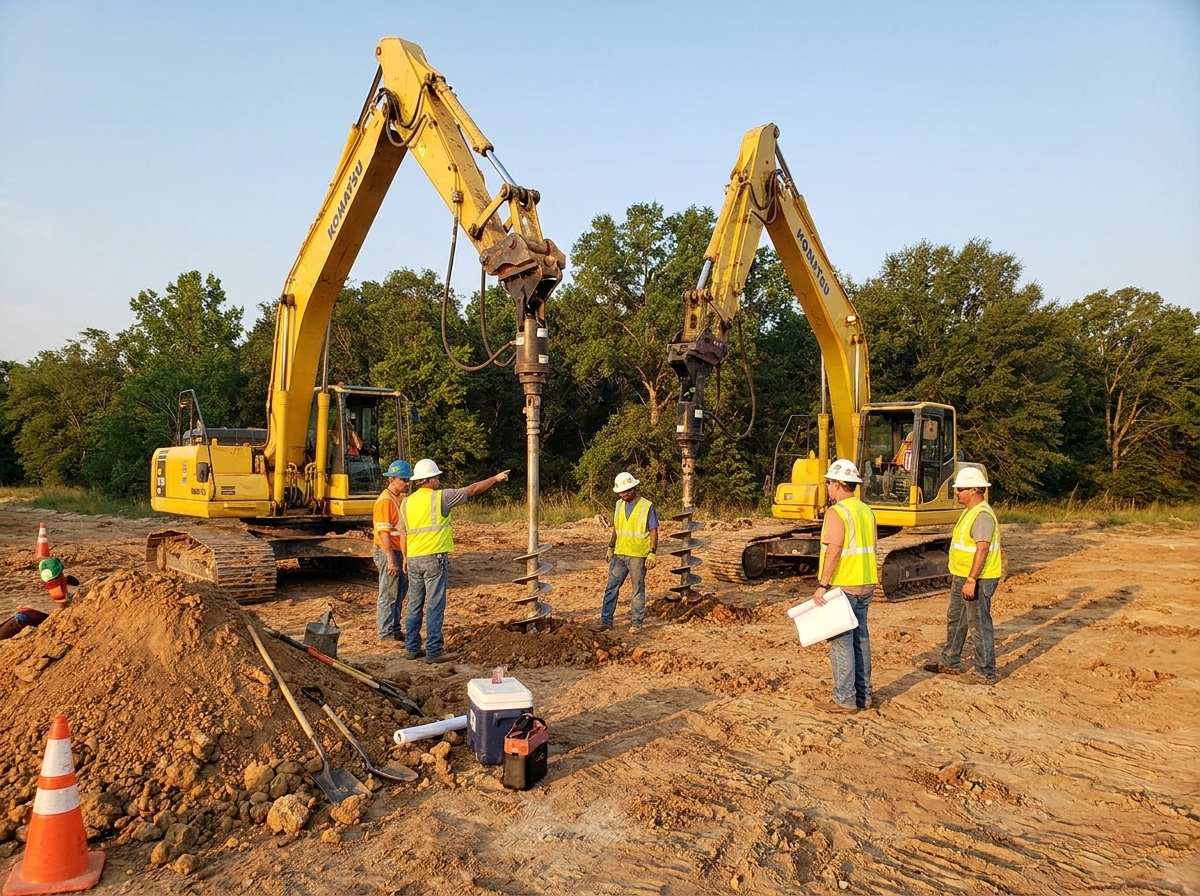
Understanding why concrete footings fail is essential to avoiding costly mistakes in construction. Let’s explore the typical challenges you might face on Australian sites.
Difficult Ground Conditions
Ground conditions in Australia can be quite challenging. You often deal with soils that vary greatly in composition and stability. This variability leads to issues with traditional foundation methods.
Reactive clay is a common problem. It expands and contracts with moisture changes, causing footings to shift. This movement can lead to cracks and instability, undermining the entire structure. Sand and gravel might seem stable, but if not managed well, they can wash away, eroding the foundation.
Moreover, some soils have high sulfate content. This can corrode concrete over time, weakening the footing. It’s crucial to assess these conditions before starting any project.
Expansive Clay Heave
Expansive clays pose a major risk. They expand when wet and shrink when dry. This constant movement is tough on concrete footings. It can lead to significant structural damage if not addressed.
During wet seasons, the soil swells, pushing against the footing. In dry periods, the clay shrinks, causing the footing to settle unevenly. This movement results in cracks and shifts. Over time, these shifts can lead to costly repairs or a complete rebuild.
Preventing clay heave requires understanding soil behavior and planning accordingly. Solutions like moisture barriers or alternative foundation types can mitigate these risks.
Collapsible Soils and Their Impact
Collapsible soils are another challenge. They appear stable when dry but lose strength when wet. This sudden loss of stability can cause footings to settle or collapse.
When water infiltrates these soils, they compact and reduce in volume. This process undermines the footing, leading to uneven settlement. Buildings in areas with collapsible soils often experience cracks and structural issues.
Proper soil analysis is key. Identifying collapsible soils early allows for appropriate foundation design, reducing the risk of failure.
Helical Piles: The Predictable Alternative
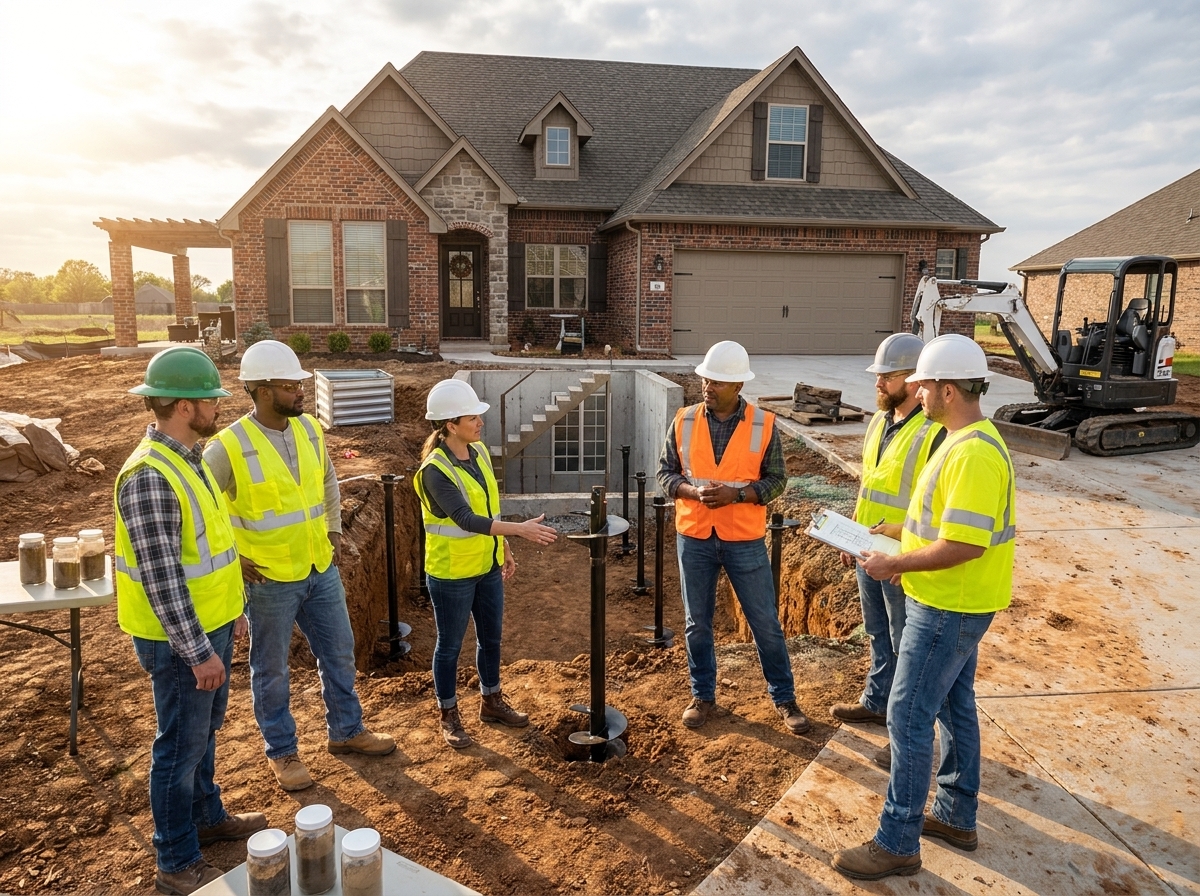
Faced with these challenges, you need a reliable solution. Helical piles offer a modern alternative that addresses the pitfalls of traditional footings.
Fast Foundation Installation
Speed is a major advantage of helical piles. Unlike concrete, which needs time to cure, helical piles can be installed and used immediately. This swift process reduces construction time significantly.
With no need for excavation or heavy machinery, installation is quick and efficient. This is especially beneficial in remote or constrained sites where traditional methods struggle.
By choosing helical piles, you save time and reduce project delays, keeping everything on schedule.
Immediate Load Capacity and Torque Verification
Helical piles offer immediate load-bearing capability. This feature allows construction to proceed without waiting for curing. You can begin building as soon as the piles are in place.
Torque verification during installation ensures that each pile is installed to the correct specifications. This real-time data provides confidence in the foundation’s performance.
This combination of immediate load capacity and verification reduces uncertainty, offering a stable base for your projects.
Corrosion Protection in Reactive Soils
Reactive soils can accelerate corrosion, but helical piles are designed to withstand these conditions. They are often coated to provide extra protection against corrosive elements.
In addition, the design of helical piles minimizes soil disturbance, reducing the exposure of metal to harmful elements. This durability is essential for long-term projects in challenging environments.
By using helical piles, you ensure longevity and reliability in reactive soils, minimizing maintenance needs.
Advantages for Australian Infrastructure Projects
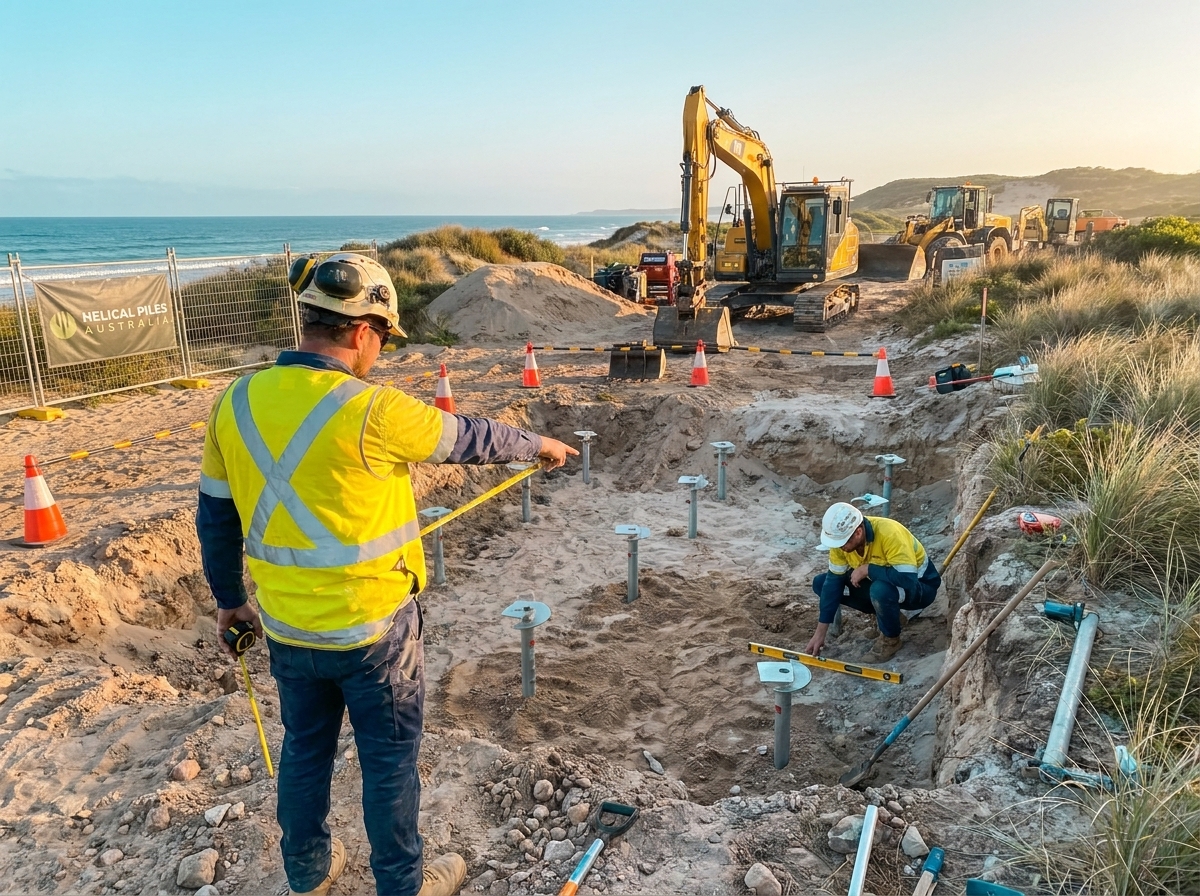
Helical piles offer several advantages specific to Australia’s construction needs. Let’s explore how they benefit different infrastructure projects.
Solar Farm Foundations and Reliability
Solar farms require stable foundations across large areas. Helical piles provide consistency and reliability, accommodating the natural terrain without extensive excavation.
Their design allows for fast installation, even in remote locations. This speed ensures that solar projects can be completed on time, maximizing energy production.
By using helical piles, you enhance the reliability of solar farm foundations, ensuring long-term success.
Pipeline Supports and Remote Site Solutions
Pipelines often traverse challenging terrains. Helical piles offer stable support in these conditions, preventing movement and damage.
Their corrosion-resistant properties make them ideal for long-term pipeline projects. Additionally, the ability to install them without heavy equipment is a significant advantage in remote areas.
With helical piles, pipeline supports are stable and secure, ensuring efficient energy transportation.
Transmission Line Footings and Environmental Benefits
Transmission lines require sturdy footings that can withstand environmental stressors. Helical piles provide this strength while minimizing ground disturbance.
Their installation does not require large-scale excavation, preserving the natural landscape. This approach aligns with the increasing demand for environmentally friendly construction practices.
Helical piles offer a sustainable solution for transmission lines, combining strength with minimal environmental impact.
In conclusion, when traditional footings fail, helical piles provide a faster, more reliable alternative. By addressing ground conditions and offering immediate load capacity, they ensure project success in Australia’s unique environments.