Pairing solar panel mounting rails Australia with helical pile foundations cuts installation time by up to 50%. Traditional concrete bases often slow projects with curing delays and unpredictable soil challenges common in Australian sites. Helical piles provide immediate load capacity, verified by torque measurements, and adapt to reactive clays, coastal sands, and rocky ground. This combination reduces risk and keeps your schedule on track while meeting AS 2159 and AS/NZS 1170 standards. Read on to see how integrating these systems improves your solar farm mounting system’s reliability and speed. For more insights on optimizing Ground Mount Solar Installation, discover how helical pile foundations enhance efficiency.
Pairing Rails with Helical Piles
When it comes to solar projects, the choice of foundation is pivotal. Helical piles present an attractive solution, particularly when paired with solar panel mounting rails Australia. This combination not only reduces installation time but also ensures reliability across various challenging terrains.
Benefits of Helical Pile Foundations
Helical piles stand out due to their adaptability and speed. Immediate load capacity is one of their key benefits. Unlike concrete which requires curing time, helical piles can be installed quickly, allowing projects to progress without delay. This is especially crucial in areas with reactive clays or coastal sands, where traditional methods may falter.
Another advantage is adaptability to diverse soil conditions. In Australia, where soil types can vary greatly, having a foundation system that can adjust is invaluable. Whether dealing with clay, sand, or rocky ground, helical piles provide the necessary stability and support. Their installation process involves minimal ground disturbance, making them environmentally friendly and less disruptive to the site.
Accelerating Solar Installation Timelines
Speed is everything in solar projects. Helical piles cut installation times by up to 50% compared to concrete. This rapid setup is due to the absence of curing and the straightforward installation process. With fewer delays, projects can adhere to tight schedules, benefiting stakeholders and investors alike.
Another factor is the predictability in performance. Traditional methods often come with uncertainties regarding soil conditions and curing times. With helical piles, you get consistent results verified through torque measurements. This reliability translates into fewer surprises and more on-time completions, making them ideal for utility-scale solar installations.
Maintaining Compliance in Australian Conditions
In Australia, compliance with standards such as AS 2159 and AS/NZS 1170 is non-negotiable. Helical piles are engineered to meet these requirements, ensuring that your project adheres to local regulations. This compliance not only safeguards the project but also enhances its credibility and acceptance.
Helical piles also offer corrosion protection, essential for longevity. By following standards like AS 4680 for galvanizing, these foundations withstand the test of time. This durability is crucial in coastal or reactive clay environments where corrosion can be a significant challenge.
Engineering Considerations for Solar Foundations
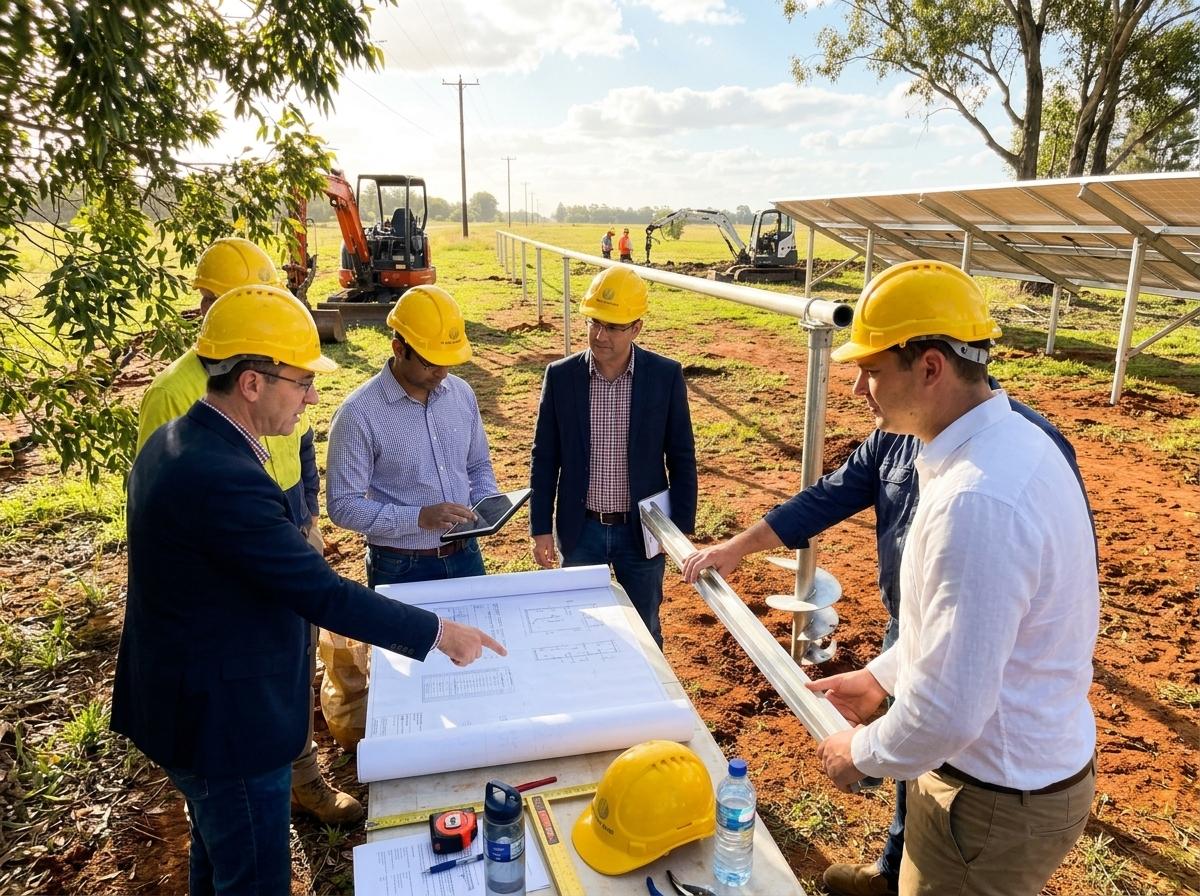
Engineering a reliable solar foundation involves understanding the site’s unique challenges. Whether it’s reactive clay or coastal sand, each condition demands a tailored approach. Helical piles offer the flexibility and strength needed to address these conditions effectively.
Addressing Reactive Clay and Coastal Sands
Reactive clay poses a significant challenge due to its tendency to expand and contract. Helical piles counter this by providing a deep anchoring solution that stabilizes the foundation. Their design allows for movement without compromising the structure’s integrity, crucial in maintaining the solar farm’s reliability.
Coastal sands, on the other hand, require foundations that can resist shifting and erosion. Helical piles, with their screw-like design, anchor securely even in loose, sandy soils. This ensures the solar panel mounting system remains stable, providing consistent energy output without interruptions.
Rock Refusal and Remote Site Strategies
Rock refusal can halt traditional foundation methods, but not helical piles. They are capable of penetrating rocky substrates with minimal resistance, thanks to their robust design. This capability is essential for sites where rock presence is prevalent, allowing for reliable foundation installation.
For remote sites, where access is limited and logistics challenging, helical piles provide an efficient solution. Their lightweight materials and easy installation reduce the need for heavy machinery, making them ideal for hard-to-reach locations. This results in lower transportation costs and quicker setup times.
Compliance with Australian Standards
Meeting Australian standards is a critical aspect of any infrastructure project. Helical piles are designed to comply with AS 2159 and AS/NZS 1170 standards, ensuring that your solar installation is both safe and efficient. This compliance is achieved through rigorous engineering and testing, guaranteeing performance under various conditions.
Corrosion protection is another compliance factor. Helical piles follow AS 4680 standards for galvanizing, offering long-term protection against environmental factors. This ensures the foundation’s longevity, crucial for the solar farm’s overall lifespan.
Requesting a Design Review
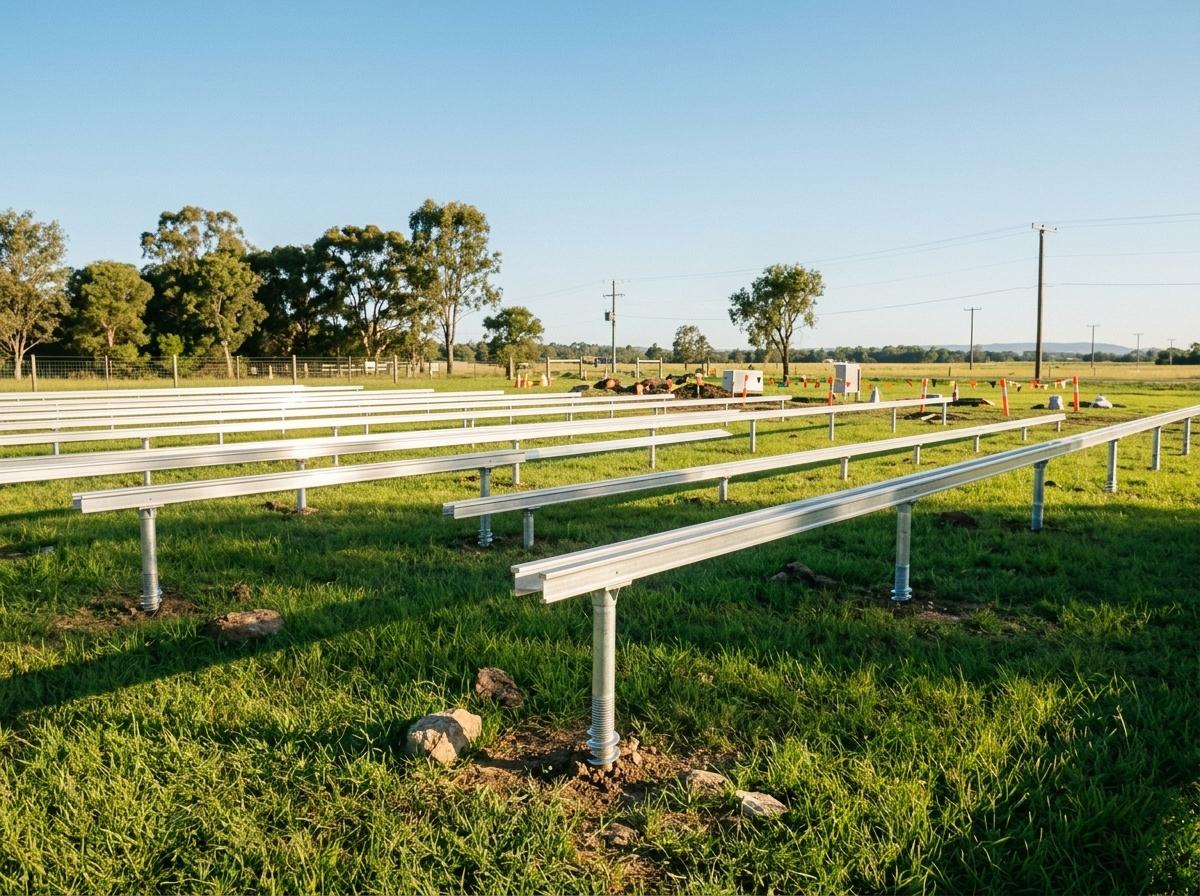
To ensure your solar project is on track, a thorough design review is essential. This process evaluates the feasibility and efficiency of integrating helical piles with your solar panel mounting system.
Preliminary Solar Piling Plan and Budget
Begin with a preliminary plan that outlines the project’s scope, site conditions, and preliminary budget. This plan should include an assessment of soil conditions, load requirements, and any potential obstacles. With a clear understanding of these factors, a more accurate budget can be developed, reducing the risk of unforeseen costs.
Integrating Rails with Helical Piles
The integration of solar rail mounting systems with helical piles should be seamless. This involves careful planning and engineering to ensure that the two components work together effectively. By aligning the rails with the helical piles, you create a robust and stable foundation that supports the entire solar array.
Contact Our Engineering Team
For detailed assistance and expert advice, contact our engineering team. We provide tailored solutions that meet your specific project needs, ensuring that your solar installation is both efficient and compliant. Our team is ready to assist you with all aspects of foundation design and implementation, from initial consultation to project completion.
Frequently Asked Questions
What are helical piles, and how do they work?
Helical piles are steel shafts with helical plates that are screwed into the ground, providing immediate load-bearing capability. They adapt to various soil conditions, offering stability and support for solar installations.
Why choose helical piles over concrete foundations?
Helical piles offer faster installation, immediate load capacity, and adaptability to challenging soils, reducing project delays and ensuring compliance with Australian standards.
How do helical piles maintain compliance in Australia?
Helical piles adhere to AS 2159 and AS/NZS 1170 standards, ensuring safety and performance. They also follow AS 4680 for corrosion protection, enhancing durability in diverse environments.
Can helical piles be used in coastal areas?
Yes, helical piles are suitable for coastal areas as they provide secure anchoring in sandy soils and offer corrosion resistance, making them ideal for such environments.
How do I start a design review for my solar project?
Begin with a preliminary plan that assesses site conditions and budget. Contact our engineering team for expert guidance on integrating helical piles with your solar panel mounting system.
Last chance for 2026 pricing – secure your foundation solutions today.