Concrete footings have long been the go-to solution for solar panel ground mounting kits in Australia, but they come with notable delays and site disturbance. Helical piles offer a practical alternative, installing up to 50% faster without sacrificing compliance with Australian standards like AS2159 and AS/NZS 1170. This article breaks down how each foundation type performs across common Australian soils, helping you make informed decisions for your next solar farm foundation. For more information on ground mount systems, visit this link.
Understanding Solar Ground Mounts
When it comes to solar panel ground mounting kits in Australia, the choice of foundation can significantly impact project timelines and environmental outcomes. Let’s explore the advantages of helical piles.
Helical Piles for Solar Projects
Helical piles deliver superior performance and faster installation. These piles can be installed rapidly, minimizing site disruption. Unlike traditional methods, they require no curing time, allowing immediate load-bearing capacity.
Their design ensures reliable performance in various soil types, making them suitable for Australian conditions. This means you can maintain your project schedule even in challenging environments. With helical piles for solar projects, you’re investing in efficiency and long-term reliability.
Screw Piles vs Concrete Footings
Comparing screw piles to concrete footings reveals clear benefits. Concrete footings involve excavation, curing, and potential delays. Screw piles, however, install faster, reducing labor by up to 40%.
Screw piles also excel in environmental considerations, requiring no heavy machinery, which lessens ground disturbance. This makes them a more sustainable choice, aligning with modern construction needs.
Australian Soils and Standards
Understanding the diverse Australian soils is crucial for solar farm foundations. Helical piles are engineered to comply with standards like AS2159 and AS/NZS 1170, ensuring they withstand the unique challenges posed by reactive clay and coastal sands.
Their adaptability means they can meet various load requirements while remaining compliant. For more on soil suitability, check out solar ground mount kits.
Installation and Design Considerations
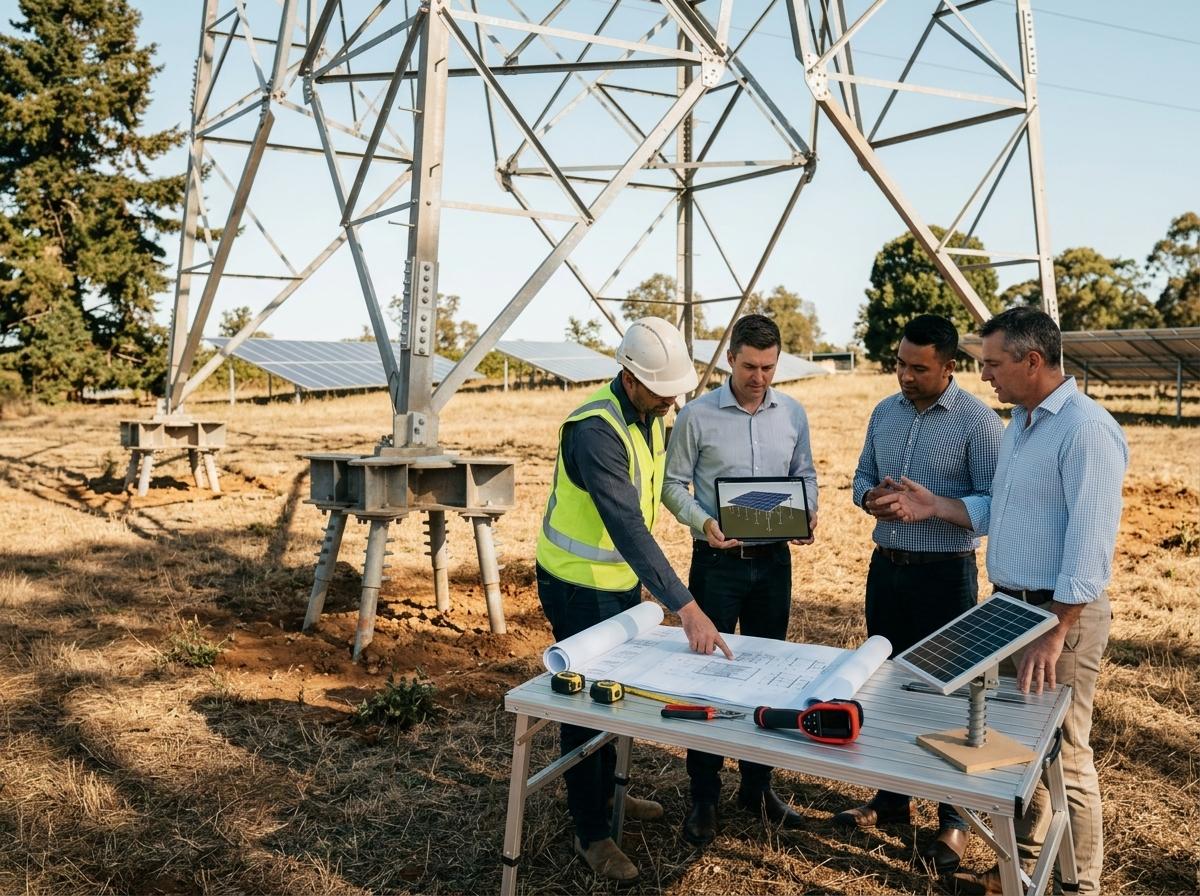
Choosing the right foundation involves understanding installation speed, load capacity, and environmental impact. Here’s what to consider:
Immediate Load Capacity and Installation Speed
Helical piles offer immediate load capacity due to their installation method, which is significantly faster than concrete footings. This speed reduces project timelines, keeping your solar farm on schedule.
The ability to install in various weather conditions further enhances their appeal, making them a versatile choice for any site.
Corrosion Protection and QA Testing
Quality assurance is vital. Helical piles undergo rigorous testing to ensure durability. Hot-dip galvanizing provides corrosion protection, ensuring longevity. This reduces maintenance needs, providing peace of mind.
Testing also verifies load capacity, aligning with Australian standards. This guarantees that your foundation can handle the demands of utility-scale solar installations.
Environmental Impact and Ground Disturbance
Reducing environmental impact is a priority in modern construction. Helical piles minimize ground disturbance, preserving the site’s natural state. Their installation requires no heavy excavation, which is ideal for sensitive areas.
By choosing helical piles, you’re supporting sustainable practices while ensuring efficient project completion.
Practical Applications and Solutions
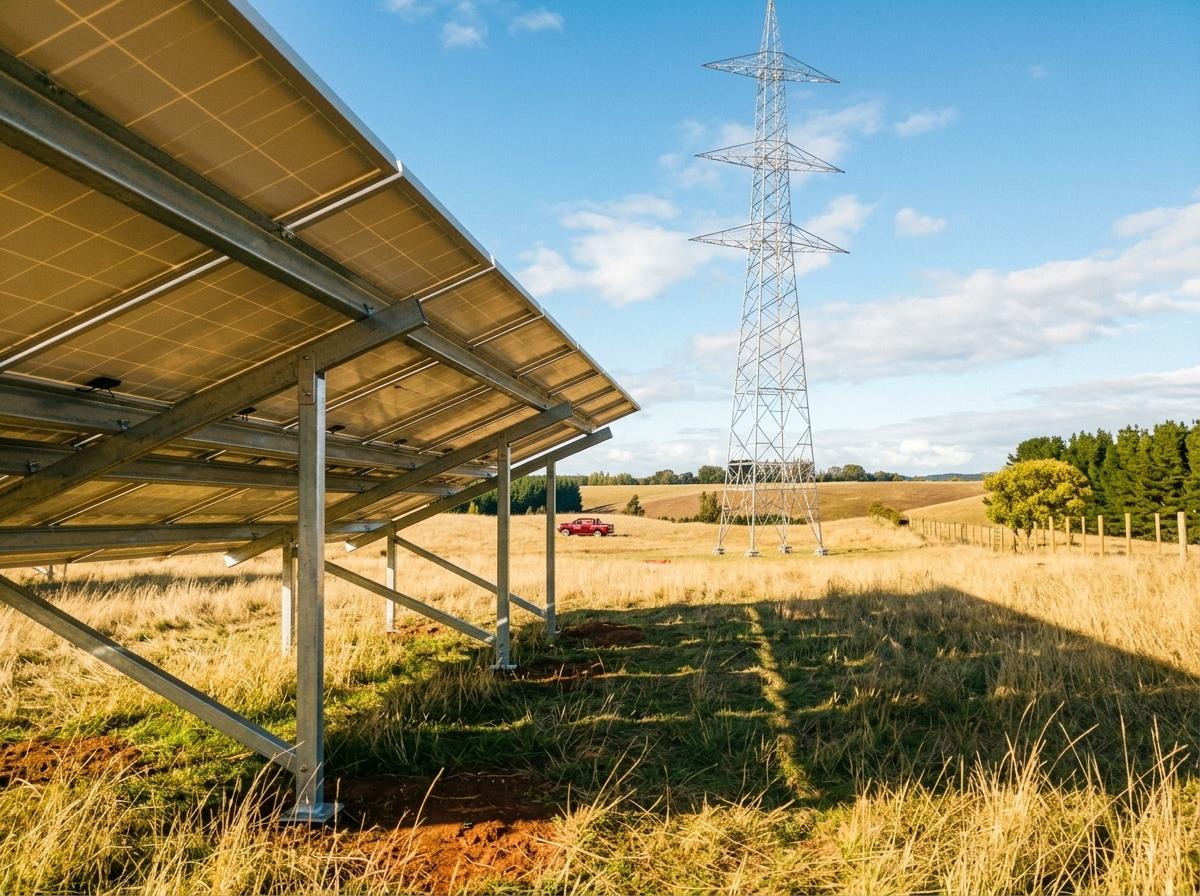
Let’s delve into specific applications where helical piles shine, addressing various site conditions and project requirements.
Reactive Clay and Coastal Sand Foundations
Helical piles excel in reactive clay and coastal sand, common in Australia. Their design accommodates soil movement, preventing structural issues. This makes them an ideal choice for diverse locations.
For solar farms, this adaptability means fewer surprises and more predictable outcomes, ensuring project success.
Fixed-Tilt and Single-Axis Tracker Frames
Solar farms use fixed-tilt and single-axis tracker frames, each with unique foundation needs. Helical piles provide flexibility, supporting both configurations effectively.
This versatility allows you to choose the best frame for your site, knowing your foundation will provide the necessary support.
Remote Site Installations and Program Constraints
Remote installations pose challenges, but helical piles offer solutions. Their lightweight design and quick installation reduce logistical hurdles, making them perfect for remote projects.
By minimizing transportation and installation times, you can meet program constraints without compromising on quality.
Frequently Asked Questions
What are the benefits of using helical piles over concrete footings?
Helical piles install faster, require no curing time, and reduce site disturbance compared to concrete footings. They also perform well in diverse Australian soils.
How do helical piles handle corrosion?
Helical piles are protected by hot-dip galvanizing, which prevents corrosion, ensuring long-term durability and reducing maintenance costs.
Are helical piles suitable for remote site installations?
Yes, their lightweight design and quick installation make them ideal for remote sites, reducing logistical challenges and transportation costs.
What standards do helical piles comply with in Australia?
Helical piles comply with AS2159 and AS/NZS 1170, ensuring they meet Australian standards for load capacity and environmental impact.
How do helical piles perform in reactive clay soils?
Helical piles are engineered to adapt to soil movement, making them a reliable choice for reactive clay environments, preventing structural issues.
Last chance for 2026 pricing – secure your foundation solutions today.