Ground-mounted solar panels remain a preferred solution for utility-scale solar projects across Australia, but foundation choice can make or break your schedule and budget. Traditional concrete footings often delay construction with excavation and curing requirements, while helical piles install up to 50% faster and deliver immediate load capacity. In this post, you’ll see how engineered screw pile foundations perform reliably in reactive clay, coastal sand, and weathered rock—cutting installation time and reducing risk on your next solar farm. For more information on the benefits of ground-mounted solar panels, you can refer to this resource.
Explore our insights on Ground Mount Solar Installation and learn how helical pile foundations can streamline your solar project delivery in Australia. For a detailed comparison, consider Solar panel mounting bracket Bunnings vs engineered solar foundations to understand what suits your project best. Additionally, our analysis of Supercheap Solar Panel Mounting Kits vs Helical Pile Foundations highlights cost, compliance, and program risk in Australian conditions.
Engineering Advantages of Ground-Mounted Solar Panels
Helical piles offer a significant leap in how you can manage solar farm installations. Their design means faster installs and fewer delays compared to traditional methods.
Accelerated Construction with Helical Piles
Helical piles get your solar farm up and running quickly. By avoiding concrete curing, you cut down on wait times. The installation process is straightforward. Helical piles screw directly into the ground, achieving immediate load capacity. This means you can start mounting your solar panels right away. Unlike concrete footings, which require lengthy curing periods, helical piles allow you to keep to your project timeline. For remote sites or areas with poor access, their ease of installation makes a huge difference.
Reliable Performance in Australian Soils
Australian soils present various challenges, from reactive clays to coastal sands. Helical piles handle these with ease. They are ideal for reactive clay, which can expand and contract with moisture changes. The piles adapt and resist these movements, maintaining a stable foundation. Coastal sands, often loose and shifting, are stabilized by the screw pile’s design. Similarly, in areas with weathered rock, the piles secure a strong hold without extensive drilling. This versatility ensures your solar panels have a reliable base, no matter the ground conditions.
Helical Piles: Reducing Risk in Solar Projects
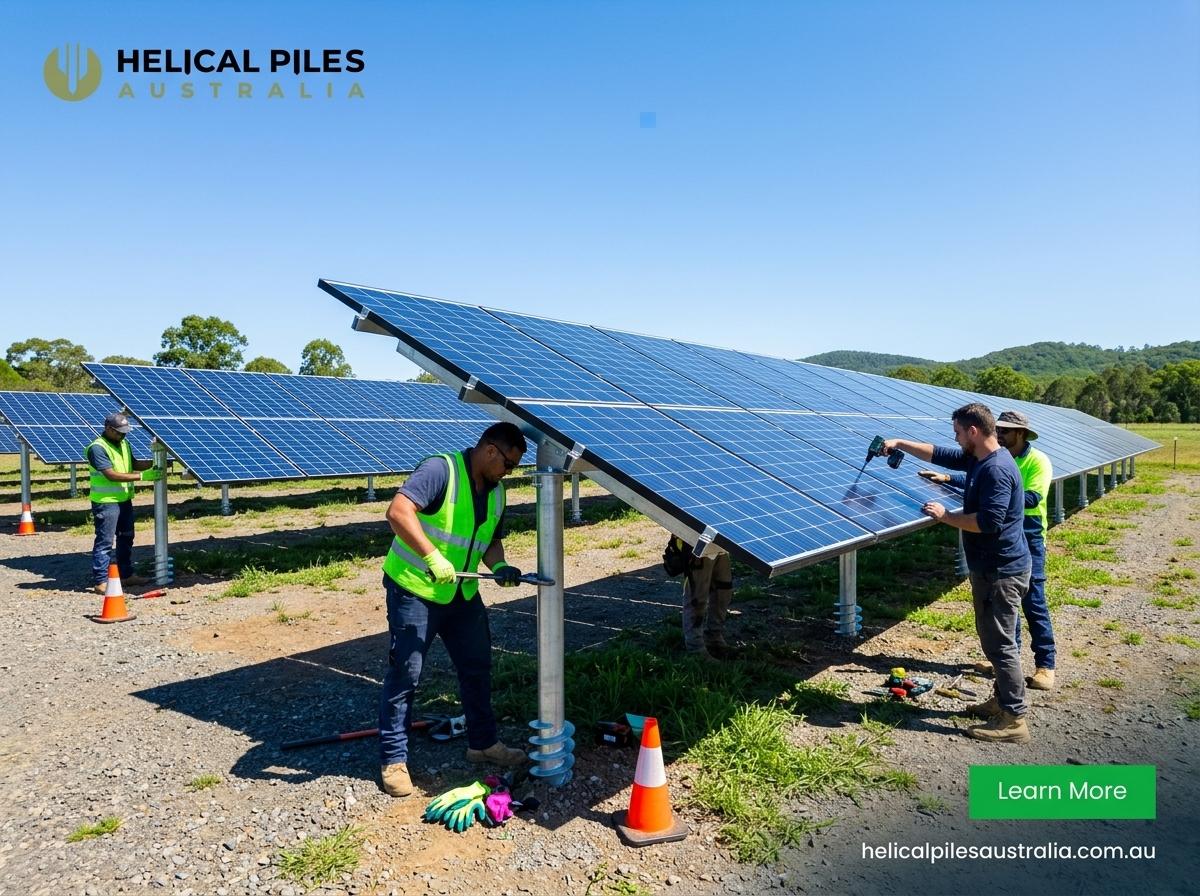
Switching to helical piles means less risk for your solar farm. Their engineering ensures stability and longevity, crucial for large-scale installations.
Torque-Verified Performance for Stability
Torque verification ensures each pile is installed to the correct specifications. This process involves measuring the resistance as the pile is screwed into the ground. It guarantees that the pile has the necessary load capacity to support your solar panels. This verification process eliminates guesswork, giving you peace of mind about the foundation’s strength. In challenging soil conditions, this becomes particularly important, as it confirms that the piles can handle both axial and lateral loads. By knowing each pile meets standards, project managers can proceed confidently.
Corrosion Protection and Load Capacity
Helical piles come with robust corrosion protection, typically featuring hot-dip galvanized steel. This enhances their longevity, especially in corrosive environments like coastal areas. The load capacity of helical piles is also noteworthy. They support significant weights, ensuring your solar panels remain securely anchored. These features combine to offer a foundation solution that not only meets immediate needs but also supports the long-term success of your solar farm. You can trust that your investment in helical piles will stand the test of time, despite environmental challenges.
Efficient Foundation Solutions for Utility-Scale Solar
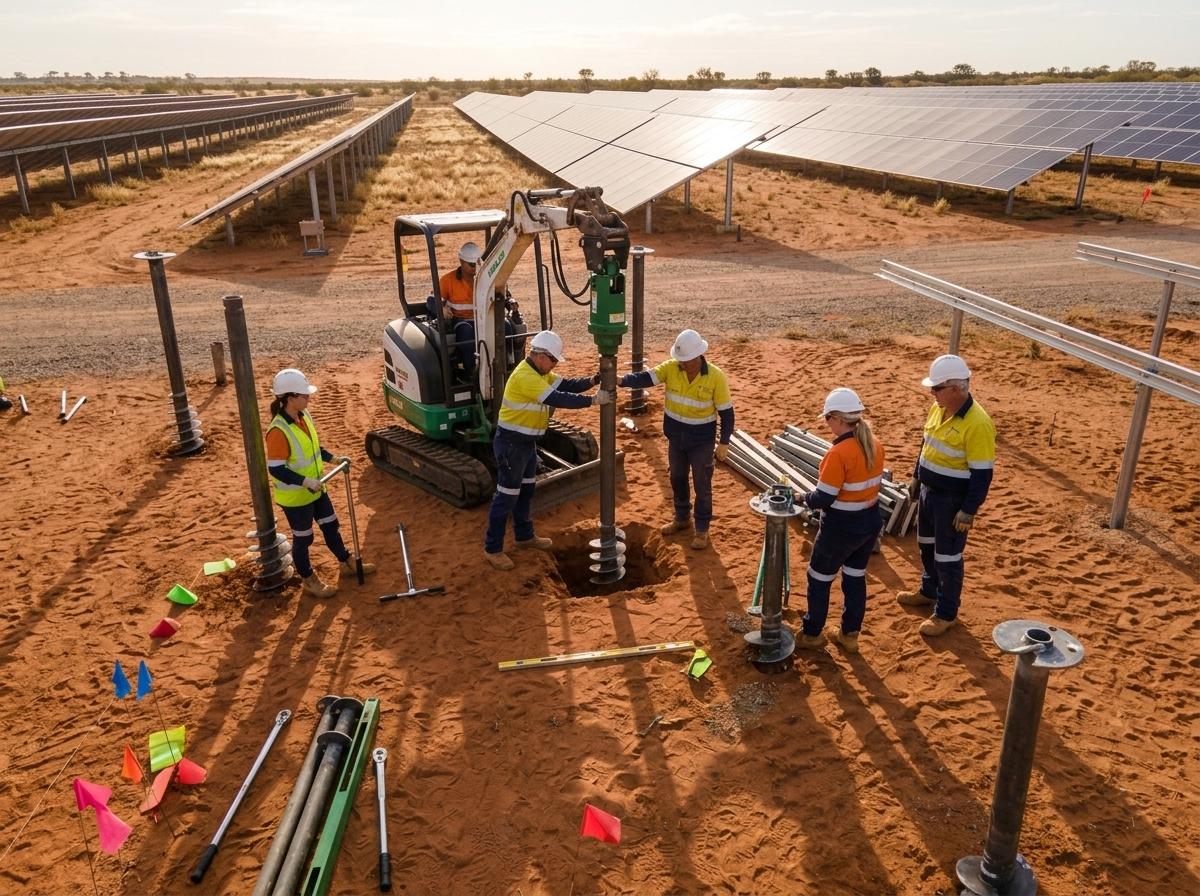
For utility-scale solar installations, foundation choice is critical. Helical piles present a compelling alternative to traditional concrete footings.
Comparing Screw Piles vs. Concrete Footings
The benefits of screw piles over concrete footings are clear. Screw piles install about 50% faster. They do not require extensive excavation or waiting for concrete to cure. This speed reduces labor costs and minimizes disruption to the site. Concrete footings, while traditional, come with their own set of challenges. They demand more time and resources, impacting the overall project timeline. In contrast, screw piles offer a seamless installation experience, particularly important in large-scale operations.
Environmental Benefits and Low Ground Disturbance
Environmental considerations are paramount in solar projects. Helical piles offer minimal ground disturbance, which is a key advantage over concrete footings. Their installation requires less excavation, preserving the natural landscape as much as possible. This low impact is not only beneficial for the environment but also reduces project costs related to site restoration. Additionally, helical piles support sustainable practices by facilitating quicker, more efficient builds with less waste. They are an eco-friendly choice for forward-thinking solar projects.
Frequently Asked Questions
What are the main benefits of using helical piles in solar projects?
Helical piles provide faster installation and immediate load capacity. They handle various soil conditions well, reducing project delays and costs.
How do helical piles compare to traditional concrete footings?
Helical piles install up to 50% faster and do not require curing time. They minimize site disturbance and offer better adaptability to challenging ground conditions.
Are helical piles suitable for all soil types in Australia?
Yes, helical piles are versatile and perform well in reactive clay, coastal sand, and weathered rock, making them suitable for diverse Australian soils.
What are the environmental benefits of helical piles?
Helical piles cause minimal ground disturbance and require less excavation. This reduces environmental impact and supports sustainable construction practices.
How does torque verification enhance the reliability of helical piles?
Torque verification ensures each pile meets load specifications, providing stability and strength. It confirms that installations are secure, reducing the risk of failure.
Last chance for 2026 pricing – secure your foundation solutions today.