Solar panel mounting brackets from Bunnings offer a convenient option for small-scale or DIY solar projects. But when your project moves beyond rooftop installations to ground mount solar Australia demands, engineered foundations become critical. This post outlines when retail brackets suffice and when helical piles for solar provide the stability, compliance, and rapid installation your project requires. Understanding these differences ensures your solar farm foundations meet Australian standards and site conditions without compromising performance.
Understanding Solar Panel Mounting Options
When planning solar installations, choosing the right mounting system is crucial. Let’s explore when retail brackets are appropriate and when engineered solutions are a must.
Retail Brackets for Residential Use
Retail brackets, like those from Bunnings, are great for small residential projects. They are perfect for rooftop installations on homes, caravans, or boats. These systems are cost-effective, easy to install, and perfect for DIY enthusiasts. You can quickly secure solar panels on your roof using simple tools and minimal effort.
However, these brackets have limitations. They are designed for lightweight panels and simple setups, making them unsuitable for large-scale or ground-mounted projects. They might not offer the necessary strength or compliance for larger installations. So, while they’re excellent for small projects, you’ll need more robust solutions as your project grows.
When to Consider Engineered Foundations
For ground mount solar foundations, retail brackets fall short. Engineered foundations, like helical piles, are crucial for larger installations. They provide the needed stability and compliance to meet Australian standards. These systems are designed to handle more weight and harsher environmental conditions.
Helical piles for solar offer several benefits. They are installed quickly, often cutting installation time by up to 50% compared to traditional methods. Their design minimizes ground disturbance, making them ideal for environments where you need to protect the natural landscape. When your project requires more than a basic setup, engineered foundations are the way to go.
Evaluating Ground Mount Solar Foundations
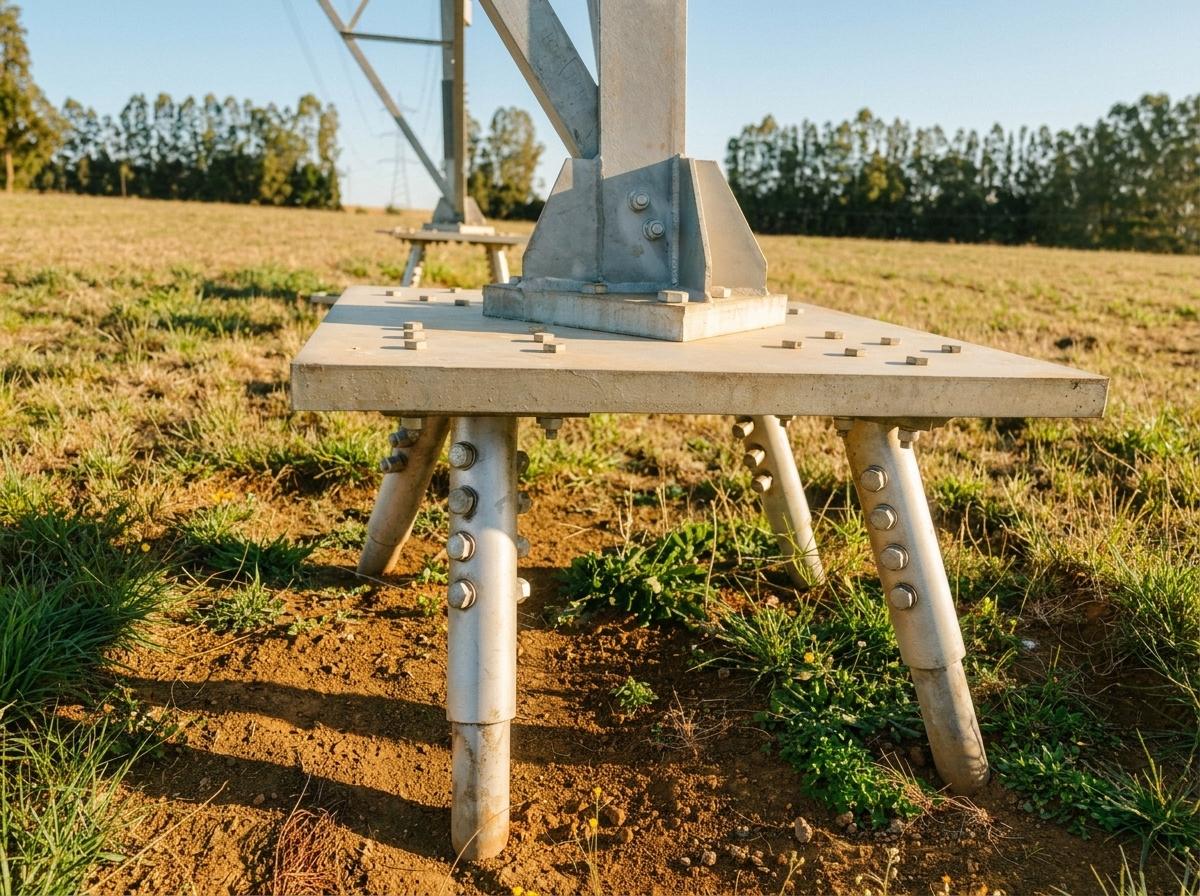
Ground-mounted solar solutions need to be stable and compliant. Let’s delve into why helical pile systems are a superior choice.
Benefits of Helical Pile Systems
Helical piles are a game-changer for solar foundations. They provide immediate load-bearing capacity, eliminating wait times associated with concrete curing. This means you can install your solar panels and start generating power faster. Additionally, they offer real-time torque verification, ensuring each installation meets the required standards.
Another significant advantage is their minimal ground disturbance. Unlike traditional methods, helical piles require no excavation, preserving the surrounding environment. They are also suitable for remote or difficult-to-access locations, making them perfect for large solar farms. These benefits make helical pile systems an optimal choice for ground mount solar foundations.
Comparing Screw Piles and Concrete Footings
When deciding between screw piles and concrete footings, consider installation time, environmental impact, and cost. Screw piles install faster, often requiring less than half the time of concrete footings. They also have a lower environmental impact, as they don’t require heavy machinery or extensive ground preparation.
Feature | Screw Piles | Concrete Footings |
|---|---|---|
Installation Time | Up to 50% faster | Longer due to curing |
Environmental Impact | Minimal ground disturbance | More excavation needed |
Cost | Cost-effective over time | Higher initial costs |
Screw piles are a more efficient choice for solar installations, offering both cost savings and environmental benefits.
Tailoring Solutions to Australian Conditions
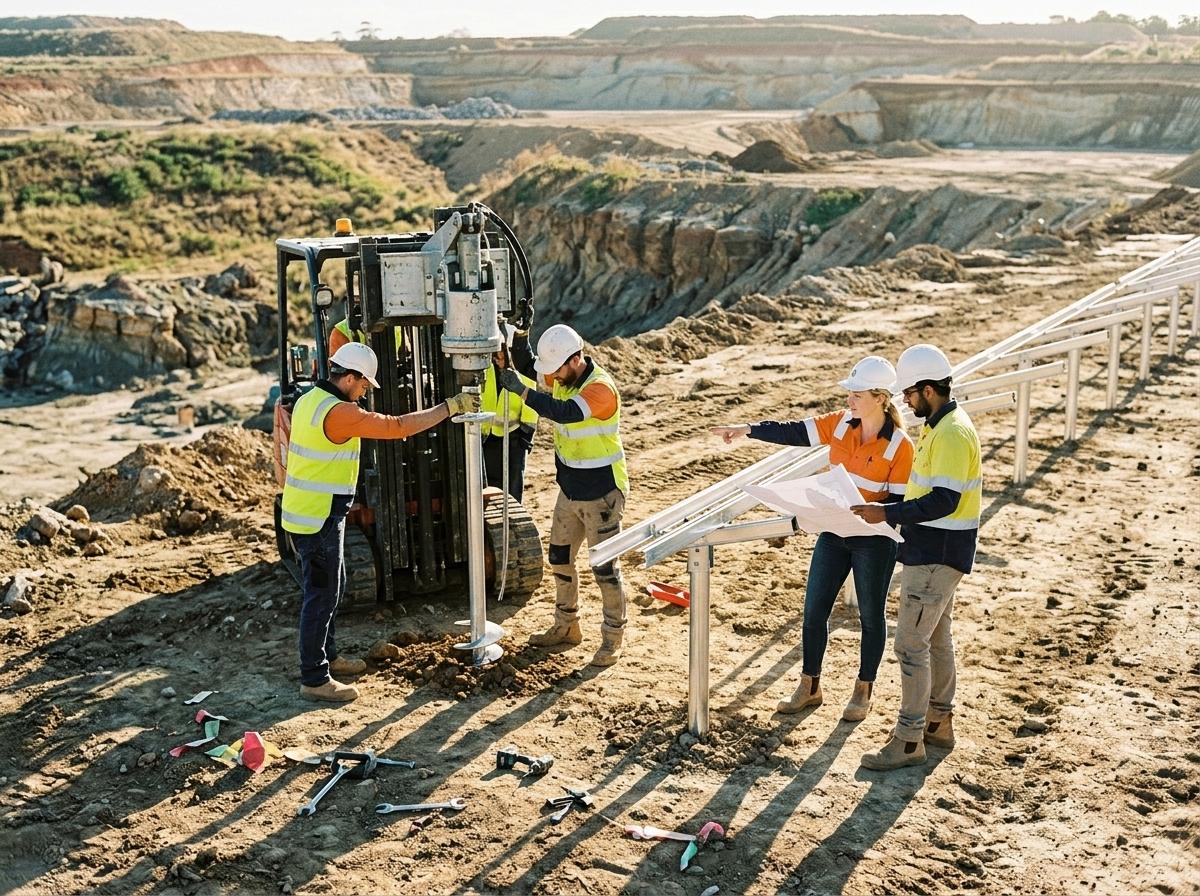
Australia’s diverse soil conditions require tailored foundation solutions. Understanding these variables ensures project success.
Addressing Reactive Clay and Coastal Sands
Reactive clay and coastal sands pose unique challenges for solar foundations. Helical piles are engineered to handle these conditions, offering stability where other methods might fail. Their design allows them to adapt to soil movements, providing a reliable foundation in reactive clay areas.
For coastal sands, which can be unstable, helical piles provide the necessary anchoring. Their installation process ensures they remain secure, even in shifting sands. This adaptability makes them an ideal choice for Australian solar projects.
Installation in Remote and Sensitive Sites
Remote and sensitive sites demand careful planning. Helical piles, with their minimal disturbance and small machinery requirements, excel in these environments. They can be installed quickly without heavy equipment, making them perfect for areas where access is limited.
In sensitive environments, where preserving the landscape is crucial, helical piles offer a sustainable solution. Their installation process minimizes environmental impact, aligning with modern ecological standards. For projects in remote areas, they provide a practical and efficient solution.
Frequently Asked Questions
What are solar panel mounting brackets from Bunnings suitable for?
Solar panel mounting brackets from Bunnings are ideal for small residential projects, like rooftop installations on homes or caravans. They are cost-effective and easy to install for DIY enthusiasts.
Why choose helical piles over concrete footings for solar projects?
Helical piles offer faster installation, minimal ground disturbance, and are cost-effective over time. They provide immediate load-bearing capacity and are suitable for remote locations.
How do helical piles handle reactive clay soils?
Helical piles are designed to adapt to soil movements, providing stability in reactive clay conditions. Their engineering ensures they remain secure, even as the soil shifts.
What makes helical piles environmentally friendly?
Helical piles require no excavation, reducing ground disturbance and preserving the natural landscape. Their installation process uses smaller machinery, minimizing environmental impact.
Are helical piles suitable for coastal sand areas?
Yes, helical piles are excellent for coastal sands as they provide necessary anchoring and stability in shifting conditions, making them a reliable choice for solar foundations in such areas.
Last chance for 2026 pricing – secure your foundation solutions today.