Traditional concrete footings can stall your infrastructure project with excavation delays and curing times. Screw piles Perth offer a practical alternative designed specifically for WA’s diverse soils—from Swan Coastal Plain sands to reactive Guildford clays and Tamala limestone. Their immediate load capacity and modular installation reduce site disruption and accelerate build schedules. This guide explains how screw pile foundations deliver reliable performance and buildability advantages tailored to your solar, transmission, or pipeline project needs.
Understanding Screw Piles in Perth
Screw piles offer significant benefits for infrastructure projects in Perth, addressing soil and construction challenges unique to the area.
Performance in WA Soil Types
Screw piles adapt to the diverse soil conditions found across Western Australia. In the Swan Coastal Plain, sandy soils often result in unstable foundations for traditional methods. Screw piles, with their helical design, provide stability by anchoring into deeper, more solid soil layers. In contrast, reactive Guildford clays can shift with moisture changes. Here, screw piles offer consistent support by bypassing unstable surface layers. Tamala limestone, while presenting a hard surface, is easily penetrated by screw piles, ensuring a secure foundation.
This adaptability means fewer delays and more reliable foundations. Where other methods falter, screw piles excel, offering immediate load capacity without waiting for concrete to cure. You can move forward confidently, knowing that your foundation is secure.
Buildability Advantages for Projects
Screw piles streamline construction by eliminating the need for extensive excavation and formwork. This reduces site disruption and accelerates build schedules. With fewer moving parts and less ground disturbance, projects progress smoothly, avoiding common setbacks associated with traditional foundations. For remote or constrained sites, where logistics can be a nightmare, screw piles offer a compact solution. They require less heavy equipment, making them ideal for projects with limited access.
Choosing screw piles means choosing efficiency. Your project can continue without the waiting game associated with curing times, reducing overall build time and costs. This approach not only saves time but also minimizes environmental impact, aligning with modern sustainability goals.
Design Applications for Screw Piles
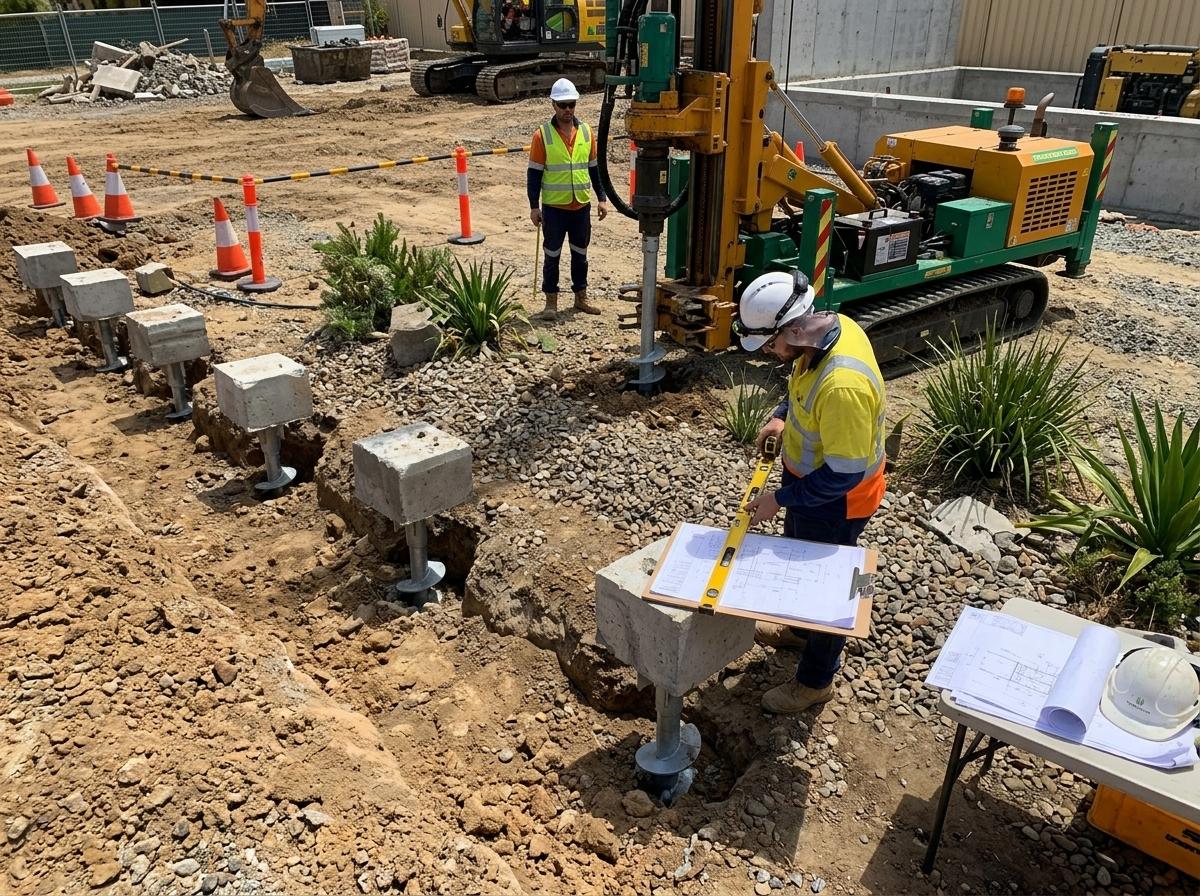
Screw piles offer versatile applications, particularly in sectors like solar energy and infrastructure.
Solar Farm Foundations in WA
For solar farms, screw piles provide a stable foundation that can be installed quickly, ensuring panels are up and running faster. Western Australia’s solar projects benefit from screw piles’ adaptability to varied soil conditions, ensuring consistent energy output and reliability.
Installations are straightforward: screw piles penetrate the ground easily, anchoring solar panels securely. This simplicity reduces installation timelines, allowing faster completion and energy production. When weather conditions are unpredictable, screw piles keep the project on track, minimizing downtime and maximizing energy generation.
Transmission Line Footings and Pipeline Supports
Transmission lines and pipelines require reliable, long-term support. Screw piles provide this by offering robust foundations that withstand environmental stresses. Their design ensures stability, even in adverse conditions like high winds or floods.
The quick installation process means less time spent in potentially hazardous conditions. For pipeline projects, using screw piles reduces the risk of buoyancy issues, a common concern in flood-prone areas. This reliability ensures consistent service and lowers maintenance needs, providing peace of mind for project managers and engineers alike.
Expert Insights and Project Engagement
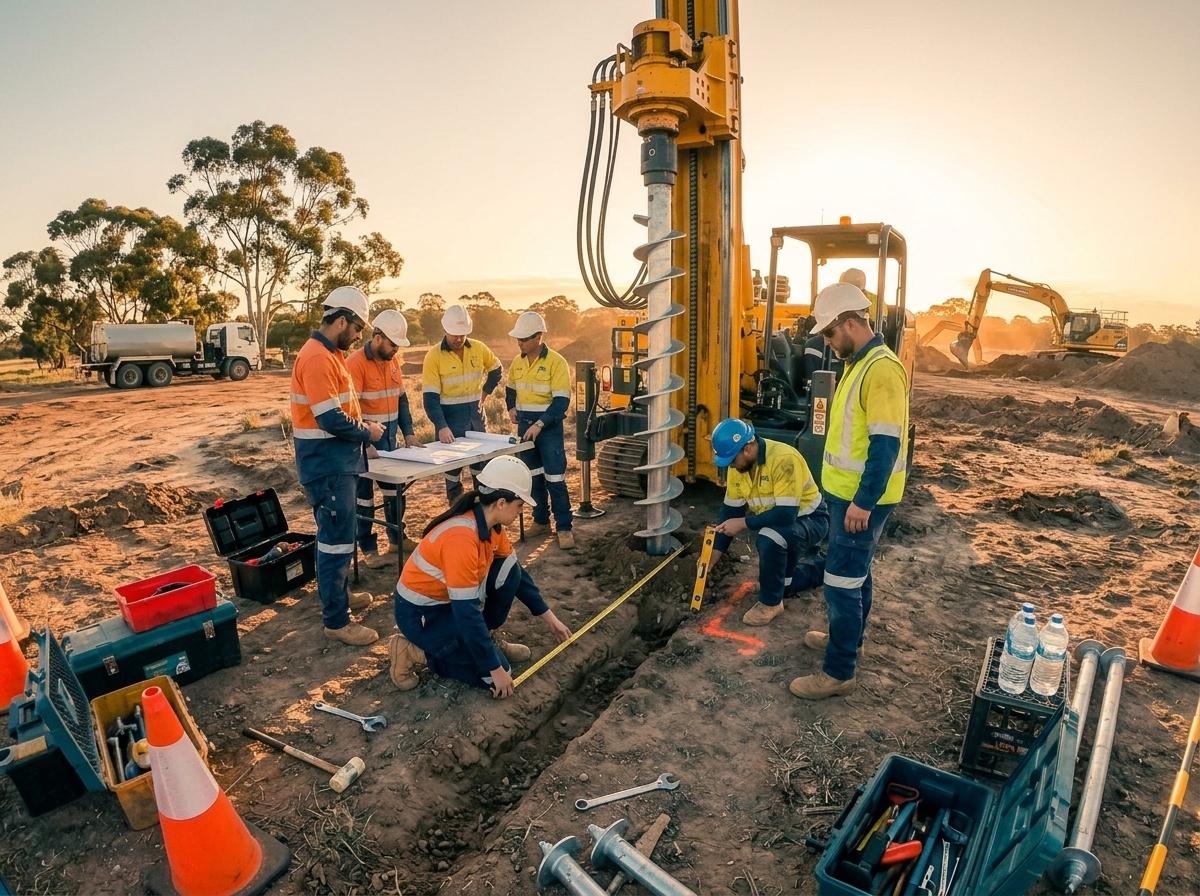
Engaging with experts early in your project ensures the best outcomes, combining technical knowledge with practical application.
Preliminary Design Review and Budgeting
Engaging in a preliminary design review helps identify potential challenges early on. By assessing soil conditions and project requirements, you can tailor your approach to maximize efficiency and minimize risks. This proactive step aids in accurate budgeting, avoiding unexpected costs and delays.
Working with professionals familiar with Perth’s unique conditions ensures your project stays on track. Their insights can lead to innovative solutions, reducing overall project time and cost. As your project progresses, you’ll appreciate the foresight and planning that went into ensuring its success.
Site Trials and Torque Correlation Testing
Site trials provide valuable data, confirming the suitability of screw piles for your specific project. Torque correlation testing ensures each pile meets the necessary load capacity, providing real-time verification of performance.
This testing not only confirms the reliability of the installation but also builds confidence in the foundation’s capability. With this assurance, you can proceed with the knowledge that your project is built on a solid base, avoiding costly rework and delays. Trust in the process, and you’ll see the benefits of a well-executed foundation strategy.
Frequently Asked Questions
What are the benefits of using screw piles in Perth?
Screw piles offer immediate load capacity, adaptability to various soil types, and reduce site disruption. They are ideal for fast-paced projects where traditional foundations may face delays.
How do screw piles handle different soil conditions?
Screw piles are designed to penetrate diverse soil types, providing stability in sandy, clay, and limestone soils. They bypass surface instability, anchoring into more stable layers below.
Can screw piles be used for all types of projects?
Yes, screw piles are versatile and suitable for solar farms, transmission lines, pipelines, and more. They are particularly beneficial in remote or constrained locations where traditional methods may struggle.
How does screw pile installation compare to traditional methods?
Screw piles eliminate the need for extensive excavation and curing time, allowing for faster installation and reduced environmental impact. This makes them a preferred choice for many modern projects.
Are screw piles environmentally friendly?
Yes, screw piles cause minimal ground disturbance and are installed with smaller equipment, reducing environmental impact compared to traditional methods.
Last chance for 2026 pricing – secure your foundation solutions today.