Slow foundation installation can stall your entire infrastructure timeline and inflate costs. Choosing the right system means balancing AS2159 compliance with speed and minimal ground disturbance. This guide shows you how to evaluate foundation systems precisely, highlighting where helical piles Australia offer clear advantages in fast, low-disturbance installation for solar, transmission, and pipeline projects. Learn more here.
Evaluating Foundation Systems
Selecting the right foundation system is crucial for project efficiency and compliance. Let’s explore the key factors to consider.
Key Evaluation Criteria
When assessing foundation systems, focus on these critical factors: speed of installation, compliance with AS2159, ground disturbance, and cost-effectiveness. Each factor directly impacts the project’s timeline and budget.
Speed: Faster installations minimize delays. Helical piles allow immediate loading, unlike concrete footings that need curing time.
Compliance: Ensure your chosen system aligns with AS2159 standards. This guarantees structural safety and integrity.
Ground Disturbance: Minimize environmental impact by selecting systems with low disturbance. Helical piles excel in this area.
Cost-Effectiveness: Balancing initial investment with long-term savings is key. Consider systems that reduce rework and hidden costs.
Comparing Screw Piles and Concrete Footings
Screw piles and concrete footings serve similar purposes, but they differ in critical ways. Screw piles require less time and equipment, offering immediate load-bearing capacity. Concrete footings involve extensive excavation, formwork, and curing, leading to potential delays.
Screw piles are ideal for projects with tight schedules and limited access. They provide reliable support without needing heavy machinery or significant site preparation. Conversely, concrete footings might suit projects where site conditions favor traditional methods and timelines are less constrained.
Understanding AS2159 Compliance
Compliance with AS2159 is non-negotiable for foundation safety. This standard governs the design and installation of piling systems in various soil conditions.
Ensure your chosen system meets AS2159 requirements by verifying load capacity and installation methods. Helical piles align with these standards, offering verifiable load capacity through torque monitoring. This ensures real-time quality assurance, critical for structural integrity.
Benefits of Helical Piles Australia
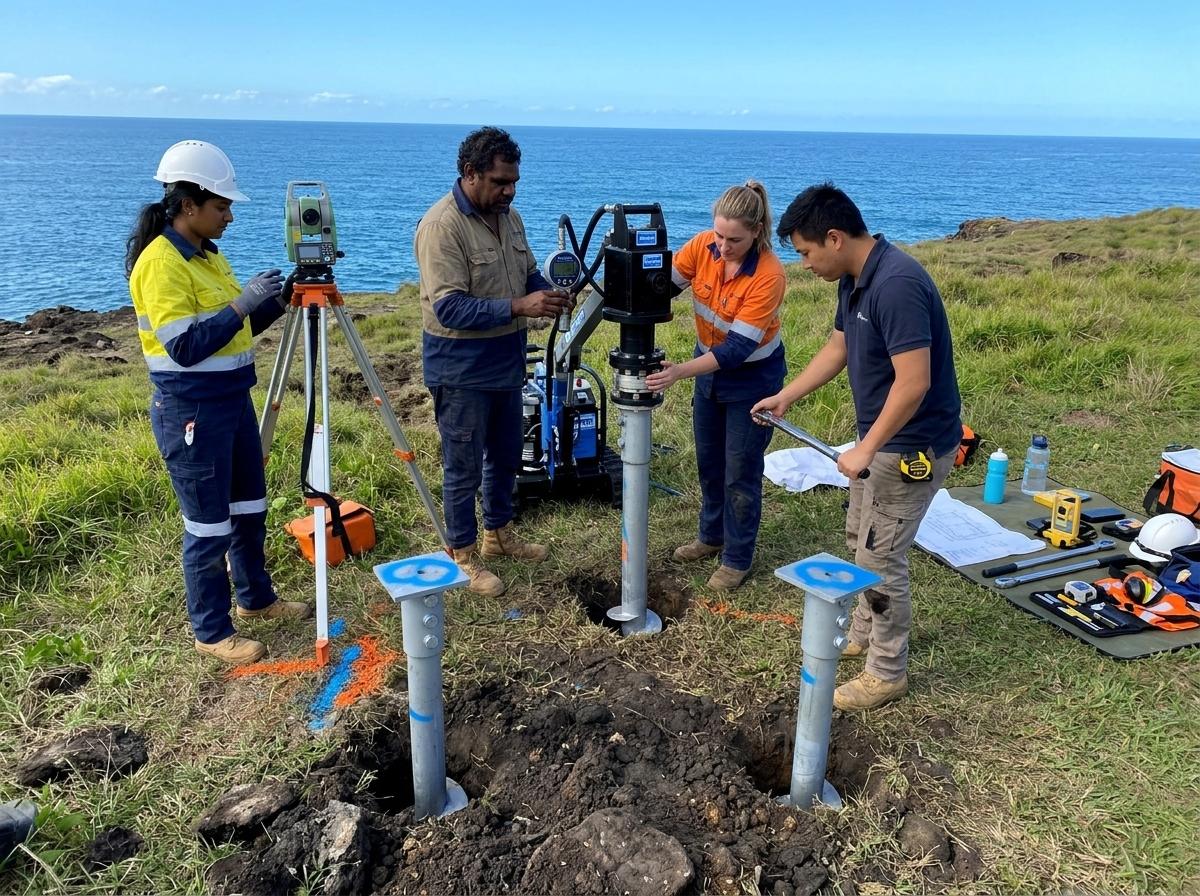
Helical piles offer distinct advantages over traditional methods, especially in challenging conditions. Here’s why they stand out.
Immediate Load-Bearing Foundations
Helical piles provide immediate support without waiting for concrete to cure. This feature accelerates project timelines, allowing construction to proceed without delay.
The ability to carry loads right after installation eliminates downtime and reduces schedule uncertainties. For projects with tight deadlines, this advantage can be a game-changer.
Minimize Ground Disturbance
Environmental considerations are crucial in construction. Helical piles cause minimal ground disturbance, preserving surrounding ecosystems.
Their installation involves no excavation spoils, reducing site impact. This is particularly beneficial for projects in sensitive areas or where soil preservation is essential.
Installation Time Comparison
Installation speed is a significant factor in choosing a foundation system. Helical piles are up to 50% faster to install compared to traditional concrete footings.
This efficiency stems from their installation process, which requires fewer resources and less site preparation. Faster installations translate to cost savings and reduced project risks.
Application in Australian Projects
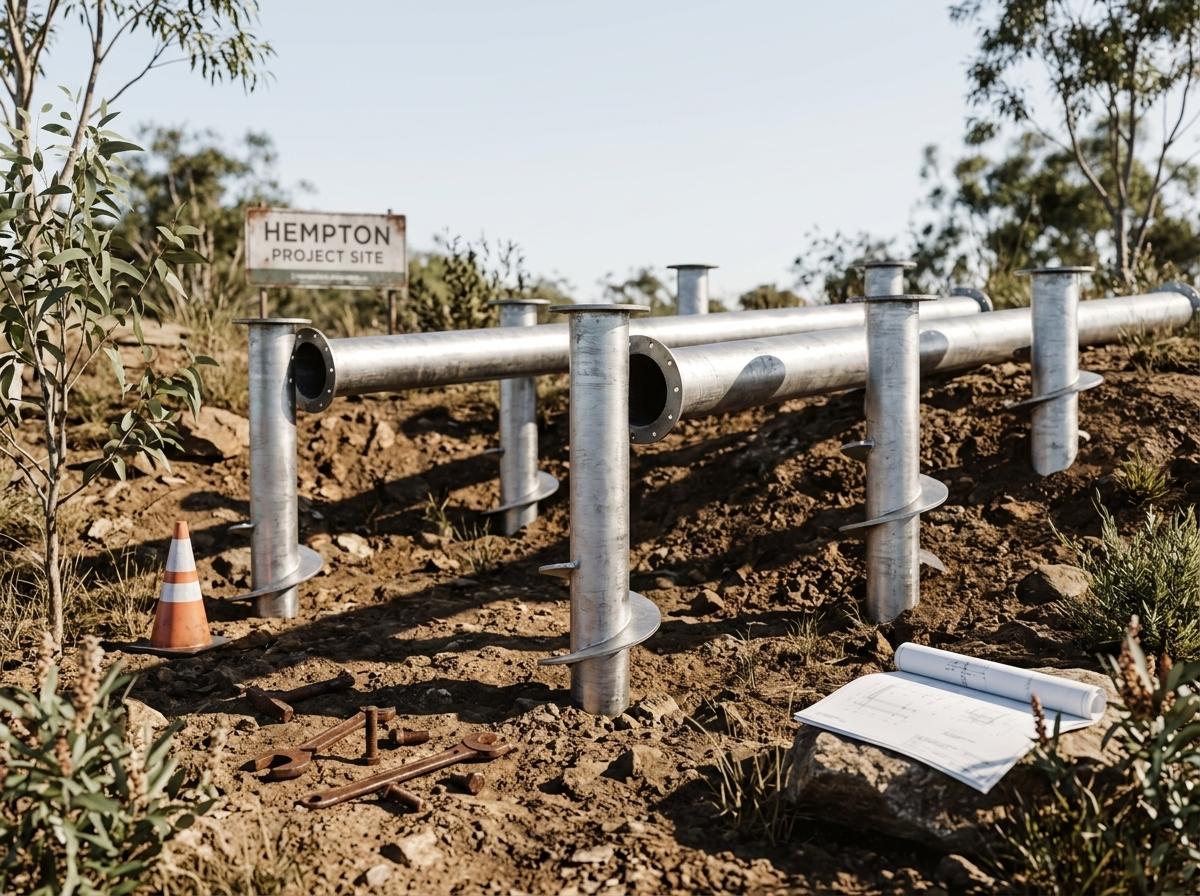
Helical piles thrive in diverse Australian conditions. Let’s explore their application across different projects.
Solar Farm Foundations
Solar farms demand extensive, stable foundations. Helical piles offer a rapid, reliable solution, ensuring projects meet tight deadlines.
The immediate load-bearing capacity of helical piles supports the vast arrays of solar panels without delay. This advantage accelerates project timelines, maximizing energy output sooner.
Pipeline Supports in Reactive Clay
Reactive clay poses challenges for traditional foundations. Helical piles excel in these conditions, providing secure support without extensive excavation.
Their ability to anchor into competent soil ensures stability. This reduces the risk of shifting or settling, crucial for maintaining pipeline integrity.
Transmission Line Footings on Coastal Sands
Coastal sands require foundations that withstand shifting soils. Helical piles offer a dependable solution, ensuring transmission lines remain stable.
Their installation causes minimal disturbance to surrounding landscapes, preserving coastal environments. This makes them an ideal choice for environmentally sensitive areas.
Frequently Asked Questions
What are the key advantages of helical piles?
Helical piles offer immediate load-bearing capacity, minimal ground disturbance, and faster installation compared to traditional methods. They are ideal for projects with tight schedules and sensitive environments.
How do helical piles align with AS2159 compliance?
Helical piles comply with AS2159 by providing verifiable load capacity through torque monitoring. This ensures structural integrity and adherence to safety standards.
Why are helical piles preferred for reactive clay and coastal sands?
Helical piles perform well in challenging soils like reactive clay and coastal sands. They provide stable support without extensive excavation, reducing the risk of shifting or settling in these conditions.
Set your foundation success criteria with trusted standards.