Traditional foundation methods often slow infrastructure projects with lengthy curing times and unpredictable installation challenges. If your project requires compliant, fast, and low-disturbance foundation systems in Australia, evaluating options against AS2159 and ground conditions is critical. This guide breaks down key factors influencing buildability, environmental impact, and whole-of-life cost, highlighting how helical piles can deliver up to 50% faster, reliable installation for solar farms, transmission lines, and pipelines. Read more here.
Evaluating Foundation Systems in Australia
When you’re assessing foundation systems, several important factors come into play, especially in Australia. Let’s dig into compliance, environmental considerations, and cost.
AS2159 Compliance and Buildability
AS2159 compliance is essential to ensure safety and effectiveness. Projects require foundations that not only meet these standards but are also practical to install.
Complying with AS2159 means considering load capacities and soil conditions. You need a foundation system that adapts to different soil types, like reactive clay and coastal sand. Buildability also involves evaluating the ease of installation, which impacts your project timeline. A system that allows for straightforward installation without extensive labor is key.
Environmental Impact and Program Risk
Construction in environmentally sensitive areas requires careful planning. You want a foundation system that minimizes disturbance to the site.
Foundation systems that reduce excavation and spoil handling are better for the environment. Choosing a system that performs well in various weather conditions can also mitigate the risk of delays. Program risk is tied to how well a foundation can be installed without unexpected setbacks, impacting timelines and budgets.
Whole-of-Life Cost Considerations
Considering the total cost over a foundation’s lifespan is crucial. Helical piles, for instance, offer longevity with reduced maintenance needs.
Whole-of-life costs involve initial installation, long-term maintenance, and any potential replacement. Selecting a system that’s durable and requires minimal upkeep can save significant costs over time. This approach ensures a smart investment that stands the test of time.
Advantages of Helical Pile Foundations
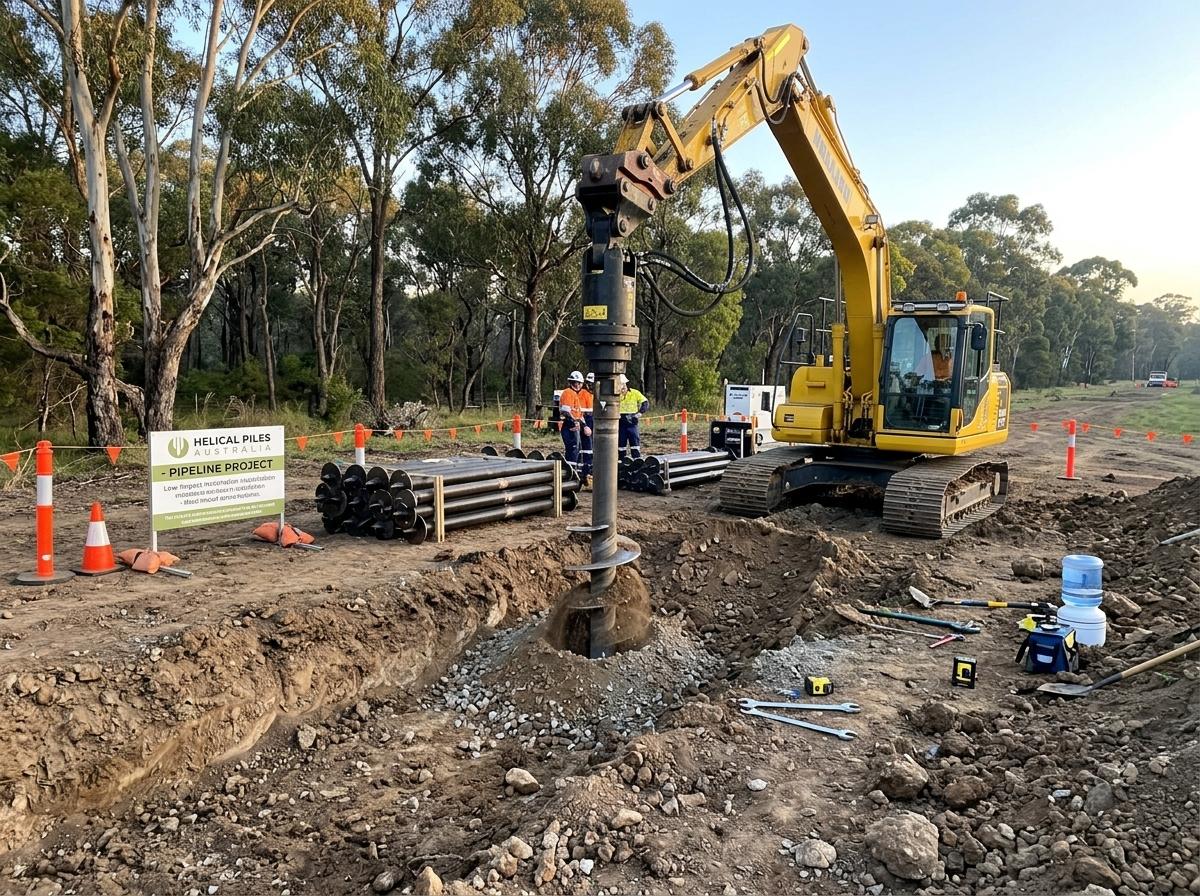
Helical piles offer unique advantages that align well with the demands of Australian infrastructure projects.
Rapid Installation and Low Disturbance
With helical piles, you gain speed and efficiency. They can be installed up to 50% faster than traditional methods.
Rapid installation is achieved by eliminating curing times and reducing excavation needs. This means less disruption to the site and a faster project timeline. Immediate load capacity after installation is another plus, allowing construction to proceed without delay.
Performance in Australian Soils
Australian soils present unique challenges, from reactive clays to coastal sands. Helical piles are designed to perform across these conditions.
Their adaptability to various soil types ensures stable foundation support. By securing into competent soil strata, they provide reliable performance even in challenging conditions. This makes them a suitable choice for diverse projects across Australia.
Comparing Screw Piles vs Concrete Footings
When you compare screw piles to concrete footings, several factors stand out.
Feature | Screw Piles | Concrete Footings |
|---|---|---|
Installation Time | Fast, no curing time | Slow, requires curing |
Ground Disturbance | Minimal | Significant |
Environmental Impact | Low | Higher due to excavation |
Maintenance | Low | Varies with conditions |
Screw piles offer advantages in speed, environmental impact, and maintenance. Concrete footings, while traditional, may not offer the same efficiency in challenging terrains.
Practical Considerations for Project Success
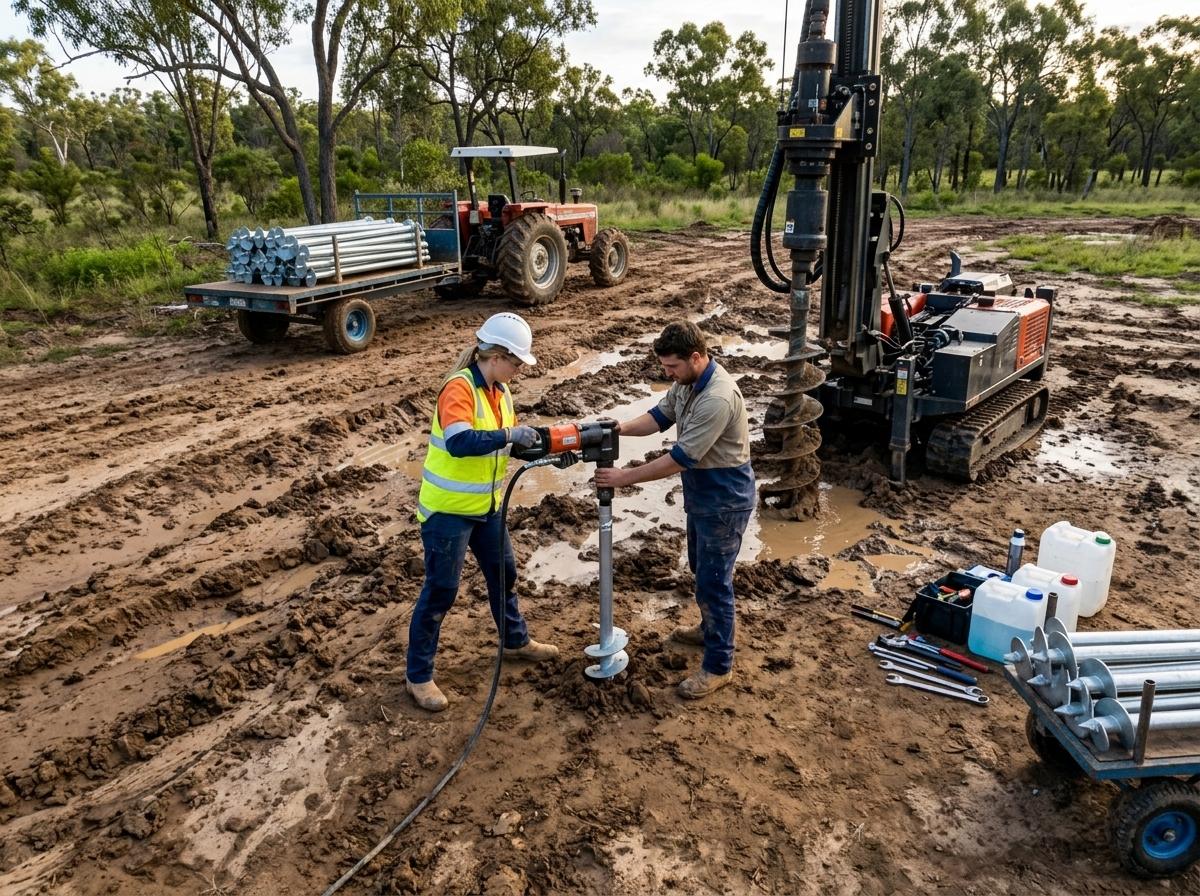
Ensuring project success involves several technical and logistical elements.
Geotechnical Engineering and Load Testing
Understanding soil conditions is critical for successful foundation installation. Geotechnical assessments inform the design process.
Load testing verifies that the installed foundation meets capacity requirements. This step is crucial for ensuring safety and compliance. By incorporating these assessments, projects can proceed with confidence in foundation performance.
Torque Correlation and Installation Process
Torque-to-capacity correlation is a key aspect of helical pile installation. It provides real-time verification of load capacity.
The installation process for helical piles involves monitoring torque to ensure proper engagement with the soil. This real-time data enables immediate adjustments if necessary, ensuring the foundation meets design criteria.
Remote Site Installation and Quality Assurance
Remote sites often present logistical challenges. Helical piles are well-suited to these environments.
Their installation requires minimal equipment, reducing the need for heavy machinery and extensive site preparation. Quality assurance is maintained through continuous monitoring, ensuring each pile meets the required standards.
Frequently Asked Questions
What are helical piles?
Helical piles are steel shafts with one or more helices that screw into the ground, providing strong foundation support by transferring loads to deeper soil layers.
How do helical piles compare to traditional foundations?
Helical piles install more quickly and with less site disturbance than traditional concrete footings. They offer immediate load capacity, reducing project timelines.
Are helical piles suitable for all soil types?
While helical piles perform well in many Australian soils, they may struggle in solid rock or densely cobbled areas. Soil assessments help determine suitability.
What is the lifespan of a helical pile foundation?
Helical piles, with proper corrosion protection, can last 50 to 100+ years, depending on soil conditions and protective measures like galvanizing.
How do I ensure compliance with AS2159 when using helical piles?
Compliance involves adhering to AS2159 standards for design and installation, which includes load testing and geotechnical evaluations to ensure safety and performance.
Set your foundation success criteria with trusted standards.