Traditional foundation methods often slow projects and increase risk, especially on challenging Australian soils. You need a clear way to evaluate foundation systems against AS 2159, balancing compliance, installation speed, and ground disturbance. This article lays out an engineer-led framework to compare options and shows where helical piles deliver measurable advantages for solar farms, transmission lines, and pipelines. For further insights, visit our website.
Evaluating Foundation Systems in Australia
Finding the right foundation system for projects in Australia requires a balance of speed, compliance, and minimal environmental impact. Let’s explore how these factors play into choosing the best option.
Understanding AS 2159 Compliance
AS 2159 sets the standards for piling design and testing across Australia. It ensures that foundation systems are safe and reliable. Understanding these guidelines is crucial when selecting a foundation method.
AS 2159 covers various aspects, including load-bearing capacities and material types. For engineers, it acts as a blueprint for safe construction practices. Following these standards ensures that your foundation is built to withstand the specific conditions found on Australian soil. It’s not just about compliance; it’s about ensuring long-term safety and performance.
Comparing Foundation Options
When comparing foundations, speed and environmental impact are key considerations. Traditional methods like concrete footings often require long curing times and significant site disruption.
Concrete footings can delay your project timeline. They need extensive excavation, which means more machinery and more time on site. On the other hand, helical piles offer a faster solution. They can be installed quickly, require no curing time, and cause minimal ground disturbance. This makes them ideal for projects where speed and site impact are concerns.
Advantages of Helical Piles
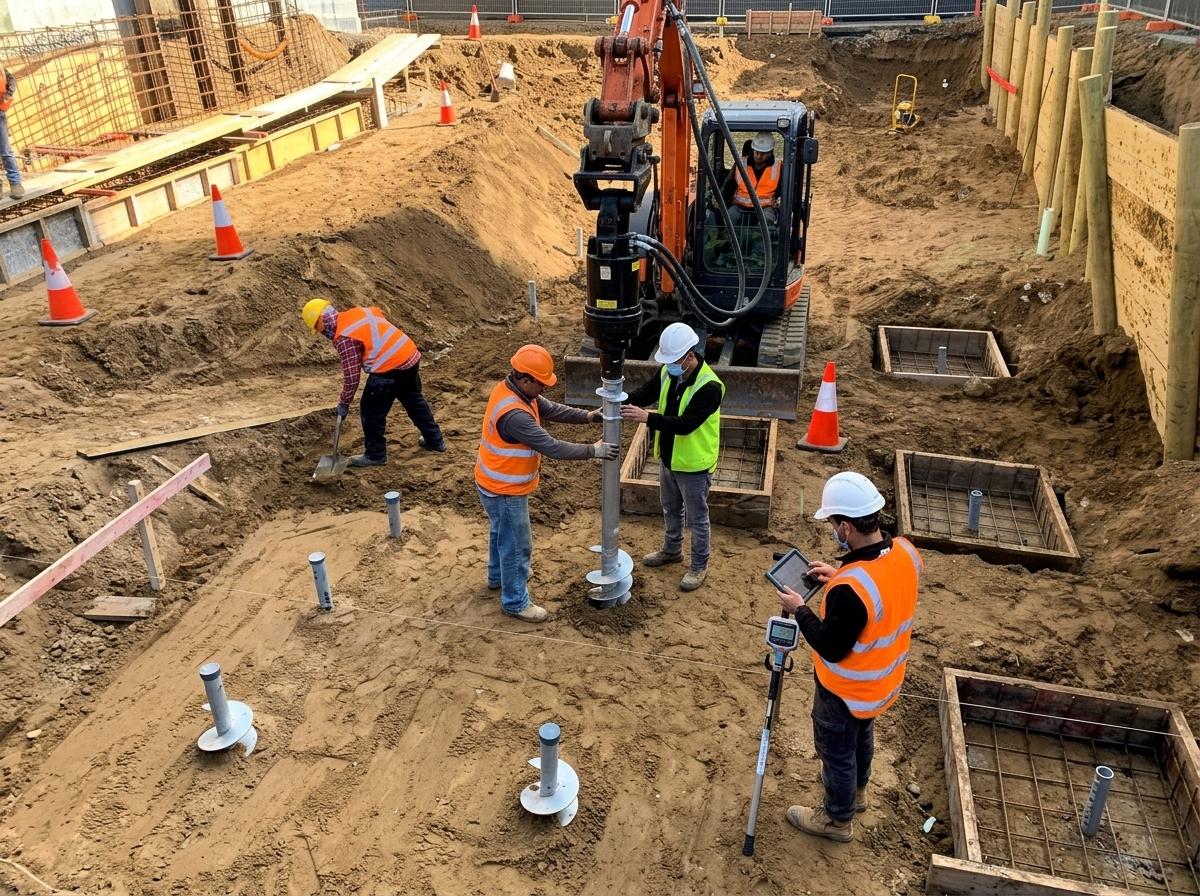
Helical piles stand out with their quick installation and low impact on the environment. These benefits can streamline project timelines and reduce costs.
Fast Installation Benefits
Helical piles can drastically reduce installation time. Unlike concrete, they don’t need curing, allowing immediate structure building.
This speed is beneficial for projects on tight schedules. You can install helical piles in various weather conditions, avoiding delays caused by bad weather. They also require less equipment, reducing logistical challenges and costs. This quick installation not only saves time but also keeps projects on budget.
Minimizing Ground Disturbance
Helical piles are known for their minimal impact on the environment. They cause less soil disruption compared to traditional methods.
This is particularly important in sensitive environments. Helical piles leave a smaller environmental footprint, making them suitable for projects in protected areas. Plus, they produce less noise and vibration during installation, which is beneficial for urban or residential projects. By reducing ground disturbance, helical piles help maintain the natural landscape.
Practical Applications of Helical Piles
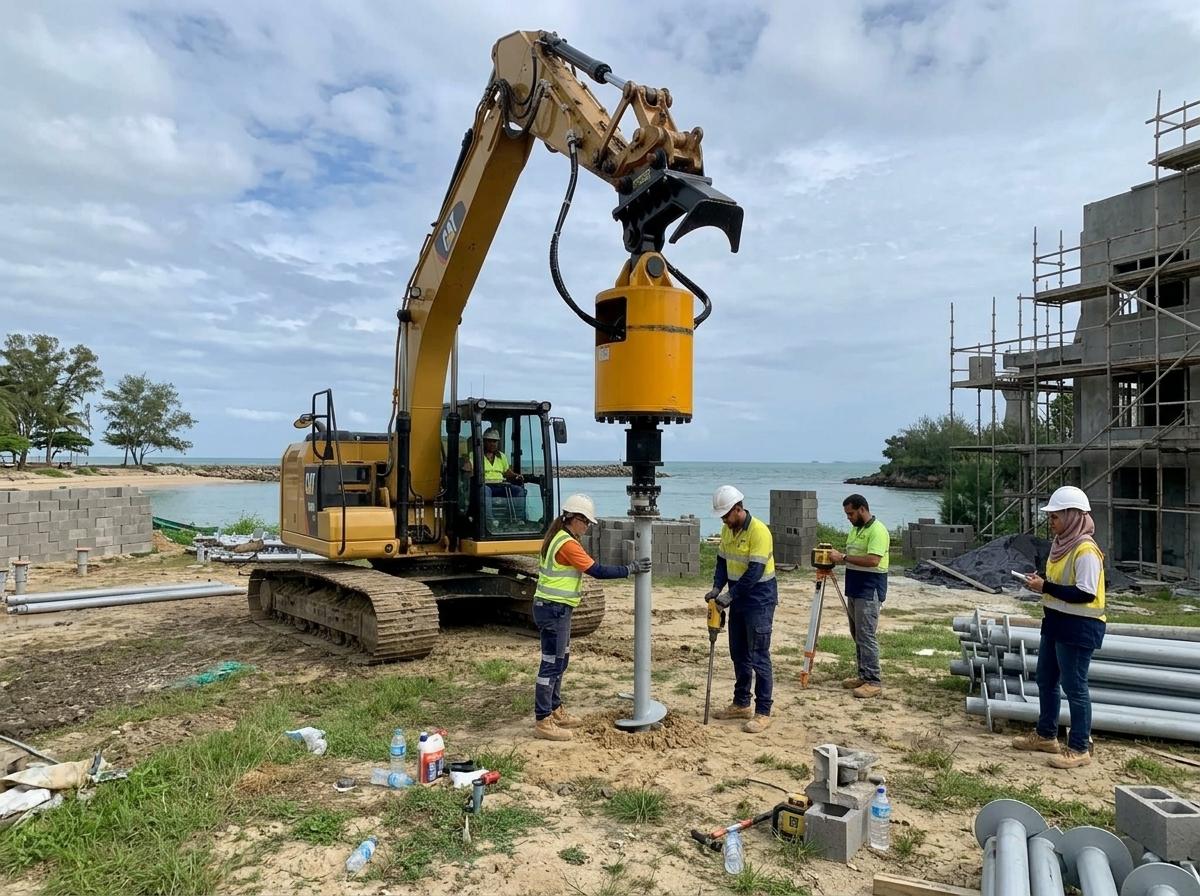
Helical piles are versatile and suitable for various infrastructure projects in Australia, from solar farms to pipelines.
Solar Farm Foundations
In solar farm projects, helical piles provide a stable foundation while maintaining the integrity of the natural environment.
Solar farms often require foundations that can be installed quickly and with minimal disruption. Helical piles fit this requirement perfectly. They support the weight of solar panels efficiently and are adaptable to different soil conditions, including reactive clays and sandy soils. By using helical piles, solar farm installations can proceed without lengthy delays, ensuring energy production starts on schedule.
Transmission Line Footings
For transmission lines, helical piles offer reliable support with reduced environmental impact.
Transmission line projects often span remote areas where access is limited. Helical piles are lightweight, allowing for easy transport and installation in these locations. They provide strong support for transmission towers, even in challenging soil conditions. Their quick installation reduces the time needed on-site, minimizing the impact on the surrounding environment and local wildlife.
Pipeline Supports in Australian Soils
Helical piles offer robust support systems for pipelines, particularly in difficult soil conditions.
Pipelines need stable foundations to prevent movement and ensure safety. Helical piles excel in providing this stability. They anchor securely into the ground, handling both compressive and tensile forces. This makes them ideal for areas with high groundwater levels or potential buoyancy issues. By choosing helical piles, you ensure your pipeline infrastructure is supported by a foundation that adapts to Australia’s varied soil conditions.
Frequently Asked Questions
What are helical piles?
Helical piles are steel shafts with helices that are screwed into the ground. They provide strong, reliable support for various structures by anchoring into deeper, competent soil layers.
How do helical piles compare to concrete footings?
Helical piles offer quicker installation and less environmental disturbance. They don’t require curing time, allowing for immediate loading, unlike concrete footings that need time to set and cure.
Are helical piles suitable for all soil types in Australia?
Helical piles are versatile and can be used in many soil conditions, including reactive clays and sandy soils. However, they are not suitable for solid rock or heavily obstructed ground with large boulders.
What is the benefit of real-time torque monitoring during installation?
Real-time torque monitoring ensures each helical pile is installed correctly, providing immediate verification of load capacity. This process enhances quality assurance and reduces the risk of foundation failure.
Can helical piles be used in environmentally sensitive areas?
Yes, helical piles are ideal for environmentally sensitive areas due to their minimal ground disturbance and low vibration during installation, which helps preserve the natural landscape.
Set your foundation success criteria with trusted standards.