Traditional concrete foundations can stall your project with long curing times and unpredictable results. What if you could install solar farm foundations, pipeline supports, or transmission line footings up to 50% faster and start loading immediately? Helical piles Australia offers engineered systems designed for rapid foundation installation in challenging ground conditions, cutting risk and delays without sacrificing capacity or compliance. Keep reading to see how these screw piles deliver consistent performance and reduce site disruption across your infrastructure projects.
Accelerating Project Timelines
When every day counts in your project timeline, finding ways to speed up foundation installation becomes crucial. This is where helical piles come into play, offering a rapid alternative that keeps projects on track.
Rapid Foundation Installation
Imagine cutting your foundation installation time in half. Helical piles can make that possible. Unlike traditional methods, these piles don’t require lengthy wait times. They are ready to load as soon as they are installed, which means you can move on to the next phase of your project without delay. This is especially beneficial for projects with tight deadlines or those prone to weather disruptions.
The installation process is straightforward. Helical piles are screwed into the ground and can be installed quickly with minimal equipment. This not only speeds up the process but also reduces labor costs. Your team can focus on other critical tasks, knowing the foundation is secure and set.
No Curing Time Foundations
One of the biggest advantages of helical piles is the elimination of curing time. Traditional concrete foundations can take days or even weeks to cure, delaying the start of construction. With helical piles, this waiting period disappears. As soon as they are in the ground, they are ready to bear load. This immediate readiness is ideal for projects in remote areas where time is of the essence.
By reducing the overall construction timeline, you save on labor and equipment costs. This makes helical piles a cost-effective solution for many infrastructure projects.
Predictable Load Capacity
Predictability is key in foundation work. Helical piles provide this by offering a consistent load capacity. This means you can rely on them to perform as expected, reducing the risk of unforeseen issues.
The capacity of a helical pile is determined by the torque applied during installation. This gives you real-time verification of their load-bearing capability. Knowing the exact capacity allows for better planning and reduces the potential for over-engineering, saving both time and resources.
Addressing Ground Challenges

Dealing with challenging ground conditions is often a hurdle in construction projects. Helical piles are designed to tackle these issues head-on, providing solutions where traditional methods fall short.
Challenging Ground Conditions
Helical piles excel in difficult soil conditions. Whether you’re dealing with clay, sand, or rocky terrain, these piles offer a reliable foundation solution. Their design allows for installation in a variety of soils without the need for extensive excavation.
This adaptability means you can use helical piles in locations where traditional piles or concrete foundations would struggle. This flexibility not only saves time but also reduces the environmental impact of your project.
Uplift Resistance and Lateral Capacity
In areas with varying soil pressures, uplift resistance is crucial. Helical piles are engineered to resist such forces, ensuring the stability of your structure. Their design provides lateral capacity as well, making them versatile for many different applications.
For example, in pipeline or transmission projects, where lateral forces are common, helical piles offer a secure solution. Their resistance to uplift and lateral movement ensures that your infrastructure remains stable, even in challenging conditions.
Torque Verification and QA/QC
Quality assurance is critical in any engineering project. With helical piles, torque verification provides a direct method to ensure each pile meets the specified load capacity. This process involves monitoring the torque applied during installation, which correlates directly to the pile’s capacity.
This real-time verification acts as a quality control measure, giving you confidence in the stability and performance of the foundation. It reduces the risk of errors and ensures compliance with engineering standards.
Tailored Solutions for Industry Needs
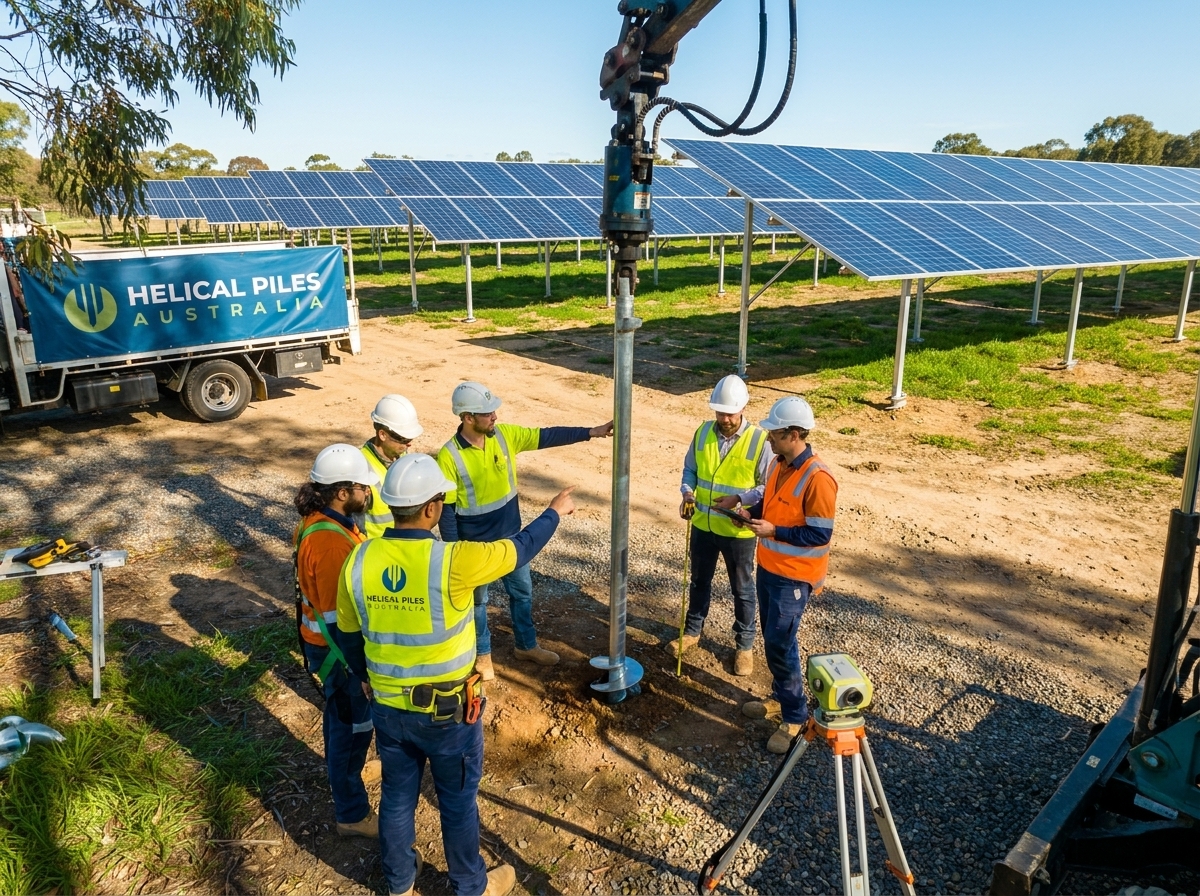
Helical piles are not a one-size-fits-all solution. They can be tailored to meet the specific needs of various industries, providing reliable support for solar farms, pipelines, and transmission lines.
Solar Farm Foundations and Racking
Solar farms require foundations that are both strong and adaptable to uneven terrain. Helical piles provide a perfect fit. Their rapid installation and minimal ground disturbance make them ideal for solar projects. Plus, their ability to be installed in remote locations without extensive equipment is a significant advantage.
Helical piles offer stability for solar racking systems, ensuring panels are securely anchored regardless of ground conditions. This reliability is crucial for maintaining the efficiency and longevity of solar installations. For more insights into solar farm construction, visit this guide.
Pipeline Supports and Anchor Systems
Pipelines traverse diverse landscapes, requiring supports that can adapt to various soil types. Helical piles offer stable, corrosion-resistant anchoring, essential for maintaining the integrity of pipeline systems. Their design handles shifting soils and slopes, ensuring pipelines remain secure.
The ability to install these supports quickly and efficiently means less disruption and faster project completion. This is especially important in remote areas where logistics can be a challenge. For a detailed look at pipeline project foundations, check out this technical analysis.
Transmission Line Footings and Remote Access
Transmission lines often run through remote areas, making access difficult. Helical piles offer a solution by providing stable footings that can be installed without extensive infrastructure. Their design supports heavy loads, critical for transmission projects.
By using helical piles, you ensure that your transmission lines are supported by a foundation that can withstand environmental pressures. This stability is essential for the reliability and safety of the power supply. Learn more about transmission foundation design here.
In conclusion, helical piles offer an efficient, reliable, and environmentally friendly solution for foundation needs across various industries. They reduce project timelines, address challenging ground conditions, and provide tailored solutions for specific industry needs. Whether you are working on a solar farm, pipeline, or transmission line, helical piles are a smart choice.
See why choosing the right foundation matters. Explore our solutions now.