Traditional foundations often stall projects when reactive clay, coastal sand, or weathered rock complicate the ground. Engineered helical piles offer a practical alternative, delivering immediate load capacity and reducing installation time by up to 50%. For your next solar, transmission, or pipeline project, understanding how these screw pile foundations perform in Australia’s toughest soils can cut risk and speed delivery. Let’s explore why engineered helical piles are proving their value across difficult ground conditions. Find out more.
Engineered Helical Piles in Australia
Addressing Difficult Ground Conditions
Australia’s unique landscapes present various challenges for construction projects, especially when it comes to laying foundations. Reactive clay, coastal sand, and weathered rock can make traditional foundations impractical. Engineered helical piles come to the rescue as they perform well even in these tough soils, offering a reliable solution with faster installation.
Benefits Over Traditional Foundations
Traditional foundations often require extensive excavation and curing time. In contrast, helical piles can be installed quickly, providing immediate load capacity. This is crucial in reducing project delays and minimizing disruption on site. Imagine starting your project without waiting weeks for concrete to cure. That’s a significant advantage in keeping timelines and budgets on track.
Applications in Infrastructure Projects
Helical piles are versatile, making them suitable for various infrastructure projects, including solar farms, transmission lines, and pipeline supports. Their ability to adapt to difficult ground conditions allows them to be used in remote and urban settings alike. This flexibility is particularly beneficial in Australia, where project sites can vary widely in terrain and accessibility.
Technical Advantages of Helical Piles
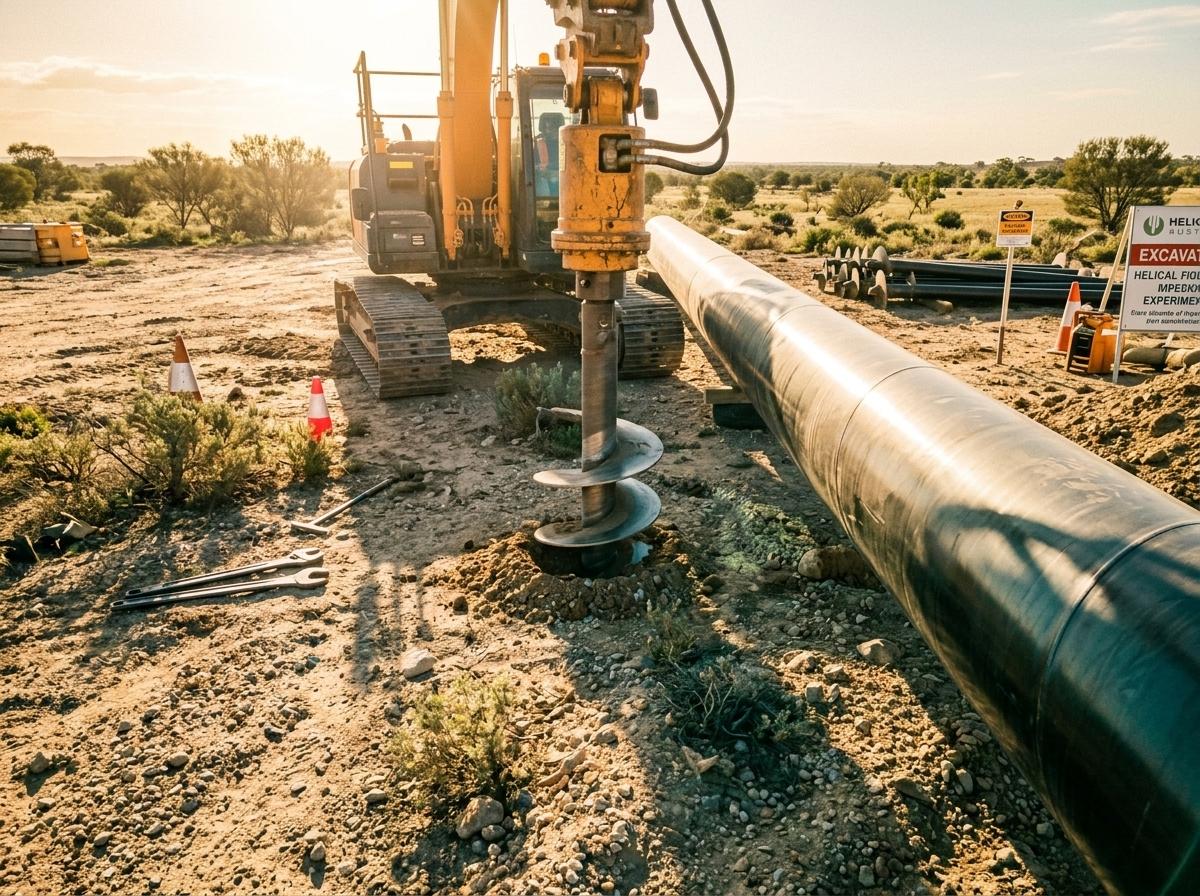
Immediate Load Capacity and Torque Monitoring
One of the standout features of helical piles is their immediate load-bearing capability. Once installed, they are ready to support structures without delay. This is made possible through real-time torque monitoring, which ensures each pile meets the necessary load capacity during installation. This method removes the guesswork, providing engineers with confidence in the foundation’s integrity.
Low Ground Disturbance and Environmental Impact
Helical piles have a minimal environmental footprint compared to traditional methods. The installation process requires little to no excavation, preserving the natural landscape and reducing waste. This makes them an excellent choice for environmentally sensitive areas where ground disturbance must be kept to a minimum.
Corrosion Protection and AS 2159 Standards
Built to withstand harsh conditions, helical piles feature robust corrosion protection, often through hot-dip galvanizing. This ensures a long service life, even in aggressive soils. Compliance with AS 2159 standards guarantees that these foundations meet rigorous Australian construction requirements, providing peace of mind to project managers and engineers.
Practical Considerations for Implementation
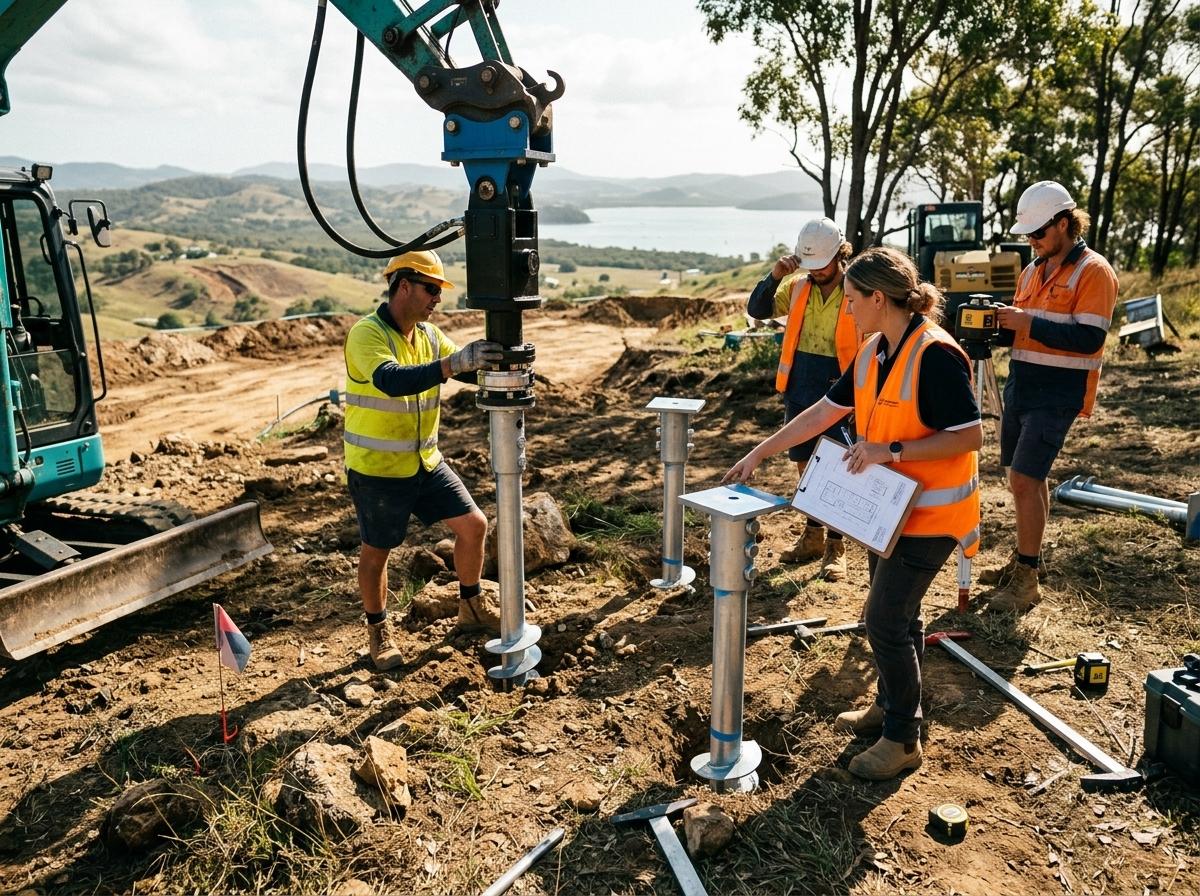
Installation Time Savings and Remote Site Suitability
Helical piles can cut installation time by up to 50%, a significant advantage for projects on tight schedules. Their suitability for remote sites stems from their ease of transport and installation without heavy machinery, ensuring projects can proceed smoothly even in isolated locations. This efficiency helps keep projects on track and within budget.
In-House Manufacturing and Quality Assurance
With in-house manufacturing, quality control is maintained at every step, ensuring consistent and reliable foundation systems. This control over the production process guarantees that all piles meet design specifications, reducing the risk of on-site issues and rework, which can otherwise lead to costly delays.
Requesting a Feasibility Review and Budget Estimate
If you’re considering helical piles for your next project, the first step is to request a feasibility review. This will help determine the suitability of helical piles for your specific conditions and provide a clear budget estimate. By doing so, you can make informed decisions that align with your project’s goals and constraints.
Frequently Asked Questions
What are the advantages of using helical piles over traditional foundations?
Helical piles offer faster installation, immediate load capacity, and minimal ground disturbance. They are ideal for difficult ground conditions and remote locations, providing a reliable alternative to traditional methods.
How do helical piles minimize environmental impact?
Helical piles require little excavation, reducing the disruption to the natural landscape. Their installation process generates less waste and is more environmentally friendly compared to traditional foundation methods.
What standards do helical piles comply with in Australia?
Helical piles comply with AS 2159 standards, ensuring they meet Australian construction requirements for design, installation, and testing.
Can helical piles be used in all soil conditions?
While helical piles perform well in many challenging soils, they are not suitable for solid rock or dense boulder conditions. A feasibility review can assess the ground conditions and determine their suitability.
What factors should be considered when choosing helical piles for a project?
Consider the soil conditions, project timeline, environmental impact, and budget. Helical piles are particularly beneficial for projects needing quick installation and minimal site disruption.