Ground screw foundations often promise quick installation, but unpredictable soil conditions in Australia can turn timelines upside down. You need a foundation system that delivers consistent performance without waiting for concrete to cure or risking costly delays. Engineered helical piles provide rapid, measurable results with torque verification, cutting installation time by up to 50% and ensuring reliability across solar farms, pipelines, and transmission projects. Let’s explore why specifying the right screw pile system makes all the difference for your next job. For more detailed guidance on installation, you can refer to this guide.
Understanding Foundation Options
When choosing the right foundation, understanding your options is crucial. Let’s explore two popular systems: ground screw foundations and helical piles.
Ground Screw Foundation Basics
Ground screws are used as an alternative to traditional concrete footings. They screw into the ground, providing a base for various structures. These screws are known for quick installations, making them a popular choice in projects where time is tight. Ground screws are versatile, accommodating a range of soil types. However, challenging Australian soils can complicate their effectiveness, potentially leading to delays.
If you want to dive deeper into ground screw installations, this ultimate guide offers comprehensive insights.
Helical Piles Overview
Helical piles are designed for reliability and speed. Their screw-like structure anchors deep into the ground, reaching load-bearing strata. Unlike ground screws, helical piles offer torque verification during installation, ensuring each pile meets specific load requirements. This verification is especially valuable in Australia, where soil conditions vary greatly. Helical piles eliminate the waiting period associated with concrete curing, allowing for immediate loading upon installation.
For a more detailed understanding of helical piles, explore the installation guide.
Comparing Ground Screws and Helical Piles
Choosing between ground screws and helical piles depends on your project’s demands. Ground screws are efficient for straightforward soil conditions but might falter in more complex terrains. Helical piles, on the other hand, are engineered to tackle tough soils with ease. They offer verified performance, reducing uncertainty and enhancing project timelines. In Australian infrastructure, where conditions can be unpredictable, helical piles often provide a more dependable solution.
Benefits of Helical Piles
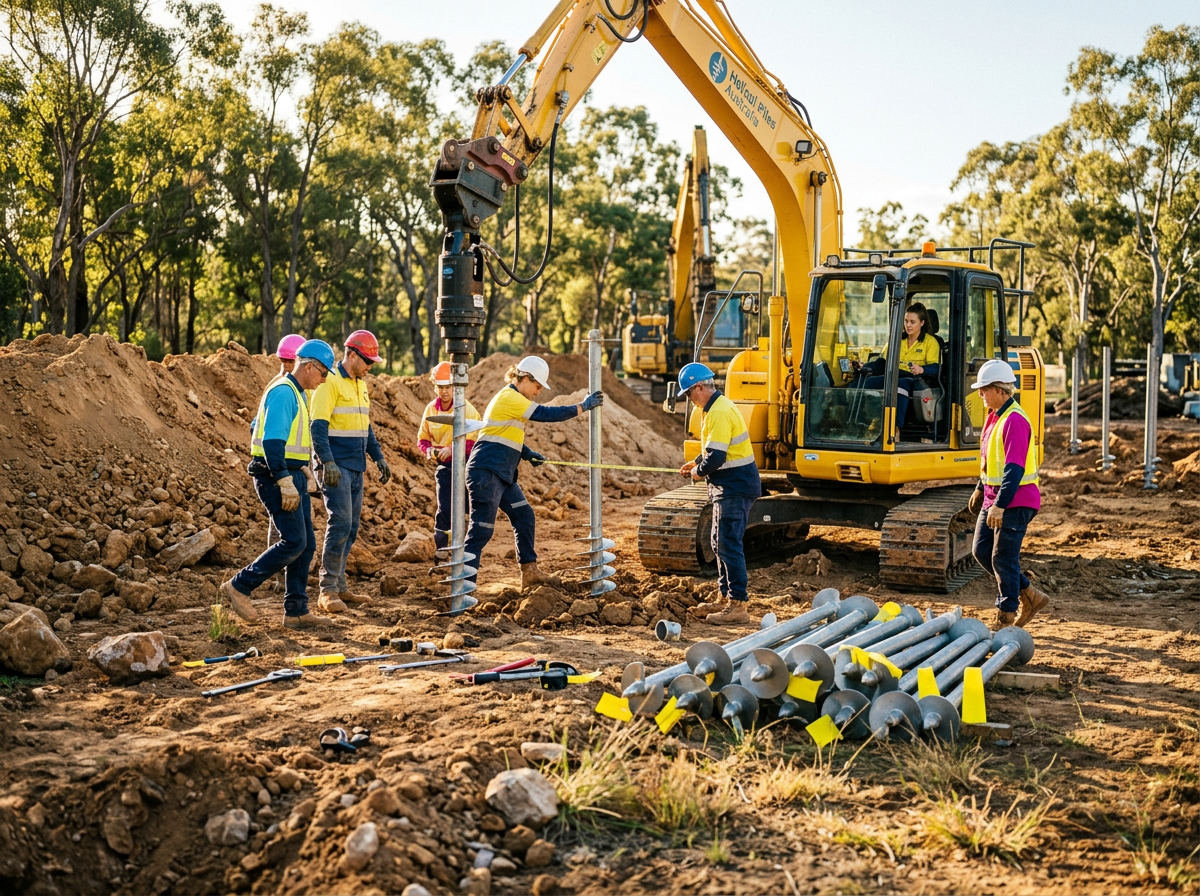
Now that we’ve compared the options, let’s delve into the specific benefits of using helical piles for your projects.
Rapid Installation Foundations
Helical piles allow for rapid installations, cutting traditional foundation timelines by up to 50%. This speed is crucial for infrastructure projects where every day counts. With no need for excavation, helical piles minimize site disruption and reduce labor costs. Their installation requires smaller, mobile equipment, making them ideal for remote or restricted access areas.
Learn how to install foundations up to 50% faster with helical screw piles.
No Curing Time Foundations
One of the standout features of helical piles is the elimination of curing time. Traditional foundations require waiting for concrete to cure, which can delay project timelines significantly. Helical piles are ready to bear loads immediately after installation. This feature is a game-changer for projects with tight schedules, allowing for faster progress without compromising safety or stability.
Torque Verification for Predictability
Predictability is key in construction, and helical piles offer just that with torque verification. This process ensures each pile meets the required capacity during installation, providing real-time quality assurance. It reduces the risk of unforeseen issues, offering peace of mind to project managers and engineers. Knowing the exact capacity each pile can handle is invaluable, especially in complex Australian environments.
Applications in Australian Infrastructure
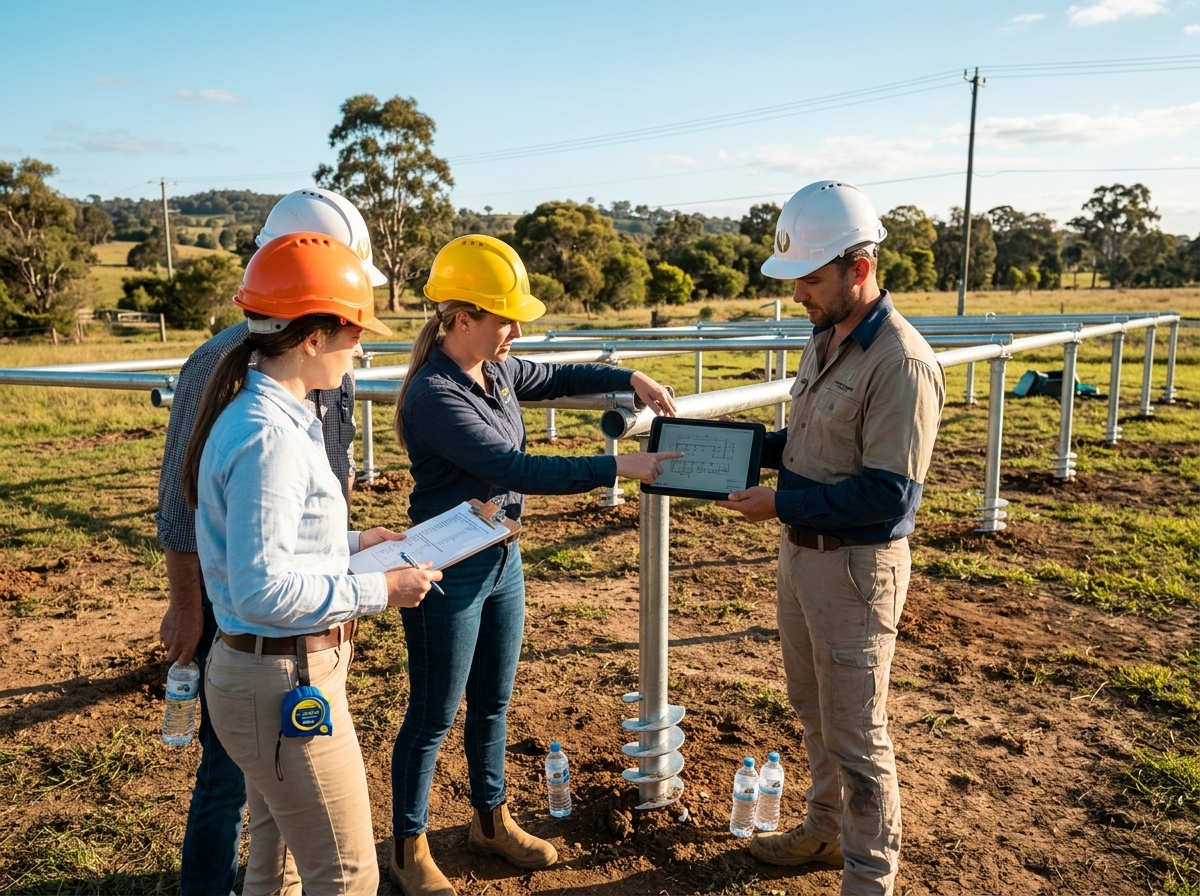
Helical piles are transforming the landscape of Australian infrastructure. Let’s explore their applications in different sectors.
Solar Farm Foundations
For solar farms, stability and speed are paramount. Helical piles provide both, ensuring panels are supported by reliable foundations. Their rapid installation minimizes site disturbance, preserving the surrounding environment. In remote locations, where access can be challenging, helical piles offer a practical solution with their smaller equipment requirements.
Pipeline Supports and Transmission Line Footings
Helical piles excel in supporting pipelines and transmission lines. They offer robust support against compressive, tensile, and lateral forces. The immediate load-bearing capability of helical piles accelerates project schedules significantly. Their corrosion resistance ensures longevity, making them an ideal choice for long-term infrastructure projects across varying terrains.
Handling Difficult Soils and Remote Sites
In Australia, soil conditions can be unpredictable. Helical piles are designed to perform in difficult soils like reactive clays and high-water-table areas. Their design minimizes soil disturbance, protecting the environment and reducing the risk of structural settling. For projects in remote sites, helical piles are a reliable choice, easily transported and installed with minimal equipment.
Frequently Asked Questions
What are the main differences between ground screws and helical piles?
Ground screws are best for simple soil conditions and quick installations, while helical piles offer torque verification and are suitable for challenging soils, providing more reliable performance.
Why choose helical piles for remote site projects?
Helical piles require less heavy machinery, making them ideal for remote locations. They install quickly with minimal disturbance, reducing logistics and environmental impact.
How do helical piles ensure predictability in construction projects?
Torque verification during installation ensures each pile meets specified load capacities, offering real-time quality assurance and reducing the risk of unforeseen issues.
Last chance for 2026 pricing – secure your foundation solutions today.