Traditional concrete footings can stall your deck project for days, especially in challenging Australian soils. Ground screws for decks cut that time by up to 50%, letting you install rapid footings without excavation or curing delays. This blog explains how engineered screw piles deliver reliable, no-dig foundations that meet AS 2159 standards while reducing site disruption and environmental impact. To explore more about installing deck footings efficiently, visit this resource.
Ground Screws vs. Concrete Footings
When you’re planning a deck project, choosing the right foundation is crucial. Ground screws offer an alternative to traditional concrete footings that can save time and reduce hassle.
Speed and Cost Benefits
Ground screws install quickly. Unlike concrete, there’s no need to wait for curing, which means less downtime on your project. This can cut installation time by up to 50%, allowing you to move forward faster. With no need for excavation, labor costs drop as well, making ground screws a cost-effective choice for deck footings.
Environmental Considerations
Ground screws are environmentally friendly. Since they require no digging, there’s minimal impact on the surrounding soil. This no-dig method helps preserve local ecosystems and prevents soil erosion. Using ground screws aligns with eco-friendly construction practices, which is important for environmentally conscious builders and homeowners.
Installation Efficiency
Installing ground screws is straightforward. You drive them directly into the ground, reducing the need for heavy machinery. This quick process keeps your site clean and minimizes disruption. With fewer steps involved, ground screws provide a seamless installation experience that keeps your project on track.
Learn more about the benefits of ground screws.
Technical Insights on Helical Piles
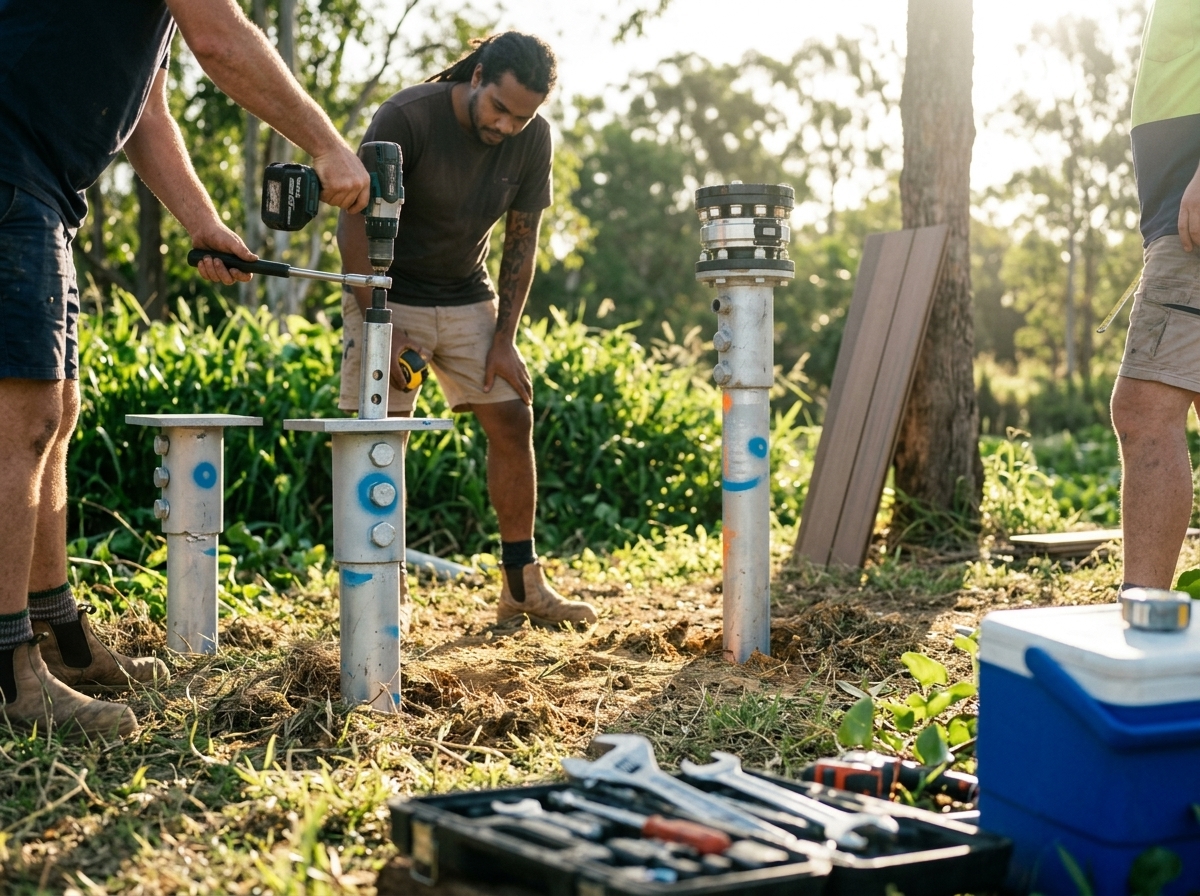
Understanding the technical aspects of helical piles is vital for any construction project. These insights will help ensure compliance and stability.
Design and Compliance with AS 2159
Helical piles are designed to comply with AS 2159 standards, guaranteeing their reliability and safety. They are engineered for specific soil conditions, ensuring they meet the load requirements. Compliance with these standards means you can trust helical piles to provide a secure foundation for your deck.
Torque Verification and Load Capacity
Torque verification is a crucial step in ensuring load capacity. It measures the soil’s resistance to the pile being turned, confirming that the helical pile can support the intended load. This step ensures that the foundation is strong enough to handle the weight of your deck, providing peace of mind.
Material and Corrosion Protection
Helical piles are made from materials designed to withstand corrosion, especially in harsh conditions like coastal areas. This protection extends the life of your foundation, ensuring it remains strong and reliable over time. Investing in quality materials means fewer maintenance issues down the line.
For more on how helical piles can speed up your project, see Helical Screw Piles: Install Foundations Up to 50% Faster—Engineered for Australian Conditions.
Applications in Australian Soils
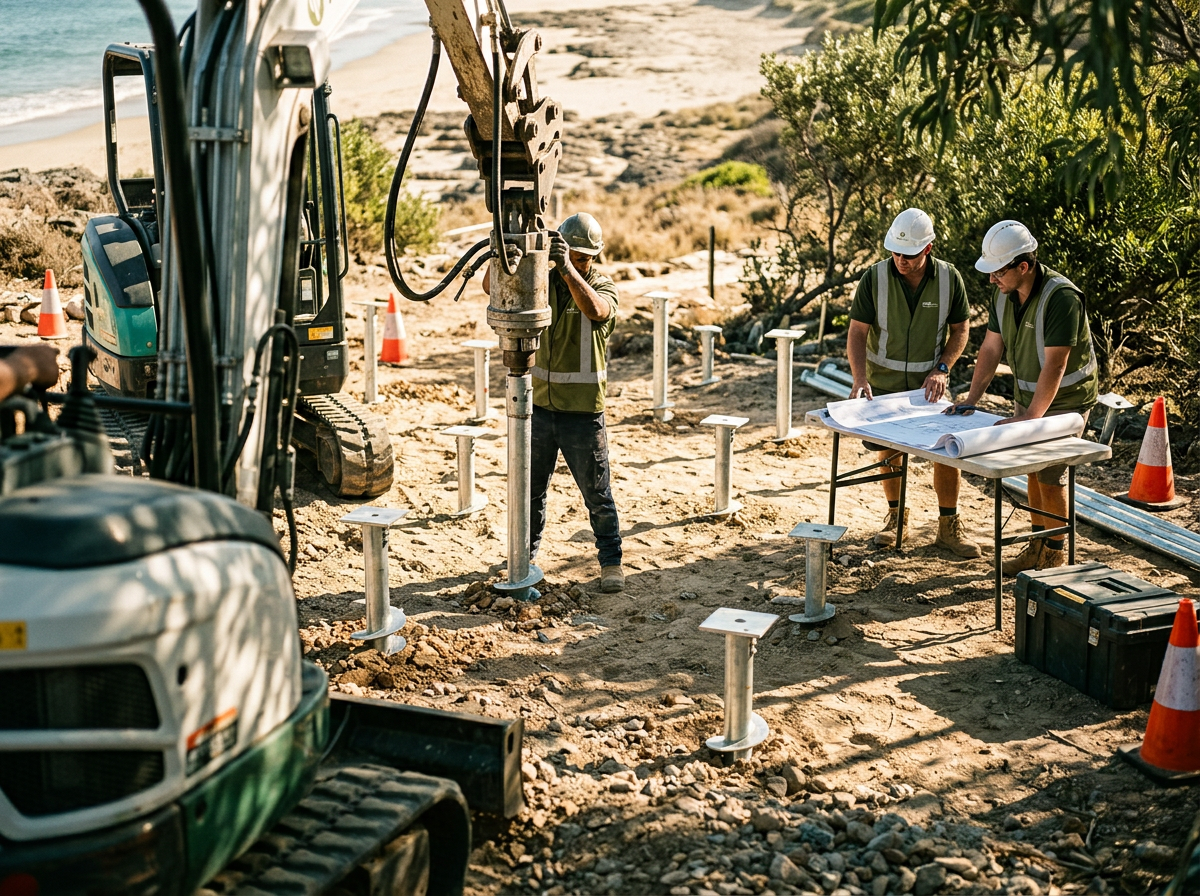
Different soil types present unique challenges. Helical piles are versatile enough to handle various conditions found across Australia.
Expansive Clay and Coastal Areas
In areas with expansive clay, traditional foundations can struggle. Helical piles adapt to these shifts, maintaining stability. Coastal areas pose corrosion risks, but helical piles are protected against such damage, making them a suitable choice for these environments.
Remote and Sensitive Environments
Remote areas often lack easy access to heavy machinery. Helical piles eliminate this need, making them ideal for such locations. Their low impact on the site is crucial for sensitive environments, ensuring minimal disturbance.
Case Studies in Deck and Boardwalk Projects
Helical piles prove their worth in real-world applications. In numerous deck and boardwalk projects across Australia, they have delivered reliable, quick, and environmentally conscious solutions. These case studies highlight the effectiveness of helical piles in meeting diverse project needs.
Check out Ground Screw Foundation Cost in Australia: A Practical Guide to Total Installed Cost and Schedule Savings for a comprehensive look at cost implications.
Frequently Asked Questions
What are ground screws, and how do they work?
Ground screws are a type of foundation that can be installed without the need for digging. They are screwed directly into the ground, providing a stable base for structures like decks and boardwalks. This method is fast and reduces soil disturbance.
Why choose helical piles over concrete footings?
Helical piles offer several advantages over concrete footings: they install quickly, require no curing time, and are less invasive to the environment. These benefits make them especially suitable for projects with tight timelines or in sensitive areas.
Are ground screws suitable for all types of soil?
Ground screws are versatile and can be used in many soil types, including expansive clay and sandy coastal soils. However, it’s essential to assess the specific ground conditions for each project to determine the best foundation method.
How do I ensure my project complies with AS 2159?
Ensuring compliance with AS 2159 involves using engineered helical piles designed for your specific soil and load requirements. Working with experienced professionals can help you meet these standards.
Can ground screws support large structures?
Yes, ground screws can support a range of structures, from small decks to larger buildings. Their load capacity is verified through torque testing, ensuring they can handle the required weight.
Last chance for 2026 pricing – secure your foundation solutions today.