Traditional foundation methods often stall projects with slow curing times and unpredictable results in tough Australian soils. You need a solution that cuts installation time by up to 50% while delivering consistent, measurable performance. Helical piers offer immediate load-bearing capacity without excavation, making them ideal for solar farms, pipelines, and remote infrastructure. This post explains how these engineered systems meet AS 2159 standards and reduce ground disturbance, helping your project stay on schedule and budget. For more insights into the advantages of helical piers, consider this resource [https://www.goterrafirma.com/the-top-benefits-of-installing-helical-piers/].
Benefits of Helical Piers in Australia
Helical piers revolutionize foundation projects by offering speed and predictability. Let’s explore how these systems can transform your infrastructure approach.
Faster, Predictable Foundations
Imagine cutting your project timeline by half. Helical piers do just that by eliminating long cure times. These systems allow immediate construction after installation. Traditional methods require waiting for concrete to cure, causing delays. Helical piers, on the other hand, can be installed quickly and are ready to bear loads right away. This rapid installation helps you stay on schedule and reduce labor costs.
But it’s not just about speed. Helical piers provide predictable performance. Each installation involves real-time torque monitoring, ensuring precise load capacity. This means you can trust that your foundation is secure and reliable. Learn more about how this method compares with others in terms of cost and efficiency here.
Environmental and Site Advantages
Helical piers reduce the environmental impact of your projects. Traditional foundations often involve heavy excavation, disturbing the surrounding landscape. Helical piers require minimal ground disturbance, preserving the natural environment. This makes them suitable for remote and sensitive sites where environmental protection is a priority.
Moreover, these foundations adapt to various terrains. Whether you’re dealing with rocky, sandy, or clay soils, helical piers can be installed with minimal hassle. They provide stability without extensive site preparation, making them a versatile choice for challenging ground conditions. For a deeper dive into their environmental benefits, check out this article here.
Real-Time Torque Verification
Real-time torque verification is key to ensuring foundation stability. Each helical pier installation is monitored for torque, which directly correlates to load capacity. This process provides immediate feedback on the performance of your foundation. Engineers can verify that each pier meets the required standards, reducing the risk of future issues.
This verification process not only ensures safety but also builds confidence in your project’s integrity. By knowing the exact load capacity, you can plan and execute your projects with certainty. This level of assurance is invaluable, especially in challenging environments. For more on torque verification and its benefits, explore this resource.
Key Use Cases in Infrastructure
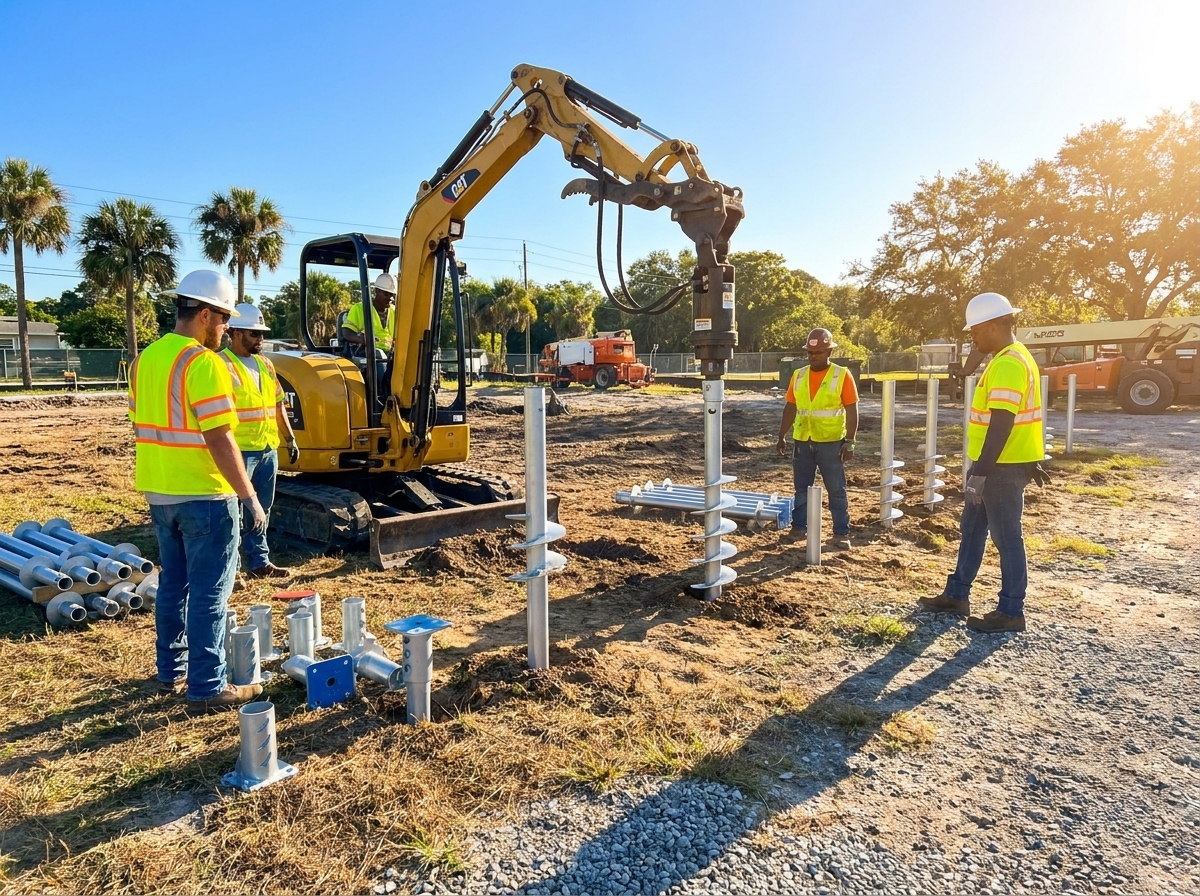
Helical piers shine in specific infrastructure projects. Their adaptability makes them a preferred choice for various applications.
Solar Farm Foundations
Solar farms often require large-scale, stable foundations. Helical piers offer quick installation, perfect for expansive solar fields. They can be installed without heavy machinery, minimizing site impact. This is crucial for maintaining the natural landscape around solar farms.
Additionally, helical piers provide reliable support in diverse soil conditions. From flat plains to hilly terrains, they adapt to the environment, ensuring stability and long-term performance. This flexibility makes them an ideal choice for solar projects across Australia. Curious about how these piers compare to poured footings? Join the discussion here.
Pipeline Supports
Pipelines traverse varied terrains, requiring robust support systems. Helical piers excel in providing stable anchoring for pipelines. Their corrosion-resistant design ensures durability, even in harsh environments. This makes them ideal for oil and gas pipelines running through challenging terrains.
Moreover, helical piers can be installed quickly, reducing downtime and project delays. Their immediate load-bearing capacity allows pipelines to be operational sooner, enhancing project efficiency. Interested in the technical aspects of pipeline support with helical piers? Check out this detailed guide on Helical Pile Capacity.
Transmission Line Footings
Transmission lines require solid foundations to withstand environmental forces. Helical piers provide a reliable solution, offering stability in diverse conditions. Their installation process causes minimal site disruption, crucial for maintaining the surrounding ecosystem.
Furthermore, these piers offer immediate load-bearing capability, ensuring that transmission lines can handle electrical loads right after installation. This efficiency reduces project timelines and enhances overall project success. For more on transmission line footings and helical piers, consider exploring this resource.
Performance and Compliance
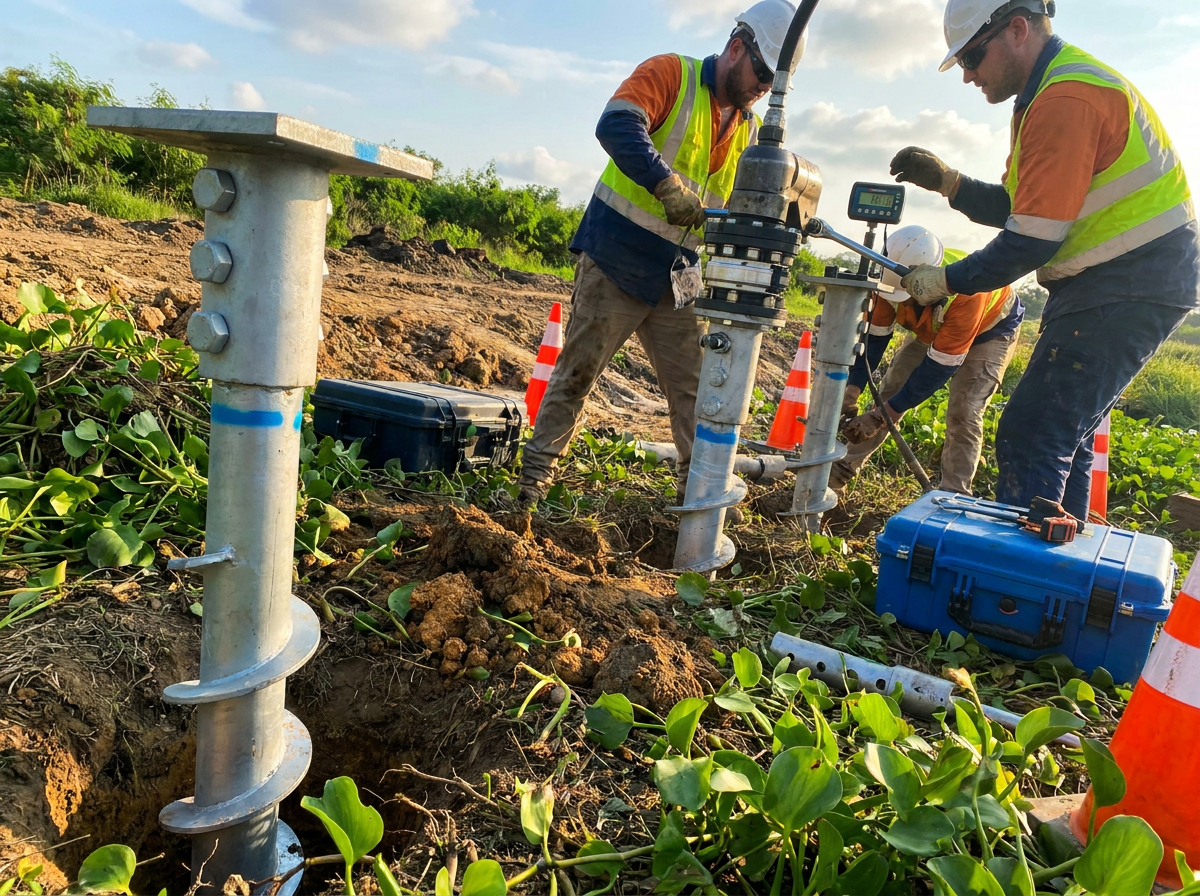
Performance and compliance are critical in foundation projects. Helical piers deliver on both fronts, ensuring that your projects meet the highest standards.
Immediate Load-Bearing Capacity
The ability to bear loads immediately after installation sets helical piers apart. This feature eliminates waiting periods, allowing construction to proceed without delay. Projects can advance swiftly, saving time and resources.
Immediate load-bearing capacity is especially beneficial in remote locations where logistical challenges can cause delays. By eliminating the need for curing, helical piers streamline project timelines, making them a preferred choice for critical infrastructure projects.
AS 2159 Compliant Foundations
Compliance with standards is crucial for project approval and safety. Helical piers meet AS 2159 standards, ensuring that your foundation systems adhere to Australian regulations. This compliance guarantees that your project is safe, reliable, and built to last.
By choosing AS 2159 compliant helical piers, you reduce the risk of regulatory issues and enhance the credibility of your project. This compliance is a testament to the quality and reliability of helical piers in infrastructure projects across Australia.
Corrosion-Resistant Design
Durability is a key factor in foundation systems. Helical piers feature a corrosion-resistant design, ensuring long-term performance even in harsh environments. This resistance to corrosion extends the lifespan of the foundation, reducing maintenance costs and enhancing project sustainability.
For projects located in areas with challenging environmental conditions, corrosion resistance is crucial. Helical piers offer peace of mind, knowing that your foundation will remain stable and reliable over time.
In summary, helical piers offer a revolutionary approach to foundation systems in Australia. Their speed, adaptability, and compliance with standards make them an ideal choice for a range of infrastructure projects. As you plan your next project, consider the benefits of helical piers and how they can contribute to your success.
Last chance for 2026 pricing – secure your foundation solutions today.