Traditional concrete foundations often stall projects with long curing times and uncertain performance in tough soils. You don’t have to accept those delays or risks anymore. Helical piers installation cuts foundation times by up to 50%, delivering verified load capacity right after installation and reducing ground disturbance. This post breaks down how screw piles outperform conventional methods across Australia’s varied conditions and project demands. For more detailed insights on helical piers, you can refer to this guide.
Helical Piers Installation Overview
Helical piers offer a speedy alternative to traditional foundations. They reduce project delays and ensure reliability even in challenging soils.
Fast Foundation Installation Benefits
With helical piers, you can install foundations up to 50% faster. Their design eliminates the need for long curing times required by concrete. Once installed, these piers provide immediate load capacity, allowing construction to continue without delay. This rapid installation reduces labor costs and shortens project timelines, keeping everything on schedule. Plus, with real-time torque verification, you can be confident in their performance right from the start.
Applicable Across Australian Soils
Australia’s diverse soils present unique challenges. Helical piers adapt well to these variations, making them suitable for many conditions, from expansive clays to sandy terrains. Their design minimizes ground disturbance, which is critical in sensitive environments. Whether in urban settings or remote areas, these piers provide reliable support without extensive site preparation. Their adaptability makes them an excellent choice for projects across the country, meeting the needs of even the most demanding sites.
Comparing Helical Piers to Concrete
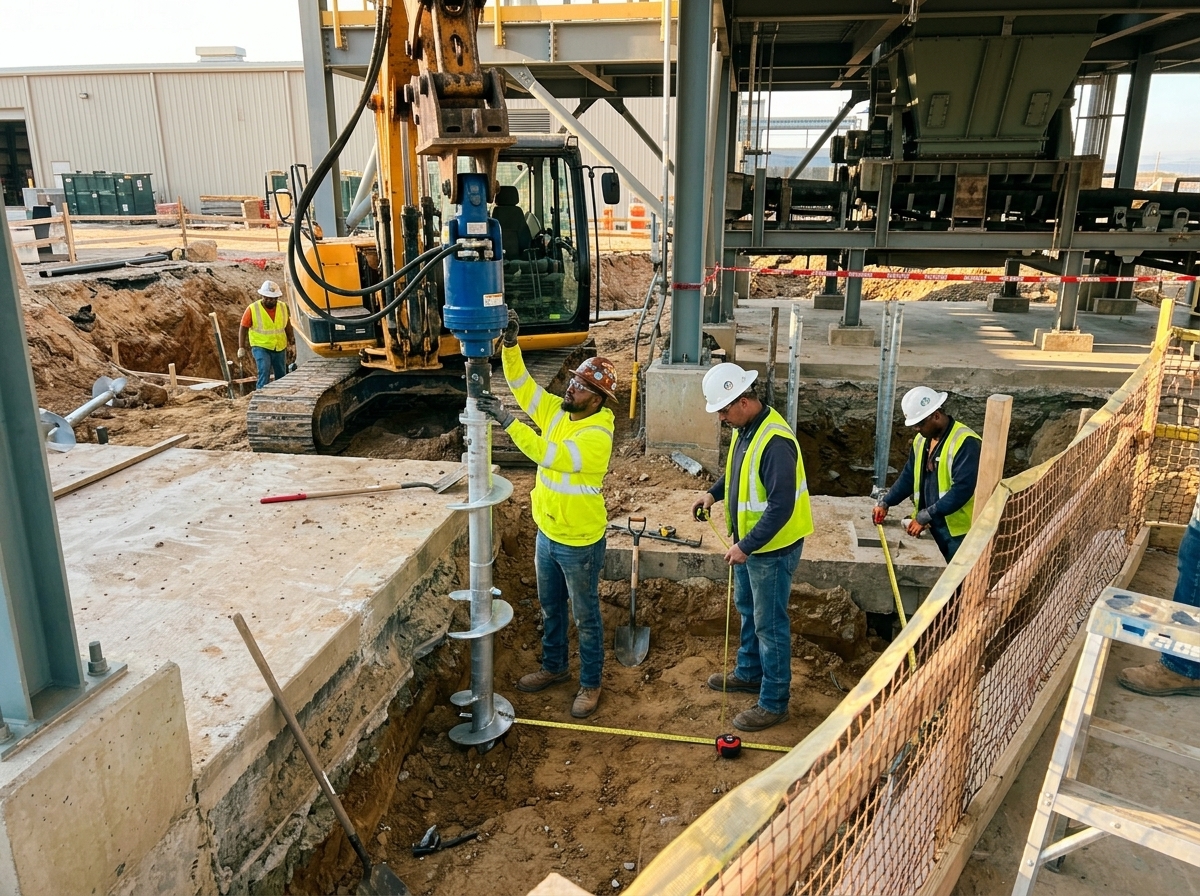
Helical piers and concrete foundations differ significantly in speed and environmental impact. Here’s a closer look at these differences.
Speed and Efficiency Analysis
Concrete foundations require extensive time for curing, often leading to project delays. In contrast, helical piers allow for immediate construction progress post-installation, saving both time and resources. Typically, helical piers can cut foundation installation time by half compared to traditional methods. This efficiency translates into faster project completion and reduced labor costs. Moreover, the equipment used for installing helical piers is smaller and more versatile, ensuring easier access to remote or constrained sites without the need for heavy machinery.
Risk and Environmental Impact
In terms of environmental impact, helical piers offer a distinct advantage. They produce minimal site disturbance, preserving the natural landscape and reducing the need for extensive excavation. This is particularly beneficial in environmentally sensitive areas where conservation is a priority. Furthermore, with helical piers, there’s less reliance on weather conditions since they don’t require concrete curing. This reliability lowers the risk of project delays caused by adverse weather, providing a consistent and predictable construction schedule.
Practical Applications and Case Studies
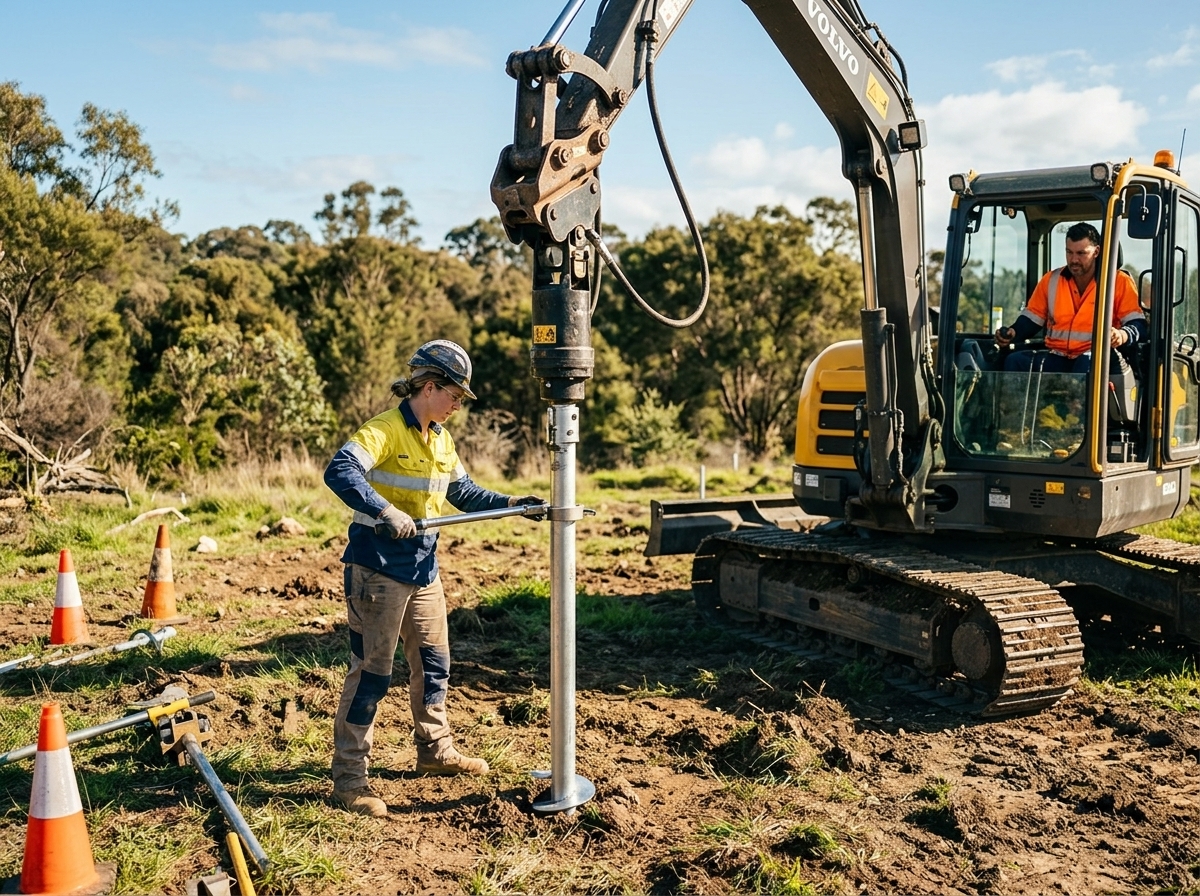
Helical piers have a wide range of applications, proving their versatility in various infrastructure projects.
Solar Farm Foundations
Solar farms require stable foundations that can be installed quickly and efficiently. Helical piers meet these demands by providing a reliable base with minimal environmental impact. In large-scale solar projects, the speed of installation reduces overall project time, allowing faster energy production and return on investment. The ability to perform in diverse soils without extensive preparation makes them ideal for the vast terrains often associated with solar farms.
Transmission Line Footings
Transmission lines often traverse remote areas, making accessibility a challenge. Helical piers are particularly advantageous in these scenarios due to their ease of installation and reduced logistical demands. They provide stable support for transmission towers, ensuring reliability and safety. Additionally, their minimal environmental impact aligns with regulatory requirements, preserving the surrounding ecosystem while delivering the necessary structural support.
Pipeline Supports in Remote Sites
In remote pipeline projects, helical piers solve many logistical challenges. They offer corrosion-resistant support systems, crucial for long-distance pipelines. The reduced need for heavy machinery and the ability to install them with minimal ground disturbance make them an ideal solution for challenging terrains. Their proven reliability and immediate load-bearing capacity ensure that pipelines remain stable and secure, even in the harshest conditions.
Frequently Asked Questions
What are the main advantages of helical piers over concrete foundations?
Helical piers provide faster installation, immediate load capacity, and minimal site disturbance compared to concrete foundations. They are adaptable to various soil conditions and reduce environmental impact, making them suitable for diverse projects.
How do helical piers adapt to different soil types in Australia?
Helical piers are designed to work effectively in a range of soil types, including expansive clays and sands. Their installation process and adaptability make them a versatile choice for Australia’s varied geological conditions.
Why are helical piers preferred for remote site construction?
In remote sites, helical piers are preferred due to their ease of installation with smaller equipment and reduced logistical requirements. They minimize ground disturbance and provide reliable support, crucial for projects in isolated or environmentally sensitive areas.
Last chance for 2026 pricing – secure your foundation solutions today.