Traditional foundation methods slow your project by weeks and increase risks on tough Australian soils. You can cut installation time by half with helical pile installation, designed for immediate load capacity and minimal ground disturbance. This guide explains how rapid foundation systems outperform concrete, ensuring predictable results for solar farms, pipelines, and transmission line footings. Keep your project on track with proven engineering tailored to local conditions. For more detailed insights, check out this step-by-step guide to helical pile installation.
Overview of Helical Pile Installation
Helical pile installation offers a fast, reliable alternative to traditional foundation methods. This section will explore the benefits, key steps in the process, and quality assurance methods.
Benefits of Rapid Foundation Systems
Helical piles speed up construction by eliminating the need for concrete curing. You can expect installations to finish up to 50% faster. This time saving is crucial when meeting tight project deadlines. Unlike cement, helical piles can be installed in various weather conditions. They offer immediate load capacity, which means you can start building right away. For more details, you can watch this video on helical pile installation.
Key Steps in Installation Process
Installing helical piles involves several straightforward steps. First, a hydraulic motor is used to screw the piles into the ground. This process requires minimal soil disturbance. Next, torque monitoring ensures piles reach the necessary depth and strength. Finally, once installed, the piles are ready to bear loads immediately. This streamlined process reduces logistical challenges and accelerates timelines. For a deeper dive, see how it works with helical pile installation.
Quality Assurance and Control Methods
Quality assurance is vital in helical pile installation. The torque-to-capacity method verifies each pile’s strength during installation. This real-time verification provides engineers with confidence in the foundation’s reliability. Such controls ensure consistent performance across varied conditions, minimizing risks and maximizing results. Learn more about quality methods in this guide to helical piles.
Performance and Environmental Advantages
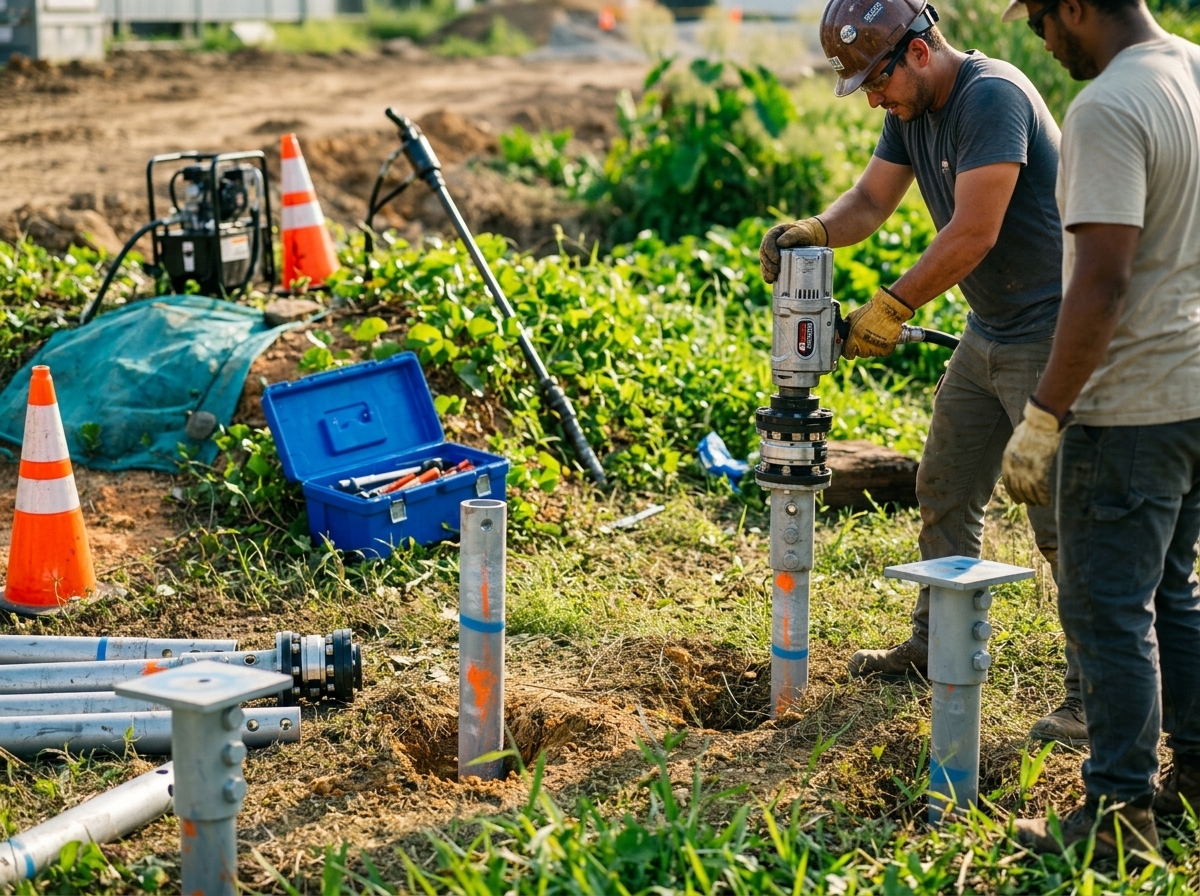
Helical piles offer immediate load capacity, minimal ground disturbance, and predictable performance across diverse soils, making them a superior choice for many projects.
Immediate Load Capacity Verification
With helical piles, there’s no waiting for concrete to cure. This immediate readiness is verified by assessing the torque applied during installation. This method ensures each pile can support the intended load right away, saving time and reducing the need for additional testing. This immediate verification is invaluable in fast-paced projects, allowing you to proceed without delay.
Minimal Ground Disturbance Benefits
Helical piles cause less disruption compared to traditional foundations. The installation process involves screwing the piles into the ground, which minimizes soil displacement. This is particularly beneficial in environmentally sensitive areas or where site preservation is essential. Reducing site disturbance also simplifies site cleanup and restoration.
Predictable Performance in Diverse Soils
Helical piles are engineered for a wide range of soil types. They perform well in conditions where traditional methods might fail, such as sandy, silty, or clay-heavy soils. This versatility makes them ideal for Australian projects, where ground conditions can vary significantly. The ability to adapt to different environments reduces risks and ensures stable, reliable support.
Helical Piles in Australian Projects
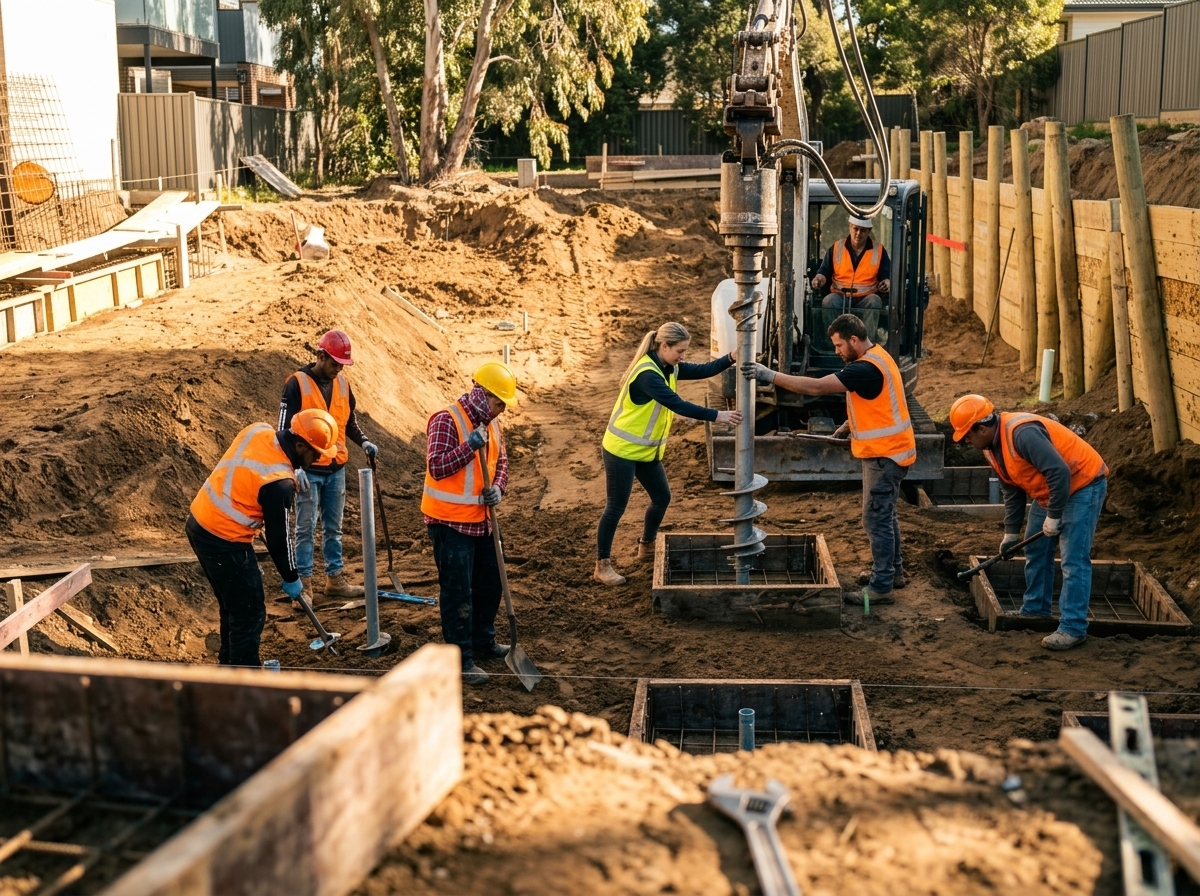
Helical piles are increasingly used across various projects in Australia, including solar farms, pipelines, and transmission lines.
Applications in Solar Farm Foundations
Helical piles provide a stable foundation for solar panels, facilitating quick installation. Their minimal ground impact and fast setup are ideal for large-scale solar projects. This method ensures panels are securely anchored, even in challenging ground conditions. Solar projects benefit from reduced installation time, speeding up overall project completion.
Uses for Pipeline Supports and Transmission Footings
When supporting pipelines, helical piles offer robust tensile and compressive strength. They secure pipelines in place, reducing risks of movement or damage, particularly in flood-prone areas. Similarly, transmission line footings benefit from the rapid installation and immediate load-bearing capacity, ensuring infrastructure is stable and reliable.
Australian Ground Conditions and Compliance
Australian projects face unique challenges due to diverse soil conditions. Helical piles are designed to comply with local standards like AS 2159, ensuring they meet rigorous safety and performance criteria. Their ability to adapt to various soils makes them a preferred choice for many engineers, offering peace of mind and reducing project risks.
Frequently Asked Questions
What are helical piles, and how do they work?
Helical piles are steel shafts with helical plates that screw into the ground. They transfer loads to deeper soil layers, providing stable support for structures without the need for concrete.
Why choose helical piles over traditional concrete foundations?
Helical piles offer faster installation, immediate load capacity, and minimal ground disturbance. They are ideal for projects with tight schedules and environmentally sensitive sites.
Are helical piles suitable for all soil types?
Helical piles perform well in a variety of soil conditions, including clay, sand, and silt. However, they may not be suitable for solid rock or highly bouldered areas, where pre-drilling might be necessary.
How is the load capacity of helical piles verified?
The load capacity is verified during installation through a torque-to-capacity relationship. This method ensures each pile is strong enough to support the intended load immediately.
What environmental benefits do helical piles offer?
Helical piles minimize soil disturbance and require less excavation, which reduces environmental impact. They are particularly beneficial in sensitive areas where preserving the natural landscape is crucial.
Last chance for 2026 pricing – secure your foundation solutions today.