Traditional concrete footings often slow your project with long curing times and unpredictable performance in Australia’s challenging soils. Screw piles Australia offers a faster, engineered alternative with installation speeds up to 50% quicker and capacity confirmed through real-time torque correlation. This post explains how helical piles comply with AS2159 while reducing ground disturbance and risks on solar farms, transmission lines, and pipelines. Keep reading to see why these foundations deliver reliable results where concrete struggles. For more insights on screw piles, you can explore this resource.
[Section Title]
[SubSection Title]
[Section Content]
Advantages of Screw Piles in Australia
Screw piles in Australia offer a game-changing alternative to traditional concrete footings, ensuring faster installation and reliability. Let’s dive into the benefits of using screw piles in various infrastructure projects.
Faster Installation and Programme Efficiency
Screw piles save you time. They can be installed up to 50% faster than concrete footings. This speed is crucial when you need to meet tight deadlines or work in remote locations. Unlike concrete, which requires curing time, screw piles are ready for immediate loading. This can significantly reduce your project’s timeline, keeping everything on track.
With screw piles, you also avoid the hassles of extensive excavation and spoil removal. The installation process uses smaller, more mobile equipment, making it suitable for sites with limited access. This flexibility means fewer delays and a smoother construction process, especially for projects like solar farms or pipeline supports.
Enhanced Load Capacity and Torque Correlation
Screw piles provide reliable support, thanks to their enhanced load capacity. This is verified in real-time through torque correlation, which ensures each pile meets the necessary standards. You can trust that your project will remain stable, even in challenging soil conditions.
The use of torque correlation as a verification method means you can see the proof of load capacity during installation. This immediate feedback allows for adjustments on the spot, reducing the risk of future issues. In contrast, concrete footings often rely on post-construction testing, which can delay progress and increase costs.
Reduced Environmental Impact and Site Disturbance
If minimizing environmental impact is a priority, screw piles are an excellent choice. Their installation causes minimal ground disturbance, preserving the site’s natural state. This is particularly beneficial for projects in sensitive environments or areas with strict regulations.
By avoiding extensive excavation and spoil removal, screw piles reduce the ecological footprint of your project. This approach not only protects the environment but also speeds up the construction process. You can complete your project faster without compromising on sustainability.
Comparing Screw Piles to Concrete Footings
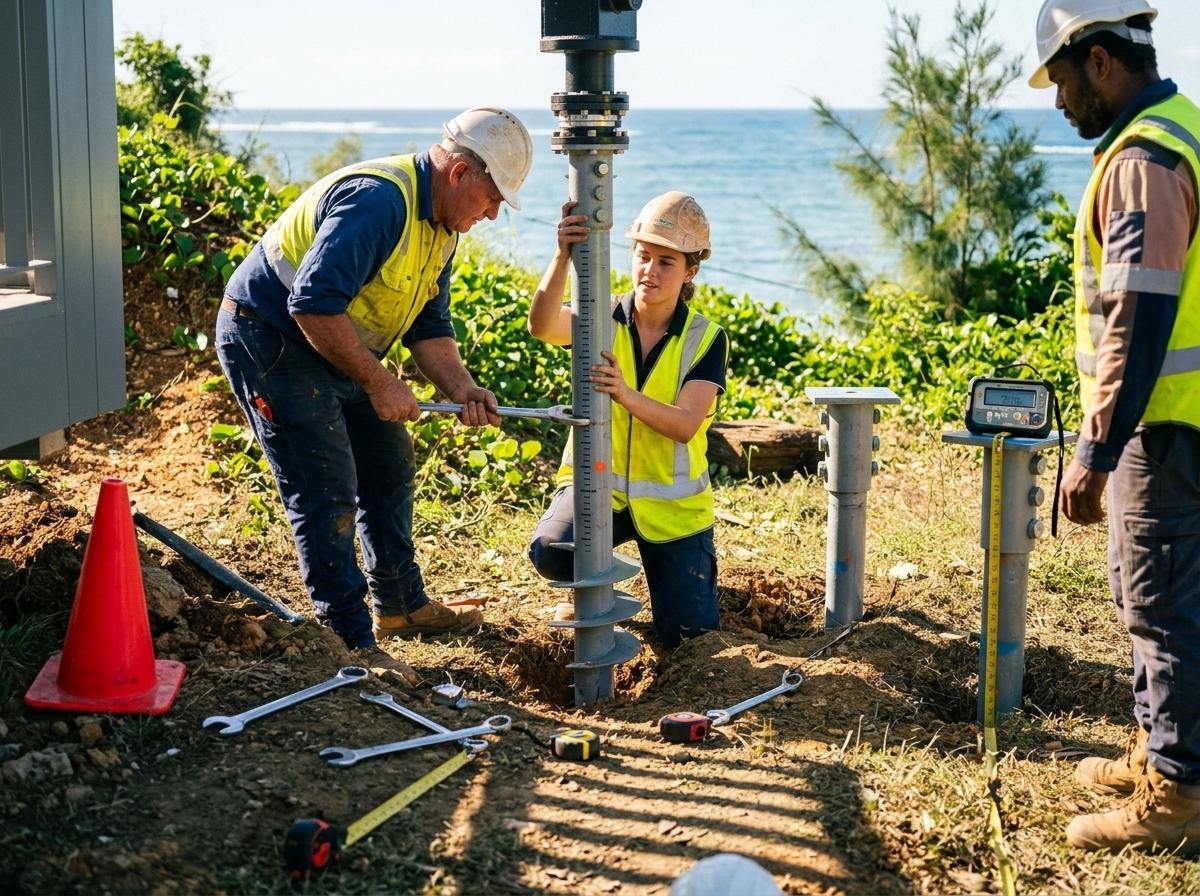
When it comes to choosing between screw piles and concrete footings, understanding their differences is key. Let’s explore why screw piles often come out on top.
Predictable Performance in Various Soil Conditions
Screw piles excel in diverse soil conditions, providing predictable performance where concrete struggles. They are particularly effective in reactive clay soils, coastal sand, and weathered rock. This adaptability ensures that your foundation remains stable, regardless of the ground conditions.
In contrast, concrete footings can be unpredictable in challenging soils, leading to potential delays and increased costs. By choosing screw piles, you reduce the risk of unforeseen complications and ensure a smoother construction process.
Compliance with AS2159 and Australian Standards
Screw piles comply with AS2159 and other Australian standards, giving you peace of mind about their reliability. This compliance guarantees that your project meets all necessary regulations, avoiding potential legal issues.
The use of screw piles also simplifies the approval process, as they are recognized for their effectiveness and safety. This can expedite your project timeline, allowing you to focus on other critical aspects of construction.
Case Studies: Successful Implementations
Numerous projects have benefited from the use of screw piles, showcasing their effectiveness. For instance, solar farm foundations have been completed faster and with less environmental impact. Similarly, transmission line footings and pipeline supports have seen improved stability and reduced costs.
These case studies demonstrate the versatility and reliability of screw piles in real-world applications. By choosing screw piles, you join other successful projects that have leveraged their benefits to achieve outstanding results.
Requesting Design Reviews and Budget Quotes
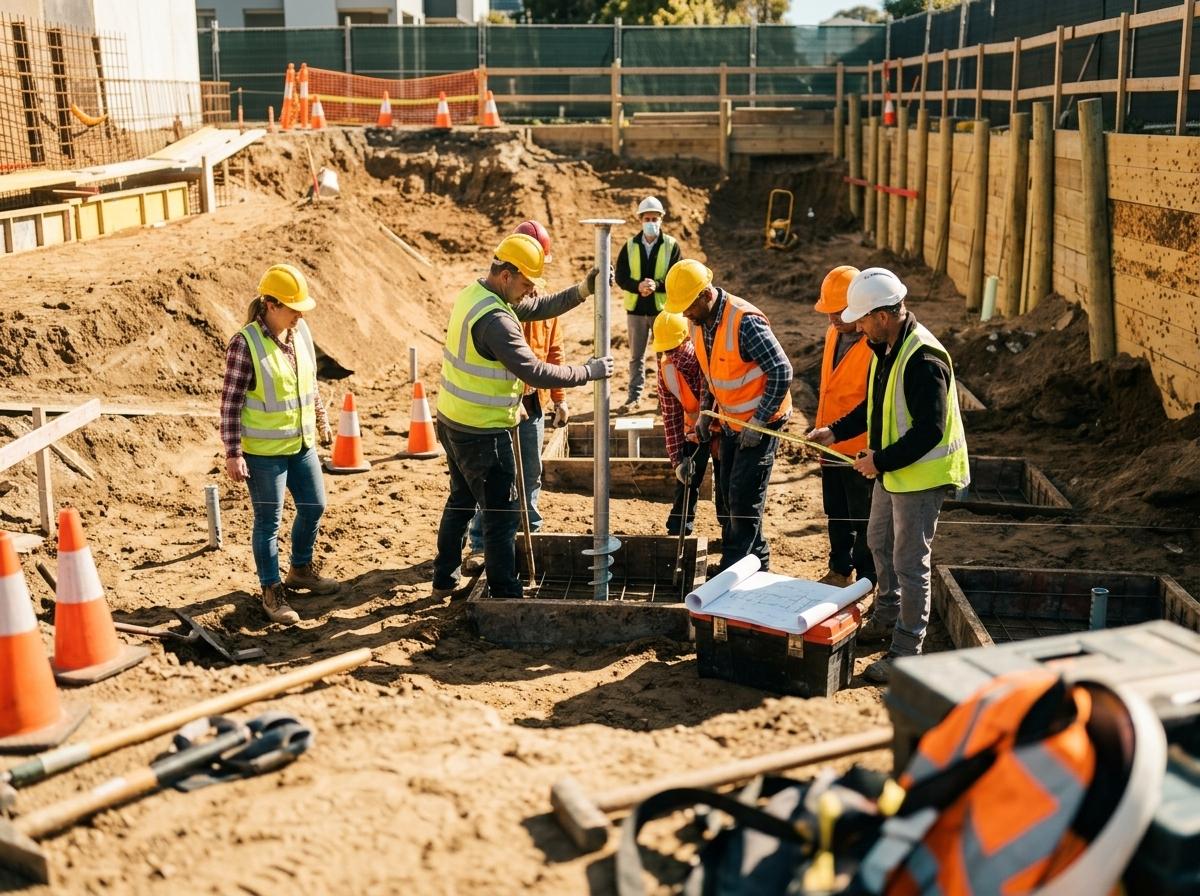
Understanding the benefits of screw piles is just the first step. The next is to request design reviews and budget quotes to tailor them to your specific project needs.
Preliminary Design Review Process
The design review process begins with a detailed assessment of your project’s requirements. This includes site conditions, environmental factors, and load expectations. By conducting a thorough review, you ensure that the screw piles are designed to meet your project’s unique needs.
This preliminary step is crucial for optimizing the performance and cost-effectiveness of your foundation solution. It also provides a clear roadmap for the installation process, minimizing potential issues and ensuring a successful outcome.
Consultation with Geotechnical Experts
Engaging with geotechnical experts is vital for the success of your project. These professionals provide valuable insights into the soil conditions and help tailor the screw pile design accordingly. Their expertise ensures that your foundation is both robust and compliant with all relevant standards.
By working with experts, you gain access to the latest industry knowledge and best practices. This collaboration can significantly enhance the efficiency and reliability of your project, giving you confidence in your foundation choice.
Access to Comprehensive Case Studies and Resources
To further support your decision-making process, comprehensive case studies and resources are available. These materials provide detailed insights into the successful application of screw piles in various projects. This information can guide your design choices and highlight the potential benefits for your specific needs.
By utilizing these resources, you ensure that you have a well-rounded understanding of screw piles’ capabilities. This knowledge empowers you to make informed decisions and maximize the success of your project.
Frequently Asked Questions
What are screw piles, and how do they work?
Screw piles are steel shafts with helical plates that are screwed into the ground to create a stable foundation. They transfer loads to deeper, more stable soil layers, allowing immediate loading after installation.
Why choose screw piles over concrete footings?
Screw piles offer faster installation, reduced environmental impact, and predictable performance in various soil conditions. Unlike concrete footings, they require no curing time and provide immediate load-bearing capability.
Are screw piles suitable for all soil types?
While screw piles are highly adaptable, they perform best in reactive clay, coastal sand, and weathered rock. They may not be suitable for solid rock or heavily bouldered ground conditions without pilot drilling.
How do screw piles comply with Australian standards?
Screw piles comply with AS2159 and are recognized for meeting all necessary regulatory requirements. This compliance ensures their reliability and safety in construction projects.
What is the role of torque correlation in screw pile installation?
Torque correlation is used to verify the load capacity of screw piles in real-time during installation. This immediate feedback allows for adjustments, ensuring that each pile meets the required standards and provides reliable support.
Last chance for 2026 pricing – secure your foundation solutions today.