Concrete foundations have long been the default for renewable energy infrastructure, but they come with hidden costs: long curing times, heavy carbon footprints, and complex site preparation. If your project demands fast, low-carbon foundation options that handle rocky and expansive Australian soils, helical piles offer a proven alternative. This post breaks down how sustainable foundations like screw piles can cut installation time, reduce disturbance, and keep your solar farm or transmission line footing compliant with AS 2159 standards. For further insights on renewable energy infrastructure, visit this resource.
Sustainable Foundations for Energy Projects
Rethinking Foundation Choices
Choosing the right foundation is crucial for energy projects. With an increasing focus on sustainability, it’s time to explore alternatives to traditional methods. Concrete, while reliable, is not always the best fit for environmentally conscious projects. Let’s delve into why helical piles are gaining traction as a preferred solution.
Environmental Impact of Construction
Construction activities can significantly affect the environment. Concrete foundations, for instance, are notorious for their high carbon emissions. The production and transportation of concrete are energy-intensive, contributing to a larger carbon footprint. Helical piles, on the other hand, offer a way to minimize this impact.
Helical Piles as Eco-Friendly Option
Helical piles stand out as an eco-friendly choice. They require less material and are quicker to install, reducing disturbance and emissions. Unlike concrete, which needs time to cure, helical piles can support structures immediately after installation. This efficiency not only speeds up projects but also aligns with sustainability goals.
Comparing Helical Piles and Concrete
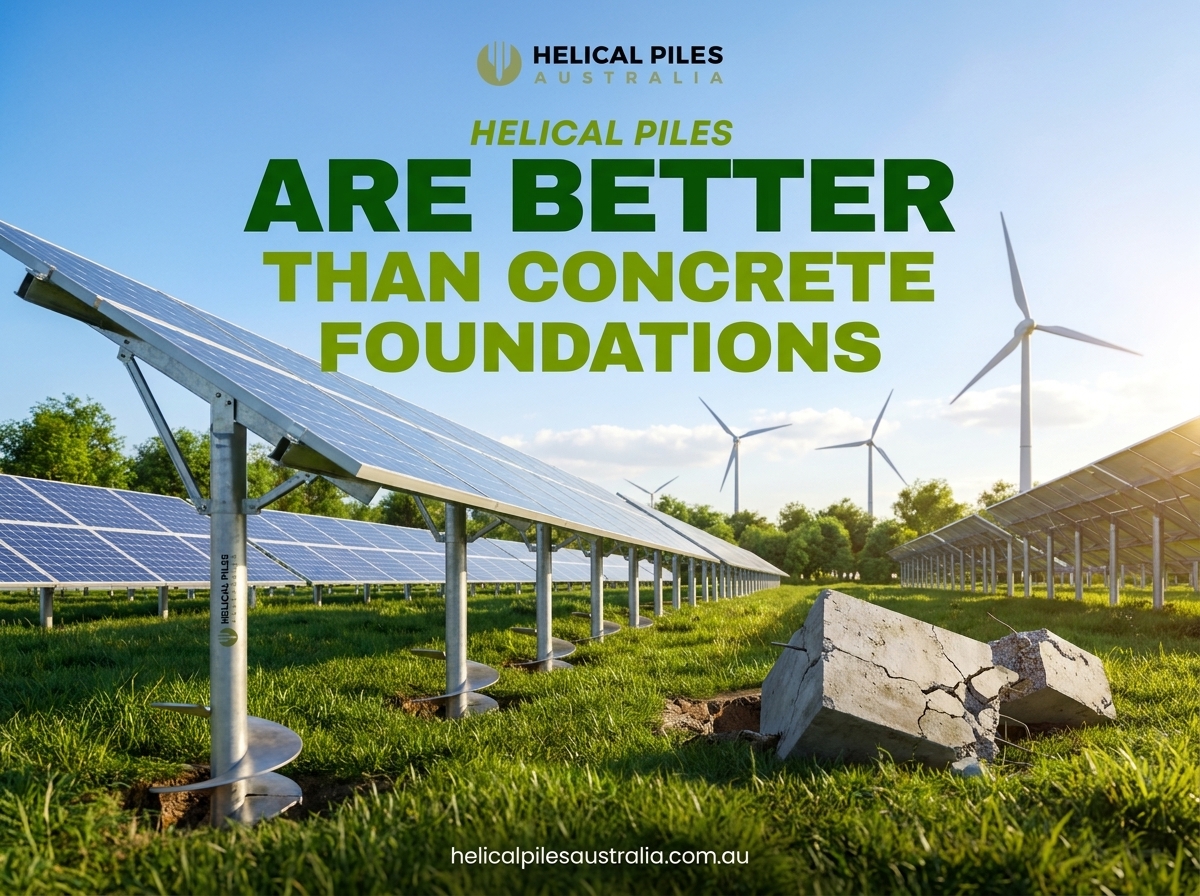
Benefits of Helical Piles
Helical piles offer numerous advantages over concrete. They are versatile and can be installed in various soil types, including rocky and expansive clays found in Australia. This adaptability makes them particularly suitable for diverse environments. Moreover, the process is less invasive, preserving the natural state of the site.
Concrete foundations can be cumbersome and require extensive preparation. The need for curing time delays construction and increases costs. In contrast, helical piles eliminate these issues, providing immediate support and reducing labor needs by 40%. This translates to faster project completion and lower overall costs.
Limitations of Traditional Concrete
Concrete has been a staple in construction but comes with limitations. Its production involves significant carbon emissions, and the curing process is time-consuming. Additionally, large-scale excavations can disrupt the environment, posing challenges for projects in sensitive areas.
The reliance on heavy machinery and the need for extensive site preparation further complicate concrete use. These factors contribute to higher project costs and longer timelines. In comparison, helical piles require minimal site disturbance, offering a more sustainable and efficient alternative.
Case Studies in Renewable Energy
Several projects have successfully implemented helical piles, showcasing their benefits. For instance, a solar farm in remote Australia chose helical piles for their quick installation and minimal impact on the environment. The project completed 50% faster than anticipated, demonstrating the efficacy of this method.
Another example is a wind farm where helical piles provided a stable foundation despite challenging soil conditions. The reduced need for heavy machinery lowered transportation costs and minimized environmental disturbance. These cases highlight the potential of helical piles in renewable energy projects.
Advantages of Helical Piles in Australia
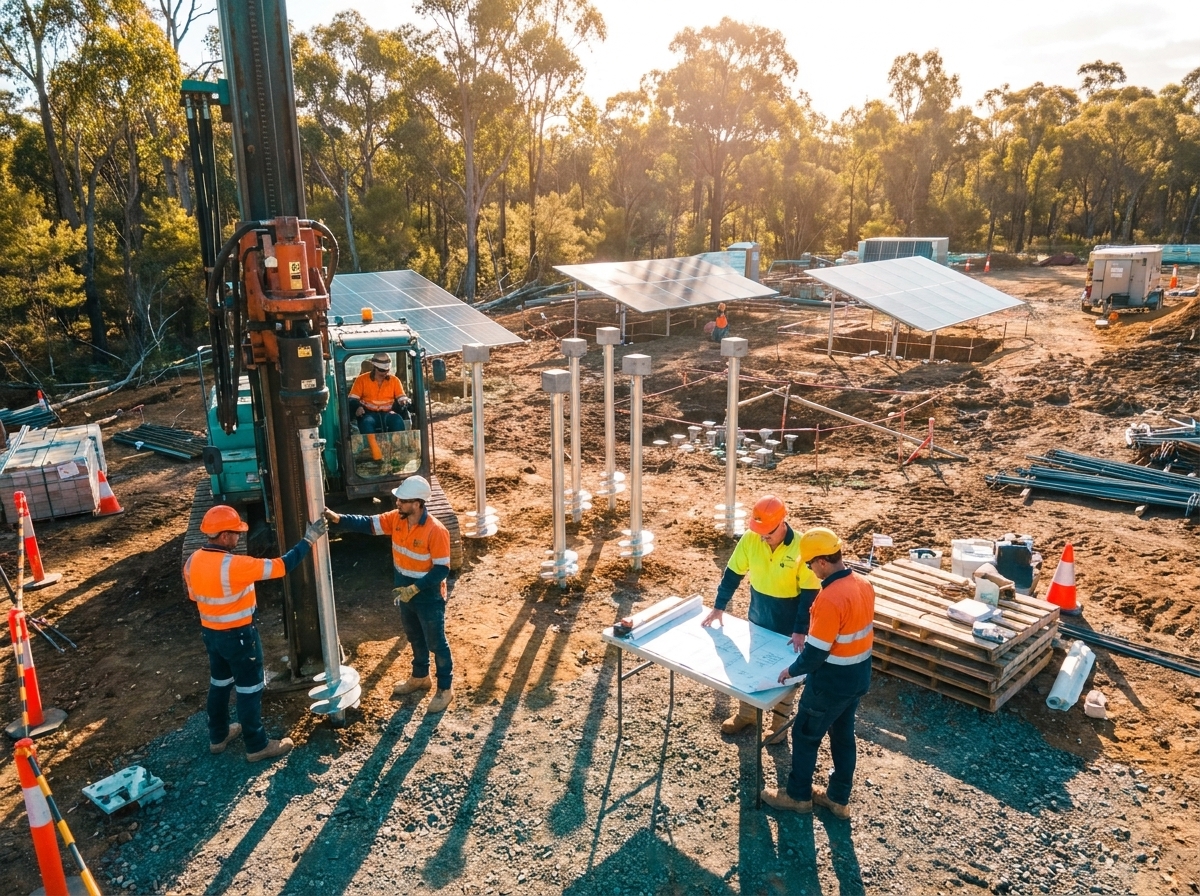
Adaptability to Australian Soil
Australian soils can be challenging, with rocky and expansive clays posing difficulties for traditional foundations. Helical piles excel in these conditions, offering a solution that adapts to various soil types. Their design allows for easy installation, even in hard-to-reach areas.
This adaptability is crucial for projects in remote locations, where soil variability can impact foundation choice. Helical piles provide a reliable option that ensures stability and longevity, essential for infrastructure projects across the country.
Installation Efficiency and Cost
Time and cost are critical factors in construction. Helical piles shine in both aspects, with installation times significantly shorter than concrete alternatives. This efficiency reduces labor needs and project durations, resulting in cost savings.
The absence of curing time means structures can be built immediately, keeping projects on schedule. For developers, this translates to faster returns on investment and reduced financial risk. The streamlined process also cuts down on-site workforce requirements, lowering labor expenses.
Compliance and Quality Assurance
Meeting regulatory standards is vital for construction projects. Helical piles comply with AS 2159 standards, ensuring quality and safety. The use of torque monitoring during installation provides real-time assurance of load capacity, giving stakeholders confidence in the foundation’s integrity.
Quality assurance is further enhanced by in-house manufacturing, maintaining control over the production process. This commitment to compliance and quality reassures project managers that their foundations are not only efficient but also reliable and safe.
By choosing helical piles, renewable energy projects can achieve their sustainability goals while benefiting from time and cost efficiencies. This approach aligns with modern construction needs, offering a responsible and practical alternative to traditional foundations. For a deeper dive into sustainable energy practices, explore the Clean Energy Council’s resources.
See why choosing the right foundation matters. Explore our solutions now.