Traditional foundation methods often slow your project and fail in Australia’s tricky soil types. You need a foundation selection guide that cuts through the guesswork and delivers reliable results on variable ground conditions. This technical guide breaks down how to choose foundation systems that match your site’s geotech data, load demands, and access limits—showing why torque-verified helical piles provide faster, safer installs with immediate load-bearing capacity.
Evaluating Foundation Systems
Choosing the right foundation system is crucial for your project’s success. Let’s explore how understanding ground conditions and decision criteria can guide your choices.
Understanding Ground Conditions
Ground conditions vary significantly across Australia, impacting your foundation choice. You might encounter reactive clay, soft soil, or coastal sand. Each type presents different challenges. For example, reactive clay expands and contracts with moisture changes, while soft soil may lack the strength to support heavy loads.
To assess these conditions, geotechnical surveys are essential. They provide data on soil type, moisture content, and load-bearing capacity. Armed with this information, you can tailor your foundation approach to suit the specific ground conditions. This step ensures stability and safety for your project.
Key Decision Criteria
Making informed decisions requires considering several factors. First, evaluate geotechnical data to understand soil behavior. Consider load demands—what weight will your foundation support? Access limitations also play a role. Some sites may have restricted access, requiring adaptable foundation solutions.
Additionally, think about environmental impact. Minimizing ground disturbance is vital, especially in sensitive areas. Lastly, account for the whole-of-life cost. This includes not just installation but also maintenance and longevity. By weighing these criteria, you can select a foundation system that meets your project’s unique needs.
Comparing Foundation Methods
When comparing foundation methods, traditional techniques like concrete are often slower and more disruptive. Concrete requires excavation, curing time, and can be affected by weather conditions. In contrast, helical piles offer a faster, less invasive solution. They require no curing time and can be installed in various weather conditions.
Helical piles also provide immediate load-bearing capacity, reducing project timelines. Their installation process is efficient, with minimal site disruption. This method is particularly advantageous for projects in remote or constrained locations where traditional methods struggle. By understanding these differences, you can choose a foundation method that aligns with your project’s goals.
Introducing Helical Piles
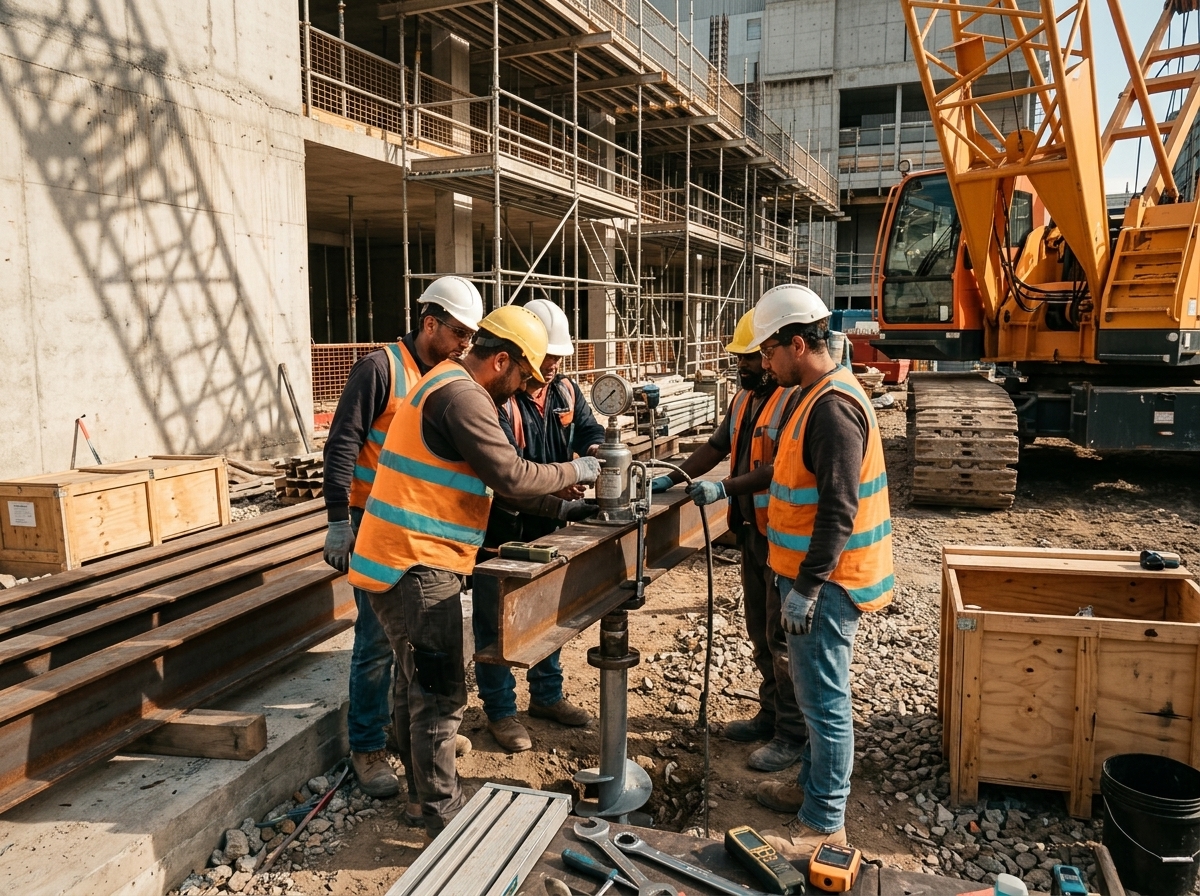
Helical piles offer a modern solution to foundation challenges. Let’s delve into their benefits, installation process, and the advantages they bring.
Benefits Over Traditional Methods
Helical piles bring several advantages over traditional methods. First, they install quickly, reducing your project’s timeline by up to 50%. This speed comes from their ability to be installed without excavation or curing delays. The piles are screwed into the ground, providing immediate load-bearing capability.
Furthermore, helical piles minimize ground disturbance. Unlike concrete, which requires large-scale excavation, helical piles leave the site relatively undisturbed. This makes them ideal for projects in sensitive areas where environmental impact is a concern. By choosing helical piles, you gain a faster, cleaner, and more efficient foundation solution.
Torque-Verified Installation
One of the standout features of helical piles is torque-verified installation. During installation, the torque applied directly correlates to the pile’s load capacity. This real-time verification ensures each pile meets the required standards for your project. It provides immediate quality assurance, reducing the risk of errors or failures.
This torque verification process sets helical piles apart from traditional methods, offering a level of precision and reliability that is unmatched. It ensures that every pile installed meets stringent performance criteria, providing peace of mind and confidence in your foundation’s integrity.
Environmental and Cost Advantages
Helical piles offer significant environmental and cost benefits. Their installation process produces minimal waste and disturbance, preserving the surrounding environment. This makes them an excellent choice for eco-conscious projects.
Cost-wise, helical piles eliminate the need for excavation and curing, reducing labor and machinery expenses. With fewer delays and a faster installation process, overall project costs decrease. Helical piles also offer long-term savings through their durability and minimal maintenance requirements. By opting for helical piles, you achieve a sustainable, cost-effective foundation solution.
Practical Applications and Case Studies
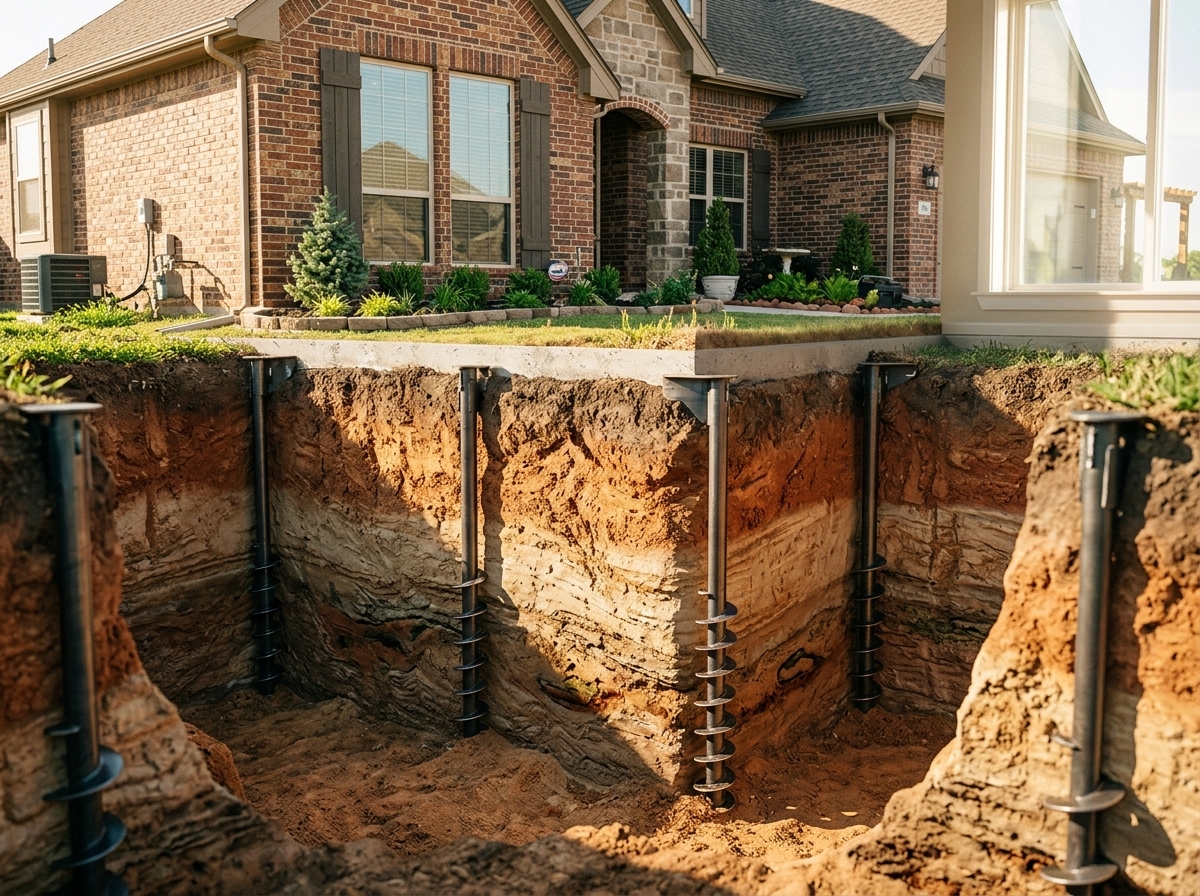
Helical piles have proven their worth across various applications. Let’s examine their effectiveness in solar farms, transmission lines, and remote sites.
Solar Farm Foundations
In solar farm projects, speed and reliability are paramount. Helical piles deliver both. Their rapid installation process keeps projects on schedule, even in remote areas with limited access. The piles’ immediate load-bearing capacity means solar panels can be installed right away, accelerating project timelines.
Moreover, helical piles are adaptable to uneven terrain, ensuring stability for solar arrays. This adaptability, combined with their minimal ground disturbance, makes them a favored choice in renewable energy projects. By using helical piles, solar farm developers achieve efficient, reliable foundations that support sustainable energy production.
Transmission Line Footings
Transmission lines often run through challenging terrain, requiring robust foundations. Helical piles excel in these conditions, providing stable support even in remote or difficult-to-access areas. Their installation process accommodates varying soil types, from reactive clays to sandy soils.
The real-time torque verification ensures each pile meets the necessary load requirements, offering confidence in the foundation’s reliability. By choosing helical piles for transmission line footings, you achieve a stable, efficient solution that withstands environmental and logistical challenges.
Remote Site Installations
Remote site installations present unique challenges, from limited access to harsh environmental conditions. Helical piles are designed to overcome these obstacles. Their lightweight nature and ease of installation make them ideal for sites with constrained access or where heavy machinery is impractical.
With no need for excavation or curing, helical piles reduce labor and equipment costs, making them a cost-effective choice for remote projects. Their adaptability to various soil conditions ensures they provide reliable support, regardless of location. By opting for helical piles, you ensure your remote site installations are efficient, reliable, and environmentally responsible.
Discover real-world success with our engineered foundation systems.