Concrete footings often fail when faced with Australia’s reactive clays, soft alluvium, and acidic sulfate soils. These failures cause costly delays and uncertain load capacity that derail your project timeline. You can avoid these risks by choosing helical piles Australia engineers trust—a foundation alternative that installs up to 50% faster, offers torque verification, and supports immediate load-bearing in challenging soils. Keep reading to see why helical piles outperform traditional concrete footings on your next project. For more information on footing failures, check out this guide on common causes of failed footings.
Common Causes of Concrete Footing Failure
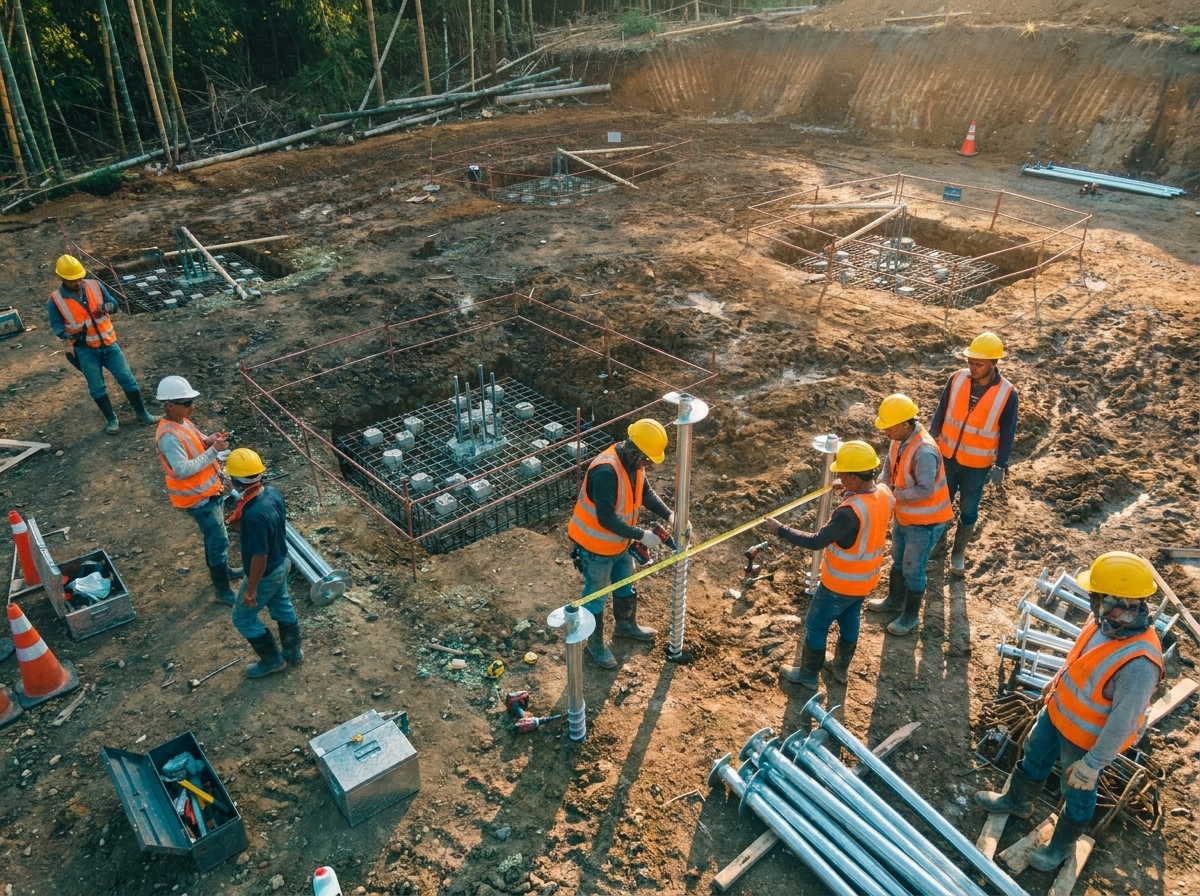
When dealing with Australian soils, concrete footings face numerous challenges. Let’s explore the most common issues.
Impact of Expansive Soils
Expansive soils can spell disaster for concrete footings. As these soils swell and shrink with moisture changes, they exert pressure on foundations. This pressure causes cracks and instability. Imagine a home on such soil. After a wet season, the soil expands, pushing against the foundation. Then, during dry spells, the soil contracts, leaving voids beneath the footings. Over time, this cycle can lead to severe structural damage. To learn more about common causes of footing failure and how to address them, visit this resource.
Challenges with Reactive Clay Soils
Reactive clay soils pose another problem. These clays change volume significantly with moisture variations. Picture a building on clay soil. During rain, the clay swells, and during drought, it shrinks. This movement can crack or tilt the foundation. Most people think concrete can handle anything, but reactive clay proves them wrong. Consistent monitoring and maintenance become essential, yet costly.
Risks from Liquefaction and Soft Alluvium
Liquefaction during seismic activity liquefies the soil, turning it into a fluid-like state. Soft alluvium, often found near riverbeds, lacks the strength to support heavy structures. This combination can cause footings to sink or tilt. For example, a warehouse on soft alluvium may face uneven settling, disrupting operations. Standard concrete lacks the adaptability for such conditions, making it a risky choice.
Helical Piles: A Reliable Foundation Alternative
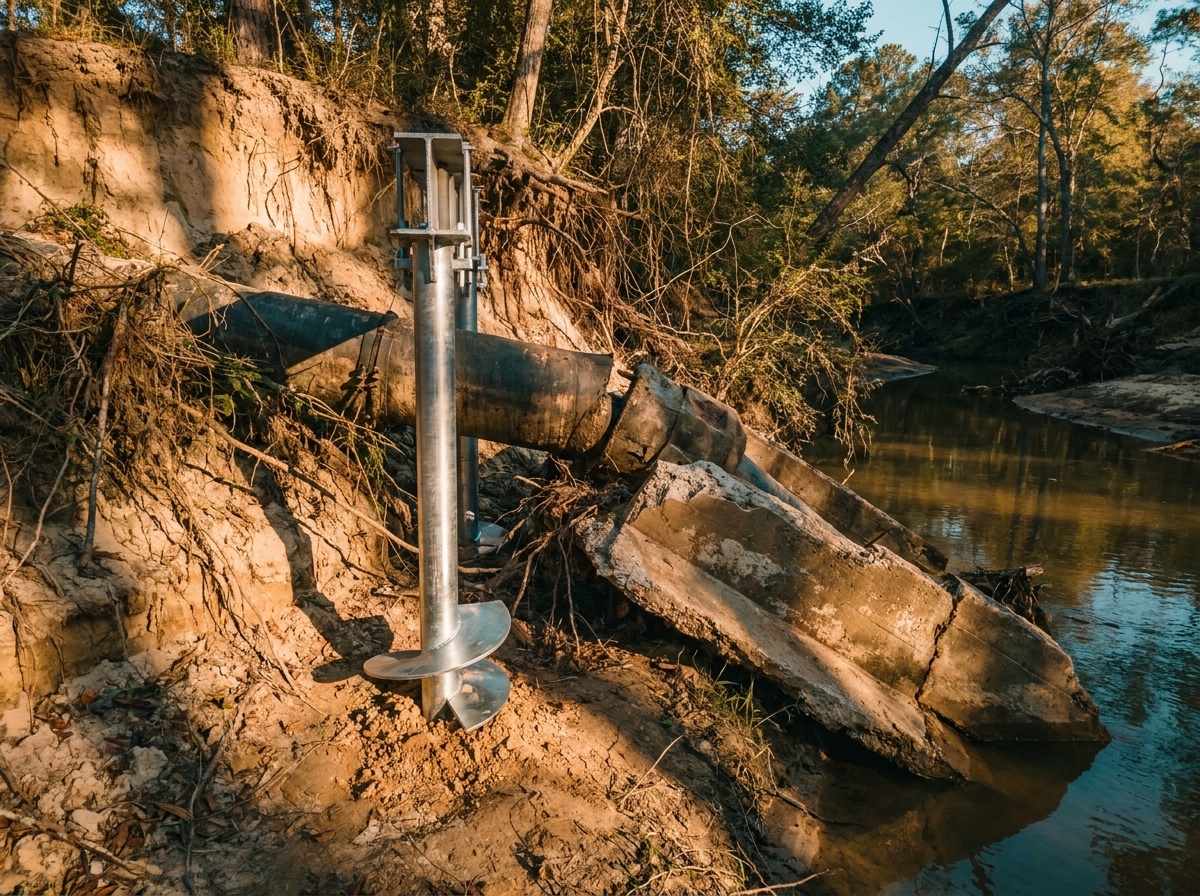
Helical piles offer a robust solution where traditional footings fail. They adapt to challenging soils, providing dependable support.
Benefits for Australian Conditions
Helical piles thrive in diverse Australian environments. They perform well in reactive clays, expansive soils, and soft alluvium, providing the stability you need. Unlike concrete, they don’t crack under pressure. The secret lies in their helical design, which anchors deeply into the ground. This ensures resilience against shifting soils and prevents settling.
Torque Verification and Immediate Load-Bearing
One standout feature of helical piles is torque verification, which ensures correct installation depth and load capacity. Unlike concrete, they can bear loads immediately, eliminating curing time. This speed means structures can go up faster, saving you time and money. Immediate load-bearing capability is especially vital for projects with tight deadlines.
Fast Installation and Reduced Ground Disturbance
Helical piles install rapidly, often up to 50% faster than concrete foundations. This quick process minimizes site disruption and reduces equipment needs. Imagine setting up a solar farm. With helical piles, your timeline shrinks, and your project progresses smoothly. Their installation causes minimal disturbance, preserving the environment.
Application of Helical Piles in Infrastructure
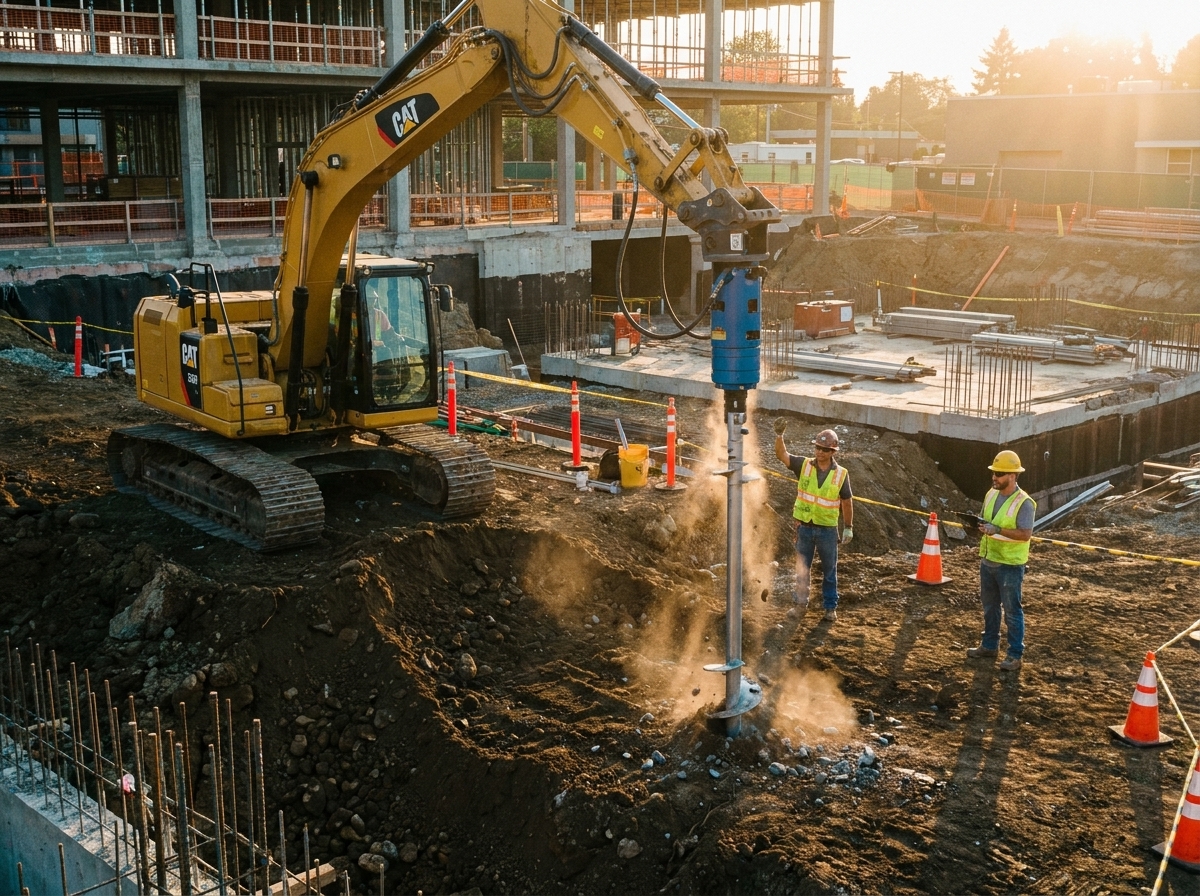
Helical piles prove their worth across various infrastructure projects in Australia. Let’s see how they excel.
Solar Farm Foundations and Pipeline Supports
In solar farms, helical piles provide stability on uneven terrain. Their quick installation suits the vast scale of these projects. For pipelines, they offer corrosion-resistant anchoring. This ensures pipelines remain secure even in shifting soils.
Transmission Line Footings and Remote Site Construction
Transmission lines benefit from helical piles, especially in remote areas. These piles adapt to challenging terrains, supporting the weight and tension of lines. In remote sites, their lightweight design eases transportation, reducing logistical headaches.
Addressing Corrosion Resistance and Settlement Control
Helical piles excel in corrosion resistance. Their materials and coatings withstand harsh conditions, ensuring longevity. They also manage settlement control, maintaining the structural integrity of your project. With helical piles, you avoid the pitfalls of concrete, gaining a reliable foundation that stands the test of time.
In conclusion, while concrete footings struggle with Australian conditions, helical piles offer a reliable, faster, and more adaptable alternative. From solar farms to pipeline supports, they meet the demands of modern infrastructure projects. Consider helical piles for your next project to reduce risk, save time, and ensure lasting success.