Variable soil conditions in Australia often derail foundation plans, causing costly delays and uncertainty. Traditional concrete footings struggle with reactive clay, coastal sand, and weathered rock, increasing project risk and extending schedules. Choosing the right foundation system is crucial to avoid these pitfalls. This guide explains how helical piles offer a reliable alternative, reducing program time while meeting the demands of Australian soils. Learn more about foundation types and soil conditions.
Understanding Variable Soil Conditions
Foundation decisions can’t wait, and understanding soil conditions is the first step. Australia’s diverse landscape presents unique challenges, making it essential to get this right from the start.
Australian Soil Types Overview
Australia’s soil types vary widely, requiring distinct strategies. Reactive clays, coastal sands, and weathered rocks can complicate construction. Reactive clays expand and contract with moisture, coastal sands offer little stability, and weathered rocks can be unpredictable. Each type demands a specific approach to ensure stability and safety source.
Understanding these conditions is crucial. For instance, reactive clays can cause foundations to shift, while coastal sands might not support heavy structures. This knowledge helps guide the choice of foundation type that aligns with the soil’s nature, ensuring long-term reliability.
Importance of Geotechnical Investigation
A thorough geotechnical investigation is vital. It reveals the soil’s composition, strength, and behavior. This step helps avoid unforeseen problems during construction. Without this insight, projects face risks like unexpected shifts or collapses.
Geotechnical data informs engineers about soil stability, moisture levels, and load-bearing capacity. By knowing these factors, decisions can be made with confidence, reducing potential setbacks and costs. Such investigations ensure that foundations are designed to meet the specific demands of the site detailed guide.
Site Classification and Soil Behavior
Site classification underpins successful foundation design. It categorizes soil according to its behavior and load-bearing capacity. By understanding these classifications, engineers can predict how soil will react under stress, leading to more informed design choices.
Classifying the site ensures the right foundation system is chosen, one that accommodates the soil’s unique properties. This approach minimizes risks and enhances safety, providing a solid base for any structure. A well-classified site is the bedrock of a successful foundation project.
Selecting the Right Foundation System
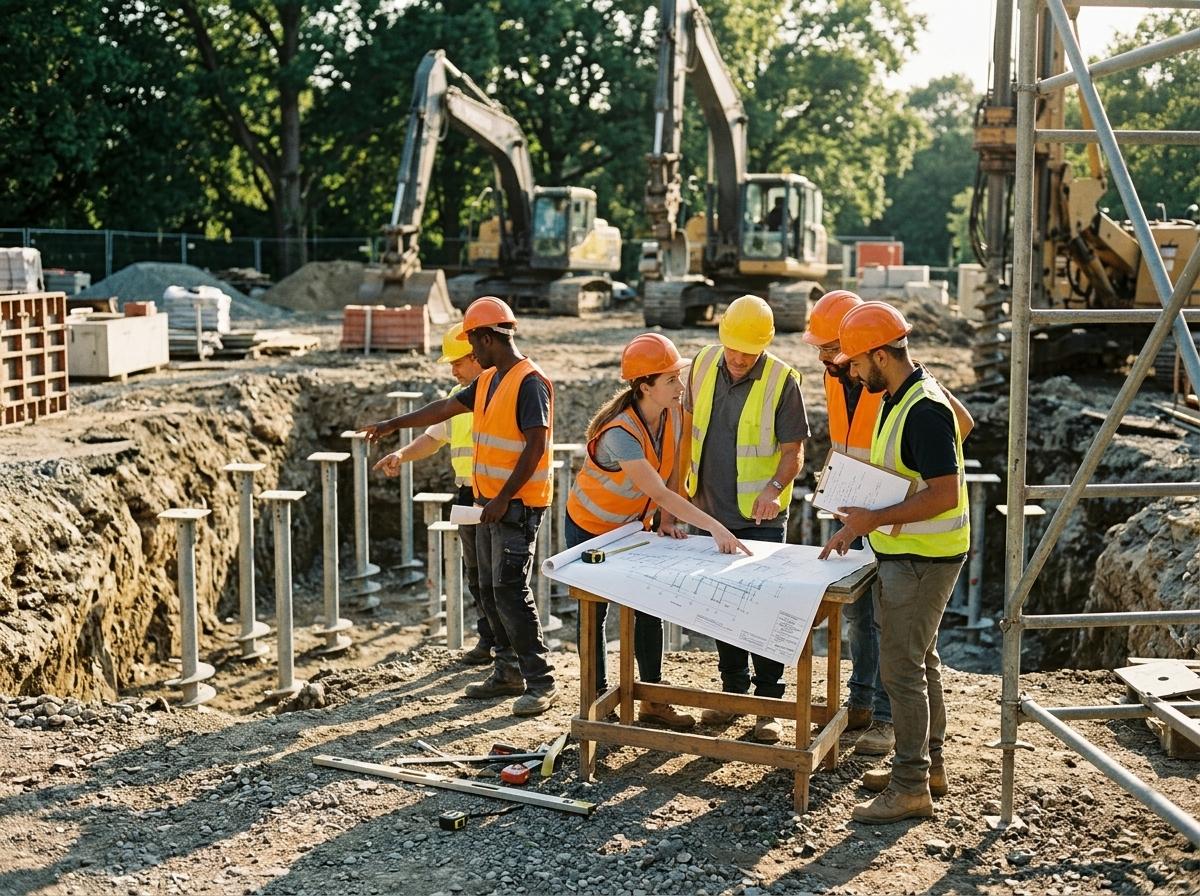
With the groundwork laid, it’s time to explore foundation systems that meet the challenges posed by various soil conditions in Australia. Helical piles emerge as a strong contender.
Comparing Helical Piles and Concrete Footings
Helical piles and concrete footings serve different scenarios. Concrete footings are traditional but can struggle with certain soils, causing delays. In contrast, helical piles offer flexibility, adapting easily to diverse conditions.
Concrete footings require extensive excavation and curing time, leading to potential hold-ups. Helical piles, however, are installed quickly and support immediate loading. This difference can significantly impact project timelines, making helical piles a preferred choice in many situations source.
Benefits of Helical Piles in Reactive Clays
Reactive clays present a unique challenge. Helical piles excel here due to their adaptability and reduced ground disturbance. They penetrate the clay and stabilize the structure, minimizing the risk of movement.
These piles are installed with precision, ensuring they reach stable soil layers. This capability allows them to support structures effectively, even in the most unpredictable clay conditions. Their installation process is faster and less invasive, reducing both time and cost, a vital consideration for any project.
Addressing Coastal and Calcareous Sands
Coastal and calcareous sands require a foundation system that can provide stability in loose conditions. Helical piles fit this role perfectly, offering strong anchorage without the need for large-scale excavation.
Their design allows them to anchor securely in sandy soils, providing the necessary support for structures. This ability to function effectively in such conditions makes them invaluable for projects near the coast. Helical piles ensure that foundations remain steady, reducing the chance of settlement or failure more insights.
Helical Piles Installation and Performance
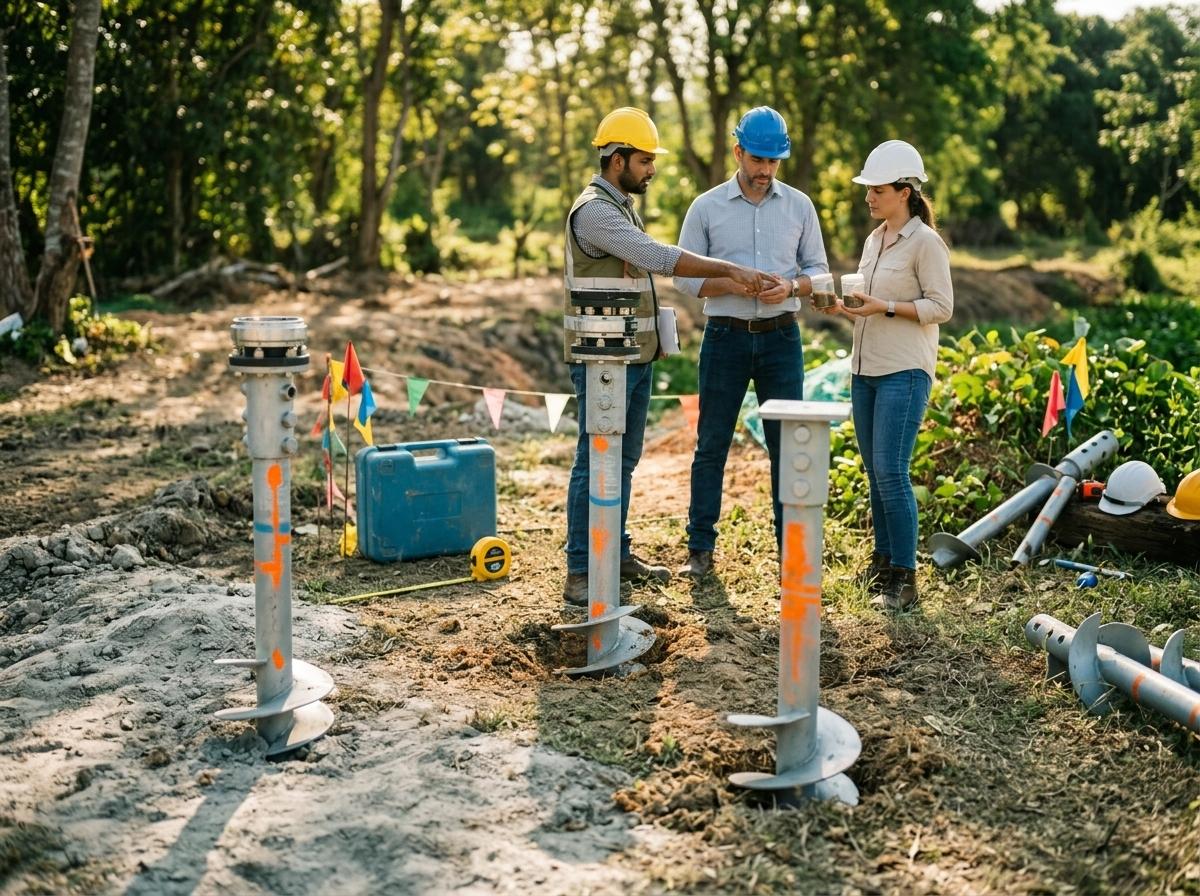
The focus now shifts to the performance and installation of helical piles, highlighting their efficiency and environmental benefits.
Installation Torque and Capacity Correlation
Understanding installation torque is key to ensuring helical piles perform as expected. Torque directly relates to the pile’s load capacity, providing a method to verify installation success.
As the piles are installed, torque measurements indicate whether they’ve reached the necessary depth and stability. This real-time verification ensures that the foundation meets the project’s requirements, giving engineers confidence in the system’s reliability.
Immediate Load-Bearing and No Curing Time
Helical piles offer the advantage of immediate load-bearing capacity. Unlike concrete footings, they don’t require curing time. This feature accelerates project timelines, allowing construction to proceed without delay.
Immediate load-bearing capabilities reduce downtime, ensuring that projects stay on schedule. This aspect is particularly beneficial in time-sensitive projects, where every day counts. By eliminating curing time, helical piles provide a significant advantage over traditional methods.
Minimizing Environmental Impact and Ground Disturbance
Environmental considerations are increasingly important. Helical piles minimize ground disturbance, making them a preferred choice for environmentally sensitive projects. Their installation process involves less excavation, preserving the site’s natural state.
This reduced impact is crucial for maintaining ecosystems and complying with environmental regulations. By choosing helical piles, projects can achieve their goals while respecting the environment. This aspect not only benefits the project but also supports broader sustainability objectives.
Frequently Asked Questions
What are helical piles best suited for?
Helical piles are ideal for projects with variable soil conditions, such as reactive clays and coastal sands. They perform well where traditional concrete footings might struggle due to their adaptability and reduced ground disturbance.
How do helical piles minimize environmental impact?
Helical piles require less excavation compared to traditional foundations, preserving the natural landscape and reducing environmental impact. Their installation process is less invasive, making them suitable for sensitive areas.
Can helical piles be used in all soil types?
While versatile, helical piles are most effective in soils where stability is a concern, like reactive clays or sandy terrains. They provide robust support by anchoring into stable soil layers, ensuring long-term reliability.
Why choose helical piles over concrete footings?
Helical piles offer faster installation, immediate load-bearing, and less ground disturbance. These benefits reduce project time and risk, especially in challenging soil conditions, making them an efficient alternative to concrete footings.
What is the significance of installation torque in helical piles?
Installation torque correlates with the pile’s load capacity, providing a measure of performance during installation. It ensures that the piles achieve the necessary depth and stability, verifying the foundation’s reliability and strength.
Explore how patented tech sets us apart in foundation solutions.