Screw piles Australia offer a precision-engineered foundation solution that installs up to 50% faster than traditional concrete footings. For projects dealing with reactive clays, coastal sands, or weathered rock, these systems provide immediate load capacity without excavation or curing delays. Understanding how helical piles perform in Australian soils can help you reduce risk, control costs, and keep your schedule on track. This article breaks down the technical benefits and installation process to support your next infrastructure project. Learn more.
Benefits of Screw Piles in Australia
Helical piles offer a wide range of benefits for infrastructure projects across Australia, helping project managers and engineers address specific challenges.
Faster Installation Times
Screw piles can be installed significantly faster than traditional concrete foundations. This speed comes from eliminating lengthy processes like excavation and curing. Once installed, they are ready to bear loads immediately, unlike concrete which requires time to set. This time-saving advantage helps keep your project on schedule.
Another benefit is the reduced need for large machinery and extensive site preparation. Smaller, more agile equipment can be used, which makes it easier to work in tight or remote locations. This flexibility ensures that your project timeline remains predictable and manageable.
Performance in Australian Soils
Australian soils can be challenging, but screw piles excel in difficult conditions. They are particularly effective in reactive clays, coastal sands, and weathered rock. These piles screw directly into the ground, reaching stable layers that provide reliable support.
The ability of screw piles to adapt to various soil conditions means fewer surprises and more predictable outcomes. They also minimize soil disturbance, which is crucial for maintaining the integrity of the surrounding environment.
Environmental and Cost Advantages
Screw piles offer environmental benefits by reducing ground disturbance and eliminating the need for concrete curing and excess excavation. This leads to less waste and a smaller environmental footprint. For eco-conscious projects, this is a major advantage.
Cost savings are another significant benefit. By reducing the time and resources needed for installation, screw piles can lower overall project costs. Avoiding delays and rework further enhances cost control, allowing you to stay within budget and deliver on time.
Technical Aspects of Helical Piles
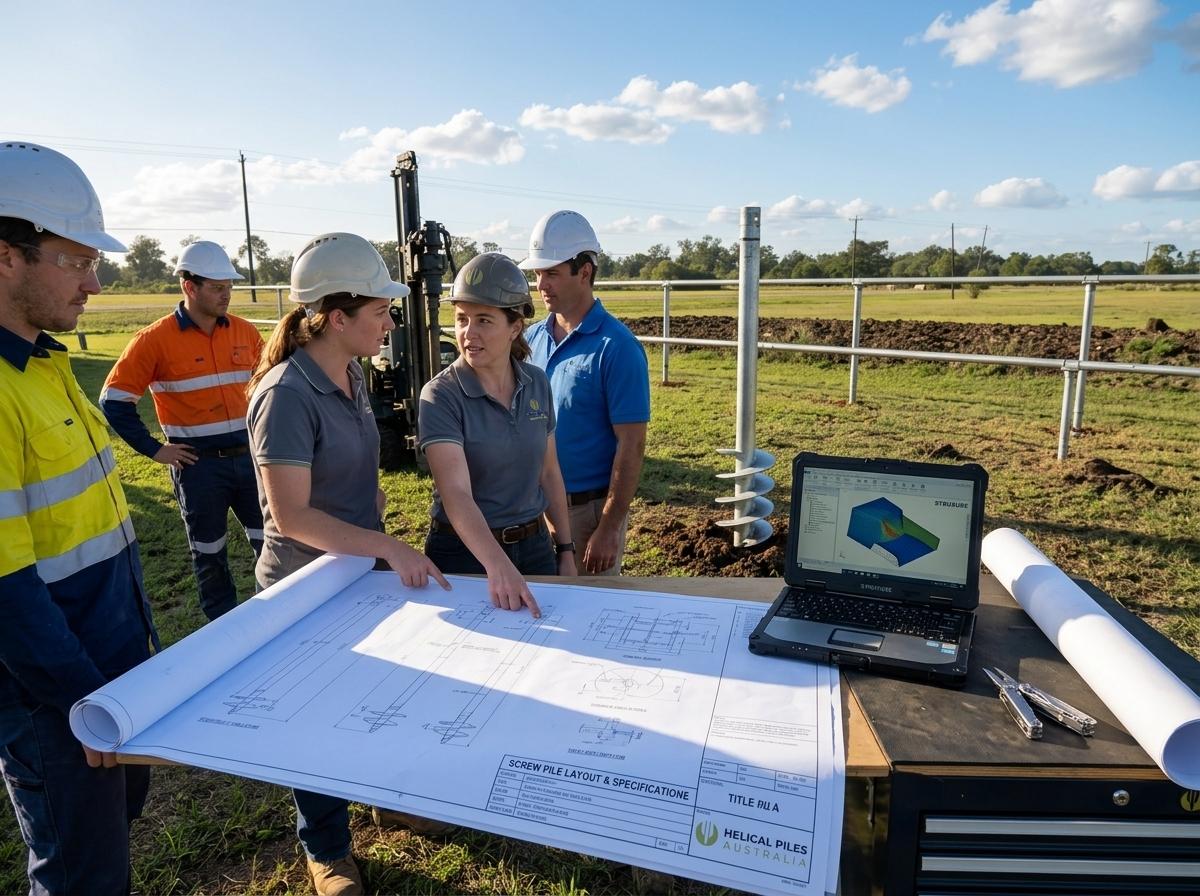
Understanding the technical aspects of helical piles helps ensure their successful application in your infrastructure projects.
Load Capacity and Torque Verification
Load capacity is a critical consideration for foundation systems. Helical piles provide immediate load capacity upon installation. This is verified using torque monitoring during installation, giving engineers real-time assurance of each pile’s capacity. This method ensures quality control and confidence in the foundation’s performance.
The torque-to-capacity correlation is a key aspect of helical pile installation. By measuring the torque during installation, you gain a direct understanding of the pile’s load-bearing capability, ensuring that it meets your project’s specific requirements.
Compliance with AS2159 Standards
Compliance with standards is crucial for any construction project. Helical piles adhere to AS2159 standards, ensuring that they meet the necessary requirements for design and construction in Australia. This compliance guarantees reliable performance and reduces the risk of unexpected issues.
These standards cover various aspects of design and construction, providing a framework that supports safety and quality. By adhering to these standards, your project benefits from proven methodologies and practices.
Corrosion Protection and Quality Control
Corrosion protection is vital for long-lasting foundations. Helical piles are typically hot-dip galvanized, offering robust corrosion resistance. This protection extends the life of the piles, making them suitable for various environmental conditions.
Quality control is another critical component. In-house manufacturing of helical piles allows for stringent quality checks, ensuring consistency and reliability in every pile produced. This level of control supports the high standards expected in infrastructure projects.
Practical Applications and Case Studies
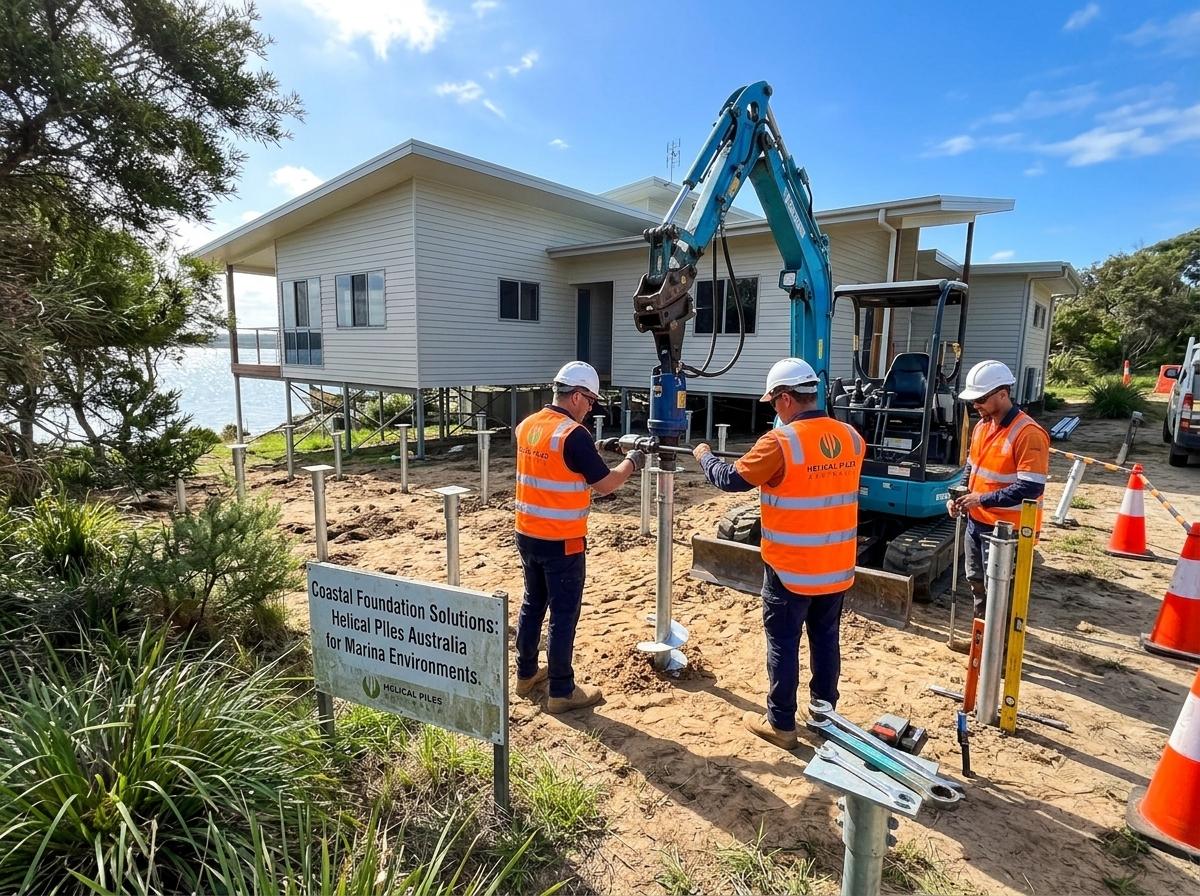
Helical piles are versatile and effective in numerous practical applications, offering solutions for various infrastructure needs.
Solar Farm Foundations
In the renewable energy sector, solar farm foundations require reliable and sustainable support. Helical piles provide a quick and efficient solution, reducing installation time and minimizing environmental impact. This makes them an ideal choice for large-scale solar installations.
The use of helical piles in solar farms ensures that the structures are securely anchored, resisting both compressive and tensile forces. This reliability is crucial for maintaining the efficiency and longevity of solar energy projects.
Transmission Line Footings
Transmission line projects often involve challenging environments and remote locations. Helical piles offer a practical solution by providing stable support with minimal ground disturbance. This reduces the environmental impact and accelerates project timelines.
The ability to install these piles in various soil conditions without extensive excavation is a major advantage. This adaptability ensures that transmission lines can be constructed efficiently, even in difficult terrains.
Pipeline Support Systems
Pipelines require stable and corrosion-resistant support systems to function effectively. Helical piles offer a durable and reliable solution, providing the necessary support in various soil conditions. Their resistance to corrosion and immediate load capacity make them an excellent choice for pipeline projects.
By using helical piles, pipeline projects benefit from reduced installation times and minimized environmental impact. This contributes to the overall success and sustainability of infrastructure developments.
Frequently Asked Questions
What are screw piles?
Screw piles are steel shafts with helical plates that are screwed into the ground, providing secure foundation support. They are used in various infrastructure projects due to their quick installation and reliable performance.
How do helical piles compare to concrete footings?
Helical piles offer faster installation times and immediate load capacity compared to concrete footings. They require no curing time and cause less ground disturbance, making them ideal for environmentally sensitive areas.
Are helical piles suitable for all soil types?
Helical piles perform well in a variety of soil conditions, including reactive clays, coastal sands, and weathered rock. However, they may not be suitable for solid rock or heavily bouldered areas without additional preparation.
Last chance for 2026 pricing – secure your foundation solutions today.