Traditional foundations often fail to keep pace with Gold Coast’s challenging soils and high water tables. Screw piers Gold Coast offer a practical solution designed to perform reliably in coastal sands, reactive clays, and acid sulfate soils. This article explains how engineered helical piles deliver immediate load capacity, corrosion resistance, and minimal ground disturbance to help your project stay on schedule and within budget.
For insights on optimizing costs, our detailed analysis of Helical Pile Cost in Australia is indispensable. Additionally, learn how Screw Pile Foundations can expedite your project timeline. For those dealing with Australian soils, our guide on Screw Pile Footings is a must-read for proven performance data.
Screw Piers for Gold Coast Conditions
Coastal Sands and Reactive Clays
Gold Coast’s unique soil conditions require a foundation system that adapts to reactive clays and coastal sands. Screw piers, or helical piles, provide that adaptability.
In coastal sands, these piles offer stability by securing into deeper layers, reducing the risk of shifting. Reactive clays can swell or shrink with moisture changes, but screw piers adjust by anchoring below active soil layers, maintaining structural integrity. These advantages mean fewer delays and a more reliable foundation for your project.
High Water Tables and Acid Sulfate Soils
High water tables and acid sulfate soils present significant challenges. Screw piers excel in these conditions, providing stability where traditional methods might fail.
High water tables can undermine foundations quickly. Screw piers go deep, anchoring below the water influence. Acid sulfate soils, which can corrode materials, are addressed by the corrosion-resistant nature of screw piers. These piles are built to withstand harsh chemical environments, ensuring longevity and dependability.
Compliance with AS2159 Standards
Screw piers aren’t just effective; they meet all necessary standards, including AS2159. This compliance ensures that your project aligns with Australian engineering requirements, providing peace of mind and regulatory assurance.
Design and Engineering Considerations
Corrosion Protection for Screw Piles
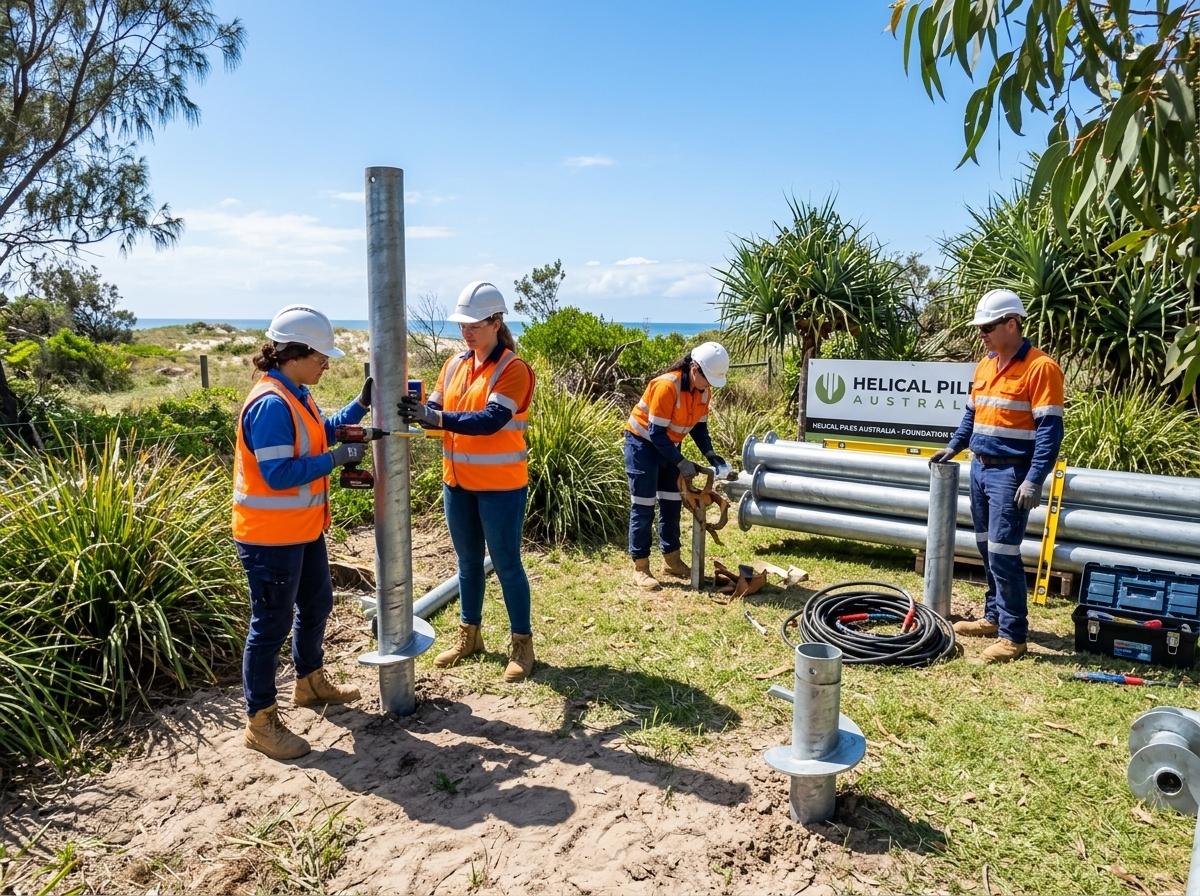
Corrosion protection is vital for durability, especially in challenging soils. Hot-dip galvanizing is a common protective measure for screw piers. This process coats the steel, preventing rust and degradation. For more aggressive environments, additional coatings or cathodic protection can be applied, ensuring the longevity of your foundation.
Installation and Torque Monitoring
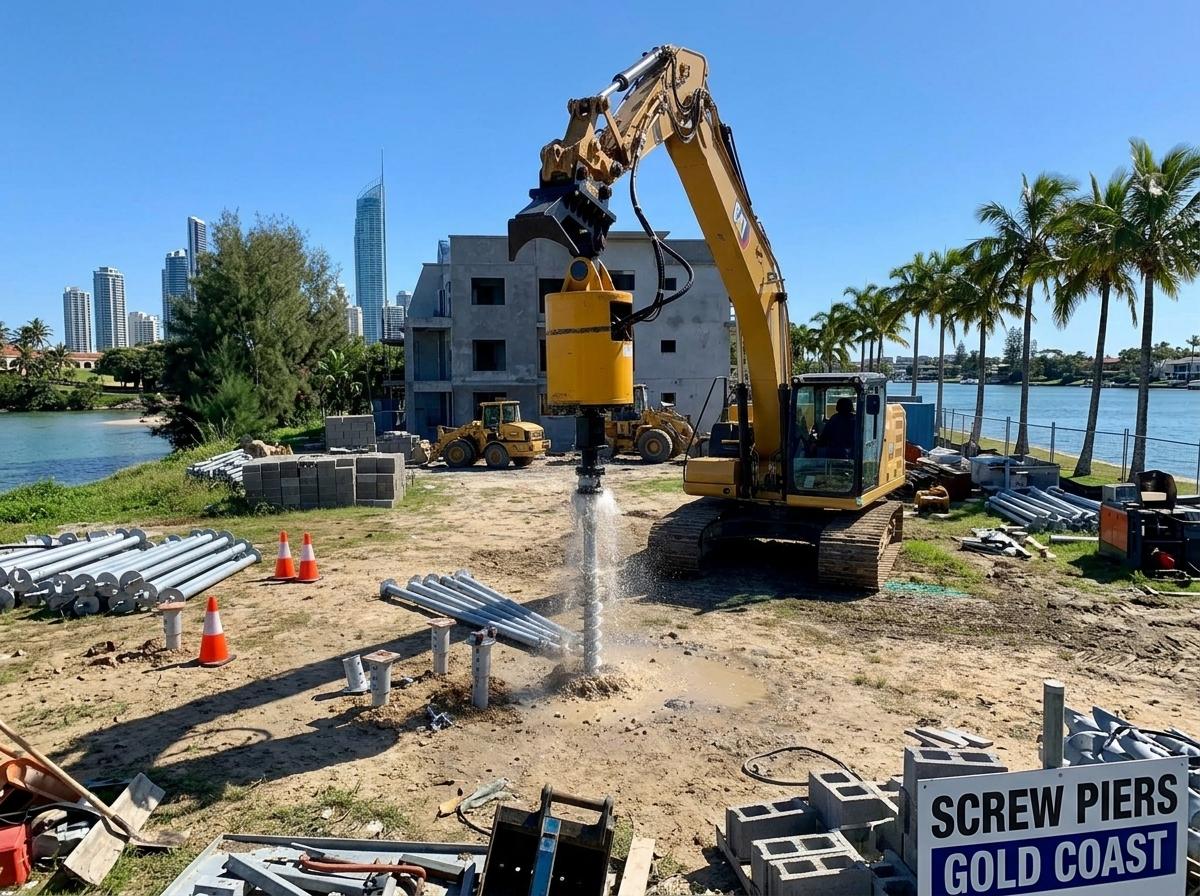
Proper installation is crucial for screw piers. Torque monitoring during installation confirms that each pier reaches its designed load capacity. This real-time assessment ensures that the foundation will perform as expected, providing immediate load-bearing capability without the need for curing time.
Real-Time QA/QC Measures
Quality assurance during installation is essential. With real-time torque monitoring, you get immediate feedback on the pile’s performance. This reduces the risk of installation errors and ensures that each pile meets the required specifications. It’s a proactive approach to maintaining construction integrity.
Environmental and Cost Benefits
Minimal Ground Disturbance
Screw piers are known for their minimal impact on the environment. Unlike traditional foundations that require extensive excavation and spoil removal, screw piers disturb less ground. This means less environmental disruption and quicker project timelines.
Program and Cost Certainty
With screw piers, you can count on a predictable program and costs. The installation process is faster, reducing labor and equipment expenses. This certainty helps keep projects within budget and on schedule, a crucial factor for any construction manager.
Comparing Screw Piles and Concrete Footings
Feature | Screw Piles | Concrete Footings |
|---|---|---|
Installation Time | Immediate load-bearing | Requires curing time |
Ground Disturbance | Minimal | Significant excavation |
Environmental Impact | Low | High |
Cost | Competitive | Variable |
Load Capacity Verification | Real-time torque assessment | Post-installation testing |
Frequently Asked Questions
What are screw piers?
Screw piers, also known as helical piles, are steel shafts with helical plates that are driven into the ground. They provide foundation support by transferring loads into deeper, more stable soil layers.
Why choose screw piers over concrete footings?
Screw piers offer immediate load capacity and are less disruptive to the environment. They do not require curing time, which can significantly reduce construction timelines and costs compared to concrete footings.
How do screw piers handle corrosion?
Screw piers are usually protected against corrosion through hot-dip galvanizing. In harsher conditions, additional protective measures such as epoxy coatings or cathodic protection can be applied to extend their durability.
Last chance for 2026 pricing – secure your foundation solutions today.