Conventional underpinning methods often slow projects and struggle with Brisbane’s challenging soils. If your commercial or infrastructure asset faces settlement or load issues, helical underpinning offers a faster, reliable alternative tailored for local ground conditions like reactive clays and river alluvium. This post explains how helical piles meet AS2159 standards, reduce installation time by up to 50%, and deliver immediate load capacity with minimal site disturbance. Learn more about underpinning in Brisbane.
Understanding Underpinning Needs
When considering foundation solutions, it’s crucial to understand when underpinning might be required. This section will cover the indicators and challenges specific to Brisbane’s unique soil conditions.
When Underpinning Becomes Necessary
Underpinning becomes essential when your building shows signs of structural distress. Cracks in walls, uneven floors, or doors and windows not closing properly are clear indicators. These issues often result from soil movement, causing the foundation to shift. In Brisbane, reactive clay and shifting alluvium are common culprits. Such conditions demand swift action to prevent further damage. Helical underpinning can offer a quick and effective solution, ensuring your structure remains stable and secure.
Identifying Foundation Stress Indicators
Recognizing stress indicators early can save substantial time and cost. Cracks appearing around the building’s perimeter, particularly in brickwork or walls, signal potential foundation issues. If you’ve noticed that these cracks are expanding, it might be time to investigate further. Look out for sagging or sloping floors as well. These symptoms are often misinterpreted as surface issues, but they may point to deeper foundation problems. By addressing these signs promptly, you maintain structural integrity and avoid extensive repairs.
Addressing Common Brisbane Soil Challenges
Brisbane’s soils present distinct challenges. The city’s reactive clays expand and contract with moisture changes, leading to foundation shifts. Additionally, river alluvium and coastal sands can be unstable, complicating traditional underpinning methods. Helical piles are designed to perform in these conditions, providing reliable support without the need for extensive excavation. This adaptability makes them an excellent choice for the varied soils found throughout Brisbane.
Helical Piles vs Traditional Methods
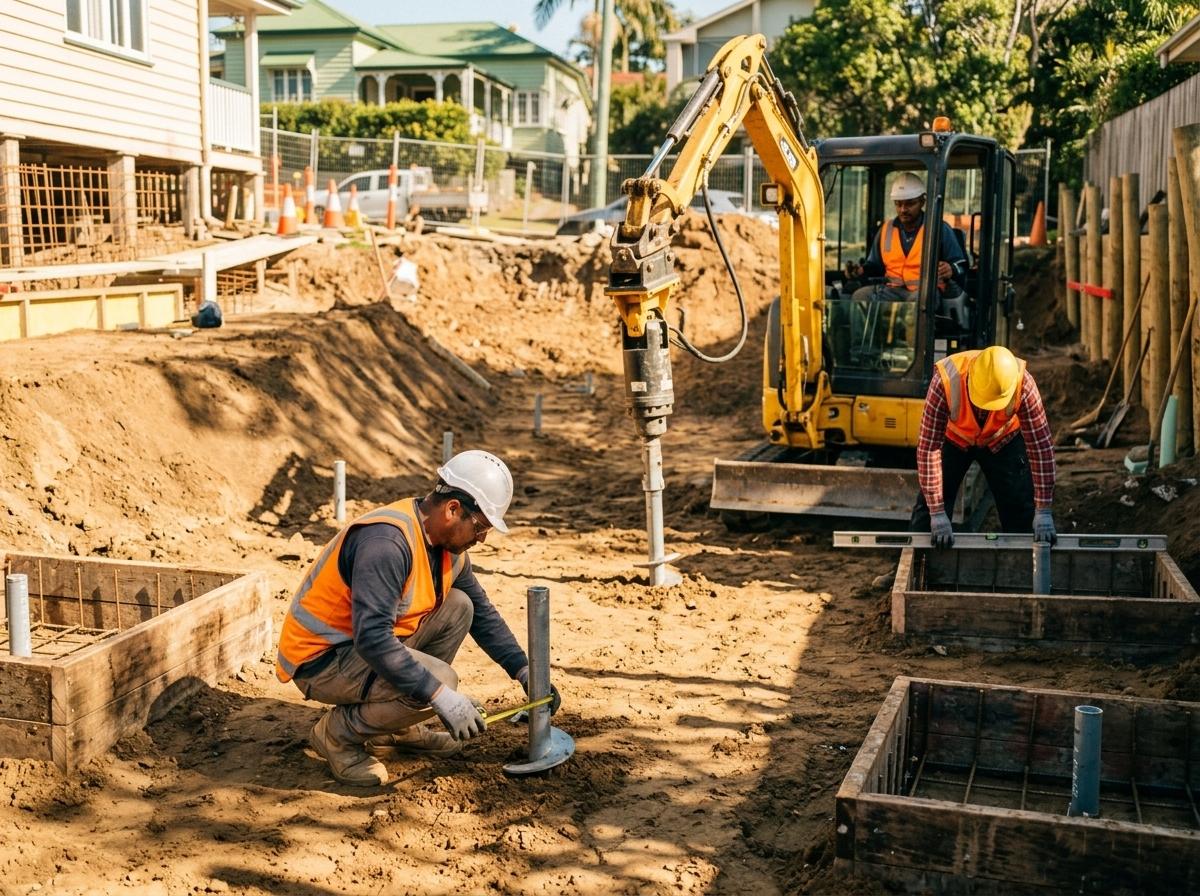
Choosing the right underpinning method is crucial for project success. Let’s explore how helical piles stack up against traditional methods like mass concrete and micro-piles.
Comparing Helical and Mass Concrete
Helical piles offer significant advantages over mass concrete underpinning. First, they can be installed up to 50% faster, minimizing disruption and keeping projects on schedule. Mass concrete requires extensive excavation and curing time, delaying progress. Additionally, helical piles provide immediate load capacity, allowing for instant stabilization. This speed is invaluable in areas with restricted access or tight timelines. With helical piles, you avoid the delays associated with concrete curing and enjoy a smoother installation process.
Micro-piles Versus Screw Pile Underpinning
Micro-piles and screw piles each have their place in foundation repair, yet they differ in application and effectiveness. Micro-piles are ideal for sites with limited access, but they often require more complex installation and higher costs. Screw piles, on the other hand, offer a straightforward and cost-effective alternative. They excel in applications where speed and minimal disturbance are priorities. These piles can be used across various soil types, making them versatile for Brisbane’s diverse conditions. For most commercial and industrial projects, screw piles present a more efficient and pragmatic choice.
Performance in Unique Brisbane Soils
In soils like Brisbane’s, performance reliability is key. Helical piles are engineered to adapt to reactive clays, coastal sands, and river alluvium, providing stability where traditional methods falter. Their design ensures consistent performance, even in the face of soil expansion and contraction. This makes them particularly suited for the city’s varied and challenging ground conditions. By choosing helical piles, you benefit from a foundation solution that not only meets current needs but also adapts to future soil shifts.
Ensuring Compliance and Performance
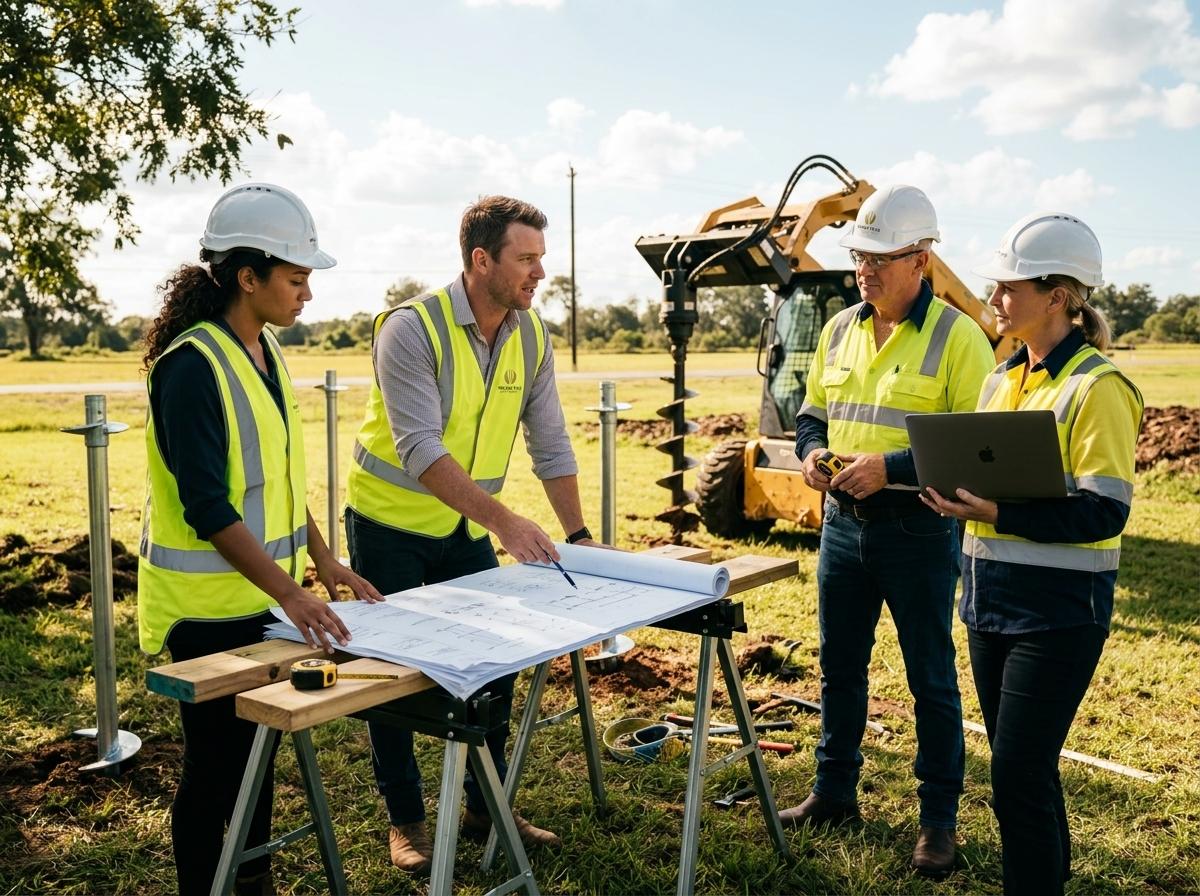
Compliance with standards and performance verification are non-negotiable in foundation work. Here’s how helical piles meet these critical criteria.
AS2159 Standards for Underpinning
Helical piles adhere to the AS2159 standards for underpinning, ensuring they meet stringent requirements for safety and reliability. This compliance guarantees that the piles are suitable for use in Australian conditions, providing peace of mind for engineers and project managers. The standards cover aspects like design, installation, and testing, ensuring that every helical pile system is up to the task. By meeting these standards, you can trust that your foundation solution will perform as needed.
Torque Correlation and Load Testing
Torque correlation and load testing are vital for confirming the performance of helical piles. Torque measures the resistance encountered during installation, providing immediate feedback on pile capacity. Load testing then verifies this capacity under real-world conditions. This dual approach ensures that each pile is installed correctly and can handle the anticipated loads. The result is a foundation system with proven reliability and performance, tailored for the specific demands of your site.
Monitoring and Verification Techniques
Regular monitoring and verification are crucial for maintaining foundation integrity. Techniques such as visual inspections, load testing, and torque monitoring provide ongoing assurance that the foundation remains stable. These methods help identify potential issues early, allowing for timely interventions. For projects in Brisbane, where soil conditions can change, such vigilance is essential. By maintaining a proactive approach, you ensure the longevity and safety of your structure.
Frequently Asked Questions
What signs indicate the need for underpinning in Brisbane?
Look for structural issues like cracks in walls or uneven floors. These signs often point to foundation problems due to shifting soils common in Brisbane.
How do helical piles compare to traditional concrete methods?
Helical piles install faster, provide immediate load capacity, and cause less site disruption compared to traditional concrete methods, making them ideal for Brisbane’s unique soil conditions.
Are helical piles compliant with Australian standards?
Yes, helical piles meet the AS2159 standards, ensuring they are safe and reliable for use in Australian environments.
What soil challenges are common in Brisbane, and how do helical piles address them?
Brisbane’s reactive clays and river alluvium pose stability challenges. Helical piles adapt to these conditions, offering a stable foundation solution.
How is load capacity verified for helical piles?
Torque correlation and load testing confirm the load capacity of helical piles, ensuring they meet the demands of your specific project requirements.
Last chance for 2026 pricing – secure your foundation solutions today.