Conventional solar panel ground mounting kits often struggle in Australia’s varied soils, causing delays and unexpected costs. You need a foundation system that handles reactive clay, coastal sand, and shallow rock without slowing your project. Helical piles for solar provide a faster, lower-risk alternative with immediate load capacity and verified installation torque. This post explains how these engineered screw pile foundations outperform traditional kits and help keep your utility-scale solar projects on track. Explore your options here.
Helical Pile Foundations for Solar
Helical pile foundations offer a swift, reliable solution for solar projects in challenging soils. They ensure your solar installations remain stable and on schedule.
Understanding Helical Pile Advantages
Helical piles bring clear benefits when it comes to speed and reliability. Their installation process is quick, without the need for extensive excavation or curing time. This means you can start building on them immediately, saving crucial time on your project timeline. Helical piles are also adaptable to various soil types, making them a perfect fit for Australia’s diverse ground conditions. This adaptability helps eliminate the guesswork and uncertainty often associated with traditional foundation methods.
Another major advantage is the reduced environmental impact. With helical piles, there’s minimal ground disturbance, which is crucial for environmentally sensitive areas. By choosing helical piles, you’re opting for a solution that balances speed, stability, and environmental care, ensuring that your solar project is both efficient and responsible. Learn more about the installation process.
Performance in Australian Soil Conditions
Australia’s soil conditions are notoriously tough, but helical piles are engineered to excel in them. These piles can penetrate reactive clay, coastal sand, and shallow rock without difficulty. Their design ensures that projects face fewer delays due to soil-related issues. The immediate load capacity of helical piles means that once they’re installed, they are ready to bear weight right away. This is a significant advantage over traditional concrete foundations, which require curing time and are often subject to delays.
In regions with reactive clay, helical piles provide stability that prevents movement and shifting, which can otherwise lead to structural issues. For coastal and sandy soils, the design of helical piles helps resist lateral forces, offering a secure foundation in areas prone to shifting sands. Their versatility in handling different soil types makes them a preferred choice for solar installations across Australia.
Integration and Installation Benefits
Integrating helical piles into your solar project is straightforward and efficient. The installation process requires less heavy machinery and fewer personnel, translating to lower labor costs and reduced site disruption. With helical piles, you avoid the logistical challenges associated with transporting and setting up large concrete components. Their compact installation equipment can access remote or confined sites with ease, ensuring that even challenging locations are not a barrier to your project’s success.
The installation of helical piles also offers real-time quality assurance. The torque applied during installation directly correlates with the pile’s load capacity, providing instant verification of stability and strength. This immediacy in validation reduces the risk of post-installation issues and enhances the overall reliability of your solar foundation system.
Comparing Ground Mount Systems
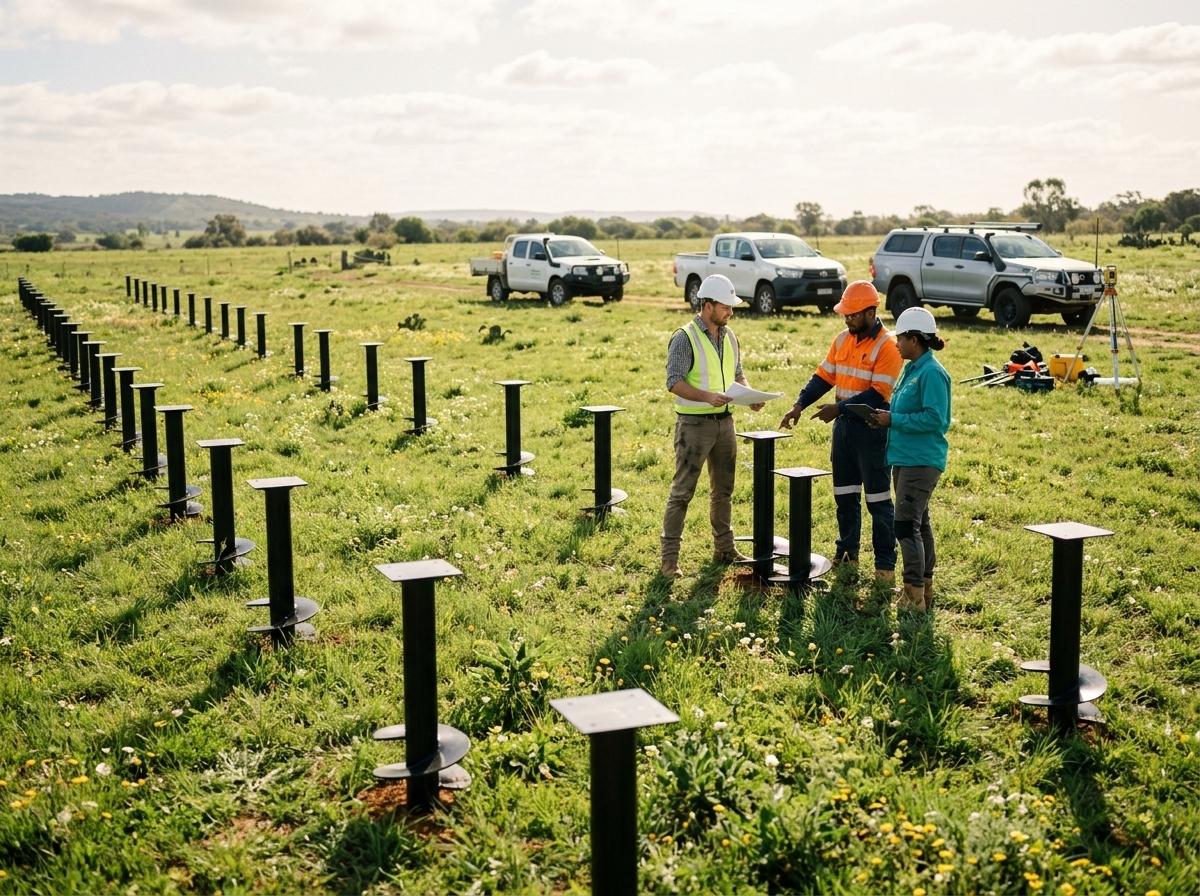
Comparing conventional methods with helical piles reveals significant distinctions in performance, cost, and efficiency. Each approach has its merits, but helical piles often come out on top in challenging conditions.
Conventional Methods vs. Helical Piles
Traditional ground mount systems typically involve concrete footings, which are time-consuming to install and require significant excavation. In contrast, helical piles are installed quickly without the need for concrete, reducing the overall project timeline by up to 50%. This speed not only saves time but also reduces costs associated with labor and machinery. Additionally, helical piles provide immediate load-bearing capacity, allowing construction to proceed without delay.
In terms of environmental impact, conventional methods can cause significant ground disturbance and often require large, heavy machinery. Helical piles, with their minimal disturbance approach, are a more environmentally friendly option. This makes them particularly valuable for projects in sensitive areas where minimizing impact is crucial. Consider this solar ground mount system for your next project.
Addressing Soil Challenges with Helical Piles
Soil challenges are a common hurdle in construction, but helical piles are designed to tackle these head-on. Their screw-like design allows them to anchor securely in various soil types, including those that are typically problematic for traditional foundations. Whether dealing with shifting sands or reactive clay, helical piles offer stability and durability. They are engineered to resist both uplift forces and lateral movement, ensuring that your solar panels remain securely in place regardless of soil conditions.
Helical piles are also advantageous in areas with shallow rock layers. Their ability to penetrate these layers without the need for pre-drilling or blasting reduces both the environmental impact and the complexity of installation. This capability ensures that your project can progress smoothly and without unnecessary delays.
Installation Process and Efficiency
The installation process for helical piles is a model of efficiency. Using compact equipment, contractors can install these piles with precision and speed. This means less time spent on foundation work and more time focusing on other critical aspects of your solar project. The simplicity of the installation process also translates into cost savings, as fewer resources are needed compared to traditional methods.
In addition to speed, the installation of helical piles is versatile. It can be performed in various weather conditions, ensuring that your project stays on schedule even when the weather is unpredictable. This adaptability is a significant advantage, particularly in Australia, where weather conditions can vary widely across different regions.
Practical Considerations for EPC Contractors
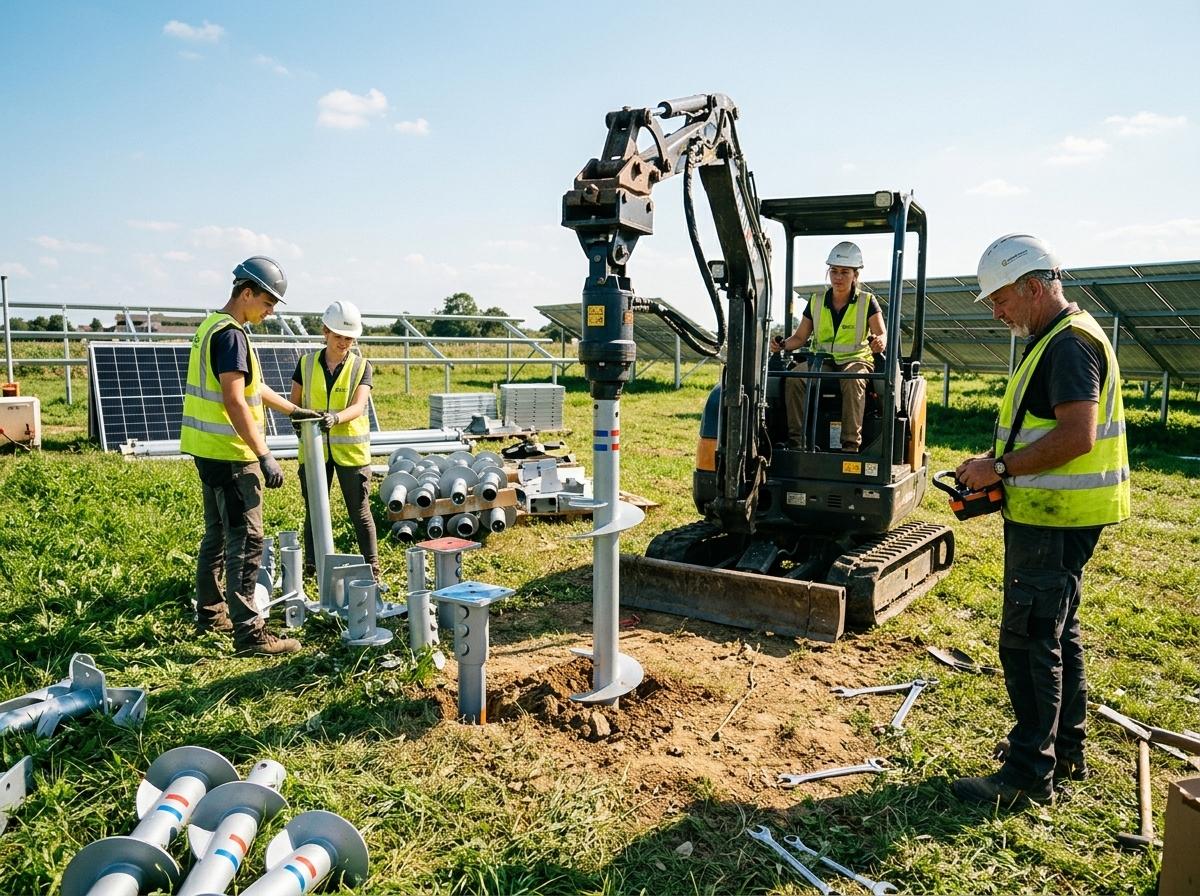
For EPC contractors, understanding the practical benefits of helical piles is crucial for project success. These foundations offer advantages in durability, cost management, and site-specific design.
Ensuring Durability and Corrosion Protection
Durability is a key consideration for solar foundations, and helical piles deliver with robust corrosion protection options. Made with hot-dip galvanized steel, these piles resist corrosion over time, even in aggressive soil environments. This resistance ensures a long service life, reducing the need for maintenance and repairs. For extra protection, options such as epoxy coatings and cathodic protection are available, offering enhanced durability in the most challenging conditions.
Choosing helical piles means investing in a foundation solution that stands the test of time, providing peace of mind and safeguarding your investment. The longevity and reliability of these piles are supported by compliance with standards such as AS2159, ensuring their suitability for Australian conditions.
Managing Construction Timelines and Costs
Time is money in construction, and helical piles help you save both. Their rapid installation process accelerates construction timelines, allowing projects to move from foundation to completion more quickly. This speed translates into cost savings, as labor and equipment expenses are reduced. Additionally, the predictability of helical pile installation minimizes the risk of unforeseen delays and associated costs.
For EPC contractors, managing budgets and timelines is crucial, and helical piles offer a foundation solution that aligns with these priorities. By reducing the potential for unexpected challenges, they ensure that projects remain on track and within budget.
Site-Specific Design and Geotechnical Engineering
Every site presents unique challenges, and helical piles are designed to meet them head-on. With input from geotechnical engineering, these foundations are customized to suit the specific conditions of your site, ensuring optimal performance. This site-specific approach minimizes the risk of foundation failure, providing a reliable base for your solar project.
Helical piles accommodate a variety of soil conditions, from reactive clay to coastal sand and shallow rock. Their adaptability and ability to handle diverse environments make them a preferred choice for solar projects across Australia. By focusing on site-specific design, helical piles offer a tailored solution that addresses the unique demands of each project.
Frequently Asked Questions
What are the benefits of using helical piles for solar installations?
Helical piles offer quick installation, immediate load capacity, and minimal ground disturbance, making them ideal for solar projects. They are adaptable to various soil types and provide reliable performance without the need for concrete curing.
How do helical piles compare to traditional ground mount systems?
Unlike traditional systems that require extensive excavation and curing time, helical piles install rapidly and are ready for immediate use. They reduce environmental impact and offer cost savings by minimizing labor and equipment needs.
Are helical piles suitable for challenging soil conditions?
Yes, helical piles are designed to handle challenging soils such as reactive clay, coastal sand, and shallow rock. Their screw-like design allows them to anchor securely, providing stability and durability across diverse environments.
How does the installation process of helical piles reduce project timelines?
The installation of helical piles involves compact equipment and no need for curing time, which accelerates construction timelines. This efficiency helps keep projects on schedule and reduces overall costs.
What measures ensure the durability of helical piles?
Helical piles are made from hot-dip galvanized steel, offering strong corrosion protection. Additional options like epoxy coatings and cathodic protection further enhance durability, ensuring a long service life even in aggressive soil conditions.
Last chance for 2026 pricing – secure your foundation solutions today.