Solar panel mounting brackets for roof rack might seem like the simplest choice for solar arrays, but that simplicity comes with limits. For utility-scale and commercial projects, relying on roof rack solar mounts can introduce risks around performance and compliance with AS 2159. This article explains why engineered ground mount solar foundations using helical piles deliver faster installation, immediate load capacity, and consistent results across Australian soils—helping you meet project deadlines and quality standards.
Roof Rack Solar Mounts
When you’re considering solar panel mounting options, roof rack systems are often a go-to choice due to their straightforward setup.
Benefits of Roof Rack Systems
Roof rack systems are popular for a few reasons. First, they are easy to install. You don’t need specialized tools or extensive knowledge, making them accessible for most residential projects. They are also relatively inexpensive, which can be attractive if you’re working on a budget. Another perk is their adaptability. Roof racks can fit various vehicle types and roof shapes, which adds to their convenience.
You might find them handy if you’re dealing with small-scale projects or needing a quick solution. They allow you to maximize existing space without requiring additional land or large equipment. Additionally, because they are widely available, you can easily find compatible parts and accessories. Check out this guide on solar panel mounts for more information about different options and compatibility.
Limitations for Commercial Projects
Despite their benefits, roof rack systems come with significant limitations when applied to larger or commercial projects. Roof racks are not designed to handle the scale and weight that utility-scale projects demand. With larger setups, performance issues can arise that impact the efficiency and longevity of your solar arrays.
Compliance is another critical factor. For instance, roof rack systems may not meet the stringent requirements of AS 2159, which governs foundation performance in Australia. This can lead to regulatory setbacks and potential risks to structural integrity. For commercial ventures, relying solely on roof racks might compromise your project’s overall success and sustainability.
Ground Mount Solar Foundations
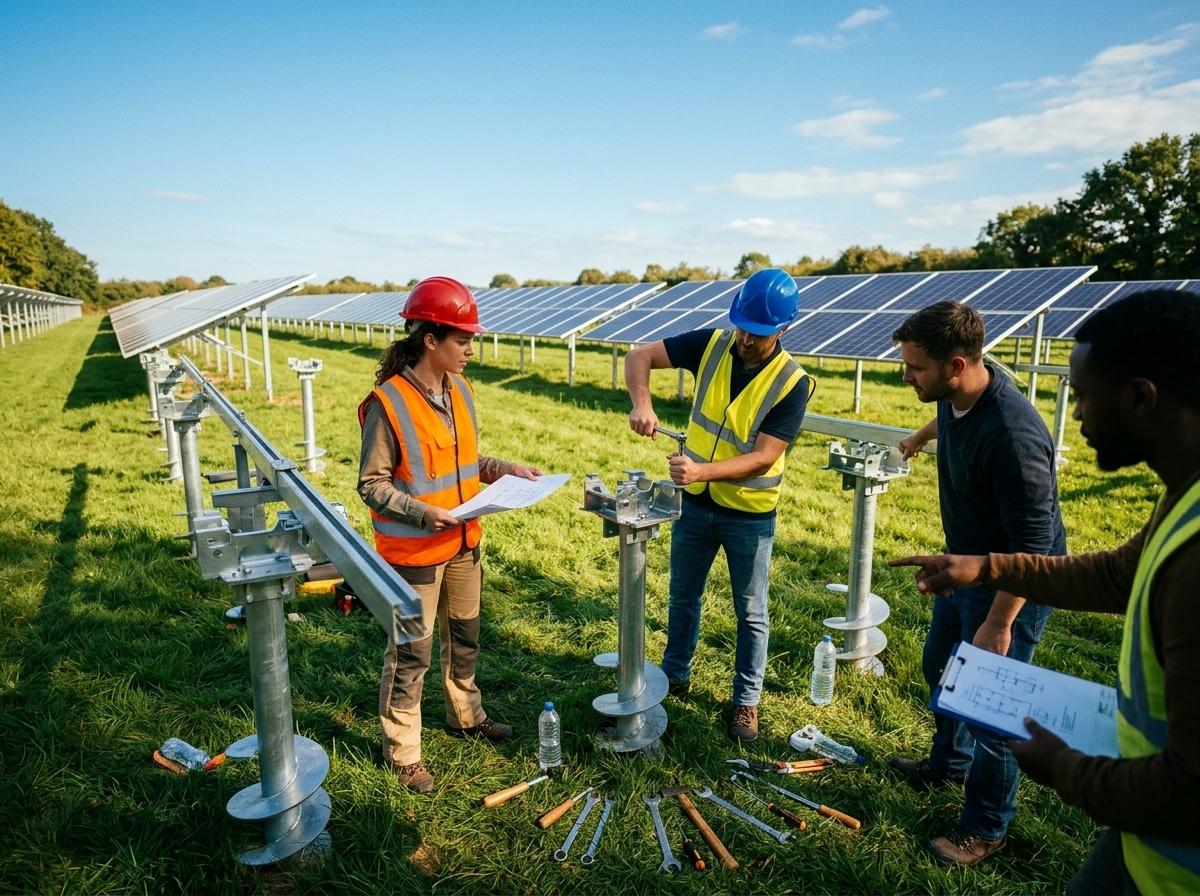
Switching gears, ground mount solar foundations offer a robust alternative for commercial and utility-scale projects. They provide reliability and compliance that roof racks simply can’t match.
Overview of Helical Piles
Helical piles are a standout choice for ground-mounted systems. These screw-like steel shafts are driven into the ground, offering incredible stability. They are designed to handle diverse soil conditions, from reactive clay to coastal sands.
What sets helical piles apart is their ability to provide immediate load capacity. This means you can start using your solar arrays right after installation, unlike traditional methods which might require curing time. Helical piles also promise reduced ground disturbance, which is crucial for minimizing environmental impact.
Installation Process and Efficiency
The installation of helical piles is straightforward yet highly efficient. Here are the typical steps involved:
Site Assessment: Identify soil conditions to determine the appropriate pile type.
Pile Installation: Use hydraulic machinery to drive piles into the ground.
Torque Verification: Ensure each pile meets specified load requirements.
Solar Array Mounting: Attach arrays to the installed piles for immediate use.
This method is not just quick; it also cuts down on labor costs and project timelines. By eliminating the need for concrete curing, projects can advance faster, saving both time and money.
Compliance with AS 2159 Standards
Compliance with AS 2159 standards is vital for any solar project in Australia. Helical piles are engineered to meet these standards, offering peace of mind to engineers and project managers. They undergo rigorous testing to ensure they meet torque and load specifications, providing reliable performance.
This compliance means fewer setbacks and a smoother project execution. It also protects against potential liabilities that could arise from non-compliance, securing both the project’s operation and your investment.
Practical Considerations for Solar Projects
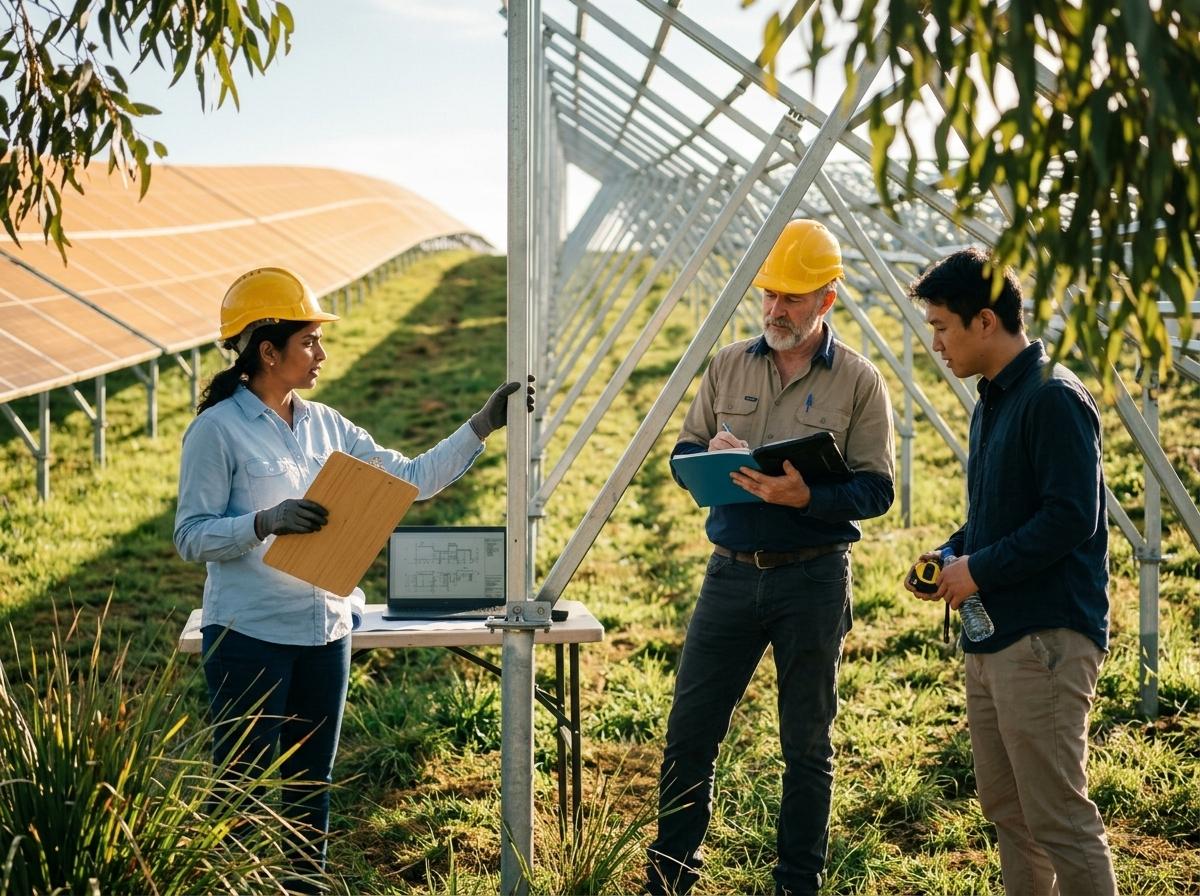
When planning a solar project, it’s crucial to weigh the environmental impact and site conditions along with construction timelines.
Environmental Impact and Site Conditions
Helical piles offer a low-impact solution for solar projects. Their installation results in minimal ground disturbance, which is beneficial for maintaining the site’s existing ecosystem. This is especially important if your project is near sensitive areas or involves significant land use.
Another advantage is their adaptability to various site conditions. Whether you’re dealing with rocky terrain or soft soil, helical piles can be customized to meet your needs. This flexibility ensures that you can install solar arrays in locations where traditional foundations might fail.
Construction Timeline and Project Efficiency
Time is often a critical factor in solar projects. The need to meet deadlines without compromising quality is paramount. Helical piles are designed to speed up the construction timeline. The absence of curing times and quick installation process means you can move from foundation setup to full operation rapidly.
This efficiency extends to cost savings too. By reducing labor and material requirements, you can allocate resources to other project areas, enhancing overall productivity and profitability. If you’re interested in learning more about efficient solar foundation solutions, explore our ground mount solar installation options that promise reduced schedule risk and predictable outcomes.
Frequently Asked Questions
What are the main benefits of helical piles in solar projects?
Helical piles provide immediate load capacity, reduced ground disturbance, and adaptability to various soil conditions. They are designed to meet AS 2159 standards, ensuring compliance and performance.
Are roof rack systems suitable for large commercial solar projects?
Roof rack systems are typically not suitable for large commercial projects due to their limited load capacity and compliance issues with standards like AS 2159.
How do helical piles impact the environment?
Helical piles have a minimal environmental impact as they cause less ground disturbance and can be installed in sensitive areas without significant disruption.
Why is compliance with AS 2159 important for solar projects in Australia?
Compliance with AS 2159 ensures that the foundation systems meet safety and performance standards, reducing risk and potential liabilities.
How do helical piles speed up construction timelines?
Helical piles eliminate the need for curing time and have a straightforward installation process, which accelerates project timelines and reduces overall costs.
Last chance for 2026 pricing – secure your foundation solutions today.